5 Best Open Source LLM Gateways for Production AI Applications in 2026
On this page
On April 20, 2026, LiteLLM's security advisory disclosed a serious problem in its open-source LLM gateway. The problem was an SQL injection in LiteLLM's gateway. An attacker didn't need any login credentials, just one request to a normal API route. That request could reach a vulnerable database query and let the attacker read or change data in it.
That mattered because LiteLLM's server manages credentials for the AI providers connected to it.
Then, about 36 hours after the advisory went public, Sysdig's Threat Research Team saw someone actually trying to break in. The attacker went after the tables holding LiteLLM's API keys, provider credentials, and server settings.
Sysdig couldn't confirm whether the attacker actually stole any credentials or used them to reach the connected AI providers. The attempt was real, but there's no proof it worked.
LiteLLM had already fixed the issue by then. Version 1.83.7 included the fix and was released the day before the advisory went public. Versions 1.81.16 through 1.83.6 were affected.
Now think about your own setup. Your LLM gateway sits between your application and the model providers you use. It handles your requests and manages the credentials that connect your applications to those providers. Your gateway choice is a security decision.
Let's look at five LLM gateways and see how each one handles your models, your data, and your credentials.
What is an LLM gateway?
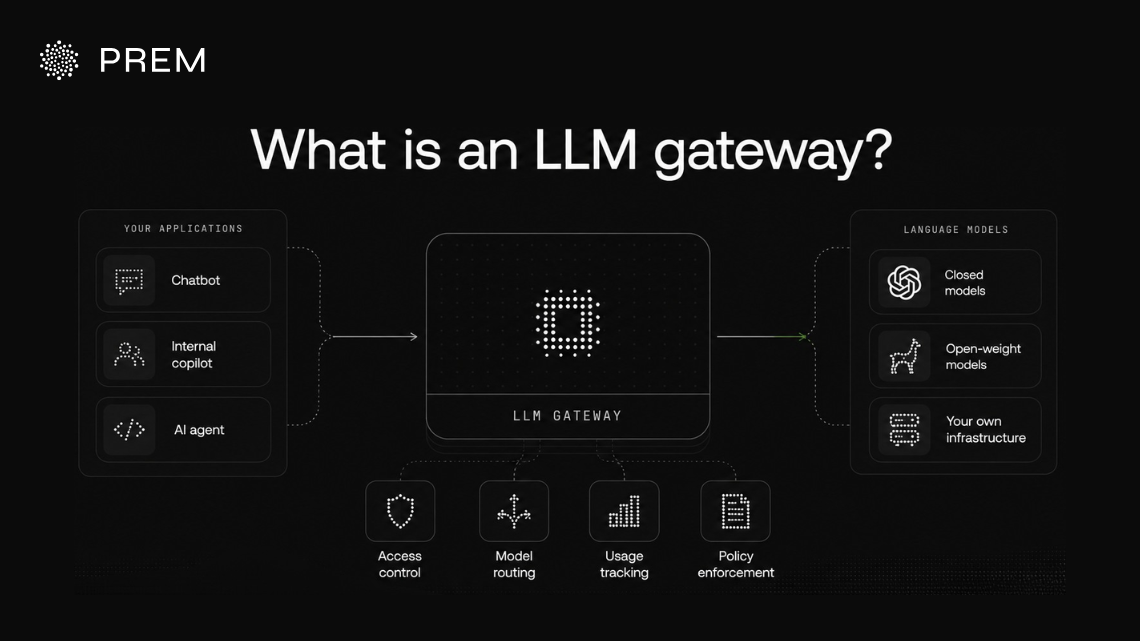
An LLM gateway sits between your application and the AI models you use. You might use OpenAI for one task, Anthropic for another, or run an open-weight model yourself.
Your application sends its request to the gateway. The gateway then sends that request to the model you have chosen.
This gives you one place to manage your AI connections. If one provider has an outage, your gateway can send the request to another provider. If you want to change models, you can make that change in the gateway without rebuilding your application around a different API.
Your gateway also handles the API keys your applications need to connect to these providers. That makes it an important part of your security setup.
If an attacker gets access to the gateway, those credentials can become a target. Your gateway needs to protect the data and credentials passing through it while still giving you the flexibility you need to run your AI workloads.
Your Gateway Holds the Keys. Who's Watching?
Enclave API processes sensitive requests inside a hardware-isolated environment, with attestation evidence your team can check directly.
Try Enclave APIWhat to look for in an open-source LLM gateway
Your gateway handles your requests and credentials, so you need to know how it works before you send production traffic through it. Use this checklist when you compare your options.
| What to check | What it means |
|---|---|
| Provider coverage | Check which AI providers and model families the gateway supports. Also check how easy it is to add another provider when you need one. |
| Credential handling | Check how your API keys are stored and protected. Also check who can access them. |
| Licensing scope | Check whether the core gateway is genuinely open-source. Make sure the features you need are available under that license. |
| Failover and reliability | Check whether the gateway can automatically send your requests to another provider when one has an outage. |
| Deployment options | Check whether you can run the gateway yourself, deploy it in your own environment, or use a managed version. |
| Observability | Check whether you can see your request activity, costs, and response times across your providers. |
| Security track record | Check whether the gateway has had publicly disclosed security issues. Look at how the team handled them and how quickly they released fixes. |
5 best open-source LLM gateways in 2026
These five gateways take different approaches to routing, performance, and deployment. The table below gives you a quick comparison. The sections after it look at each gateway's provider coverage and security.
| Gateway | Key differentiator | Standout strength |
|---|---|---|
| Prem AI | OpenAI-compatible confidential inference across multiple model families through Enclave API | Hardware-isolated processing with attestation evidence your team can verify |
| LiteLLM | One API for 100+ LLM providers | 100+ providers supported |
| Bifrost | High-performance, multi-provider AI gateway | 11 μs overhead at 5,000 requests/second |
| Traefik Labs | Kubernetes-native AI and API gateway with GitOps deployment | 3.5B+ Docker image pulls |
| Tyk | Open-source API gateway with AI gateway capabilities | Free, self-hostable open-source gateway |
Prem AI
Prem AI is a Swiss AI infrastructure company building private and verifiable AI for enterprises. Our Enclave AP gives you a protected environment for sensitive AI inference.
Enclave API: Confidential AI inference
Our Enclave API offers two processing modes through one OpenAI-compatible endpoint. Confidential routes run inside a hardware-isolated environment with attestation. ZDR routes use a different approach, backed by an agreement that your content isn’t retained.
Enclave API’s security and verification
Enclave API gives your team attestation evidence to verify the hardware-protected environment handling your requests. This adds a verifiable layer to your security review. Prem’s Platform Status & Roadmap explains how to interpret this evidence and assess what it verifies. Reference measurements aren’t pinned by default, so a successful attestation check alone doesn’t confirm that an approved software release processed your request.
Your Prototype Called. It Wants a Bodyguard.
Enclave API runs inference inside hardware-protected environments, with attestation you can verify yourself.
Try Enclave APILiteLLM
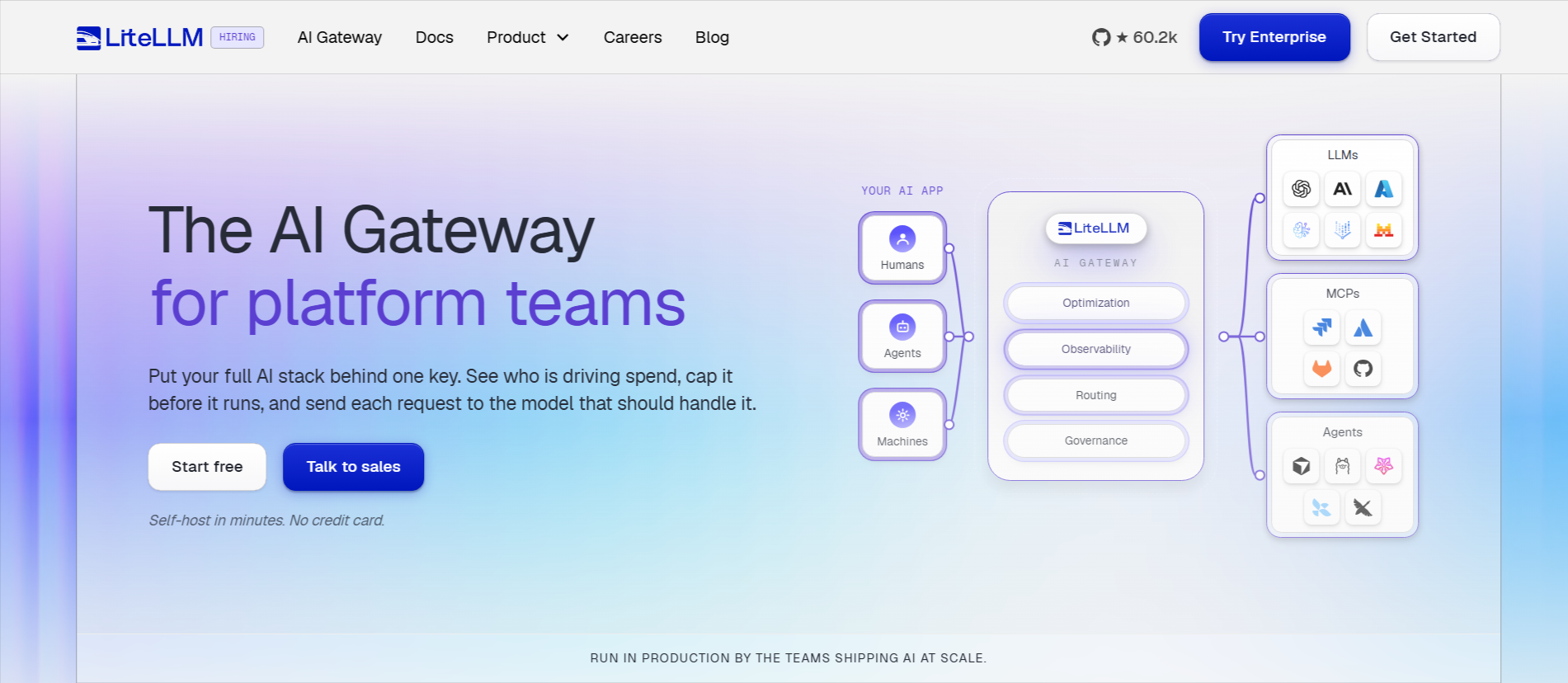
According to LiteLLM, you get one API for more than 100 LLM providers, including OpenAI, Anthropic, and Amazon Bedrock, through one OpenAI-compatible interface. You can use it as a Python SDK or run its Proxy Server with a built-in UI.
LiteLLM's provider coverage and routing
LiteLLM's proxy gives you virtual keys, spend tracking, and fallback routing, so if one provider goes down, your request can automatically go to another.
LiteLLM's security and credential management
You can create virtual keys for your users without exposing your underlying provider credentials. The SQL injection covered at the start of this article, CVE-2026-42208, affected LiteLLM directly, so keep your deployment patched and avoid unnecessary public exposure.
LiteLLM's deployment and observability
You can self-host LiteLLM under its open-source MIT license. At scale, its proxy can use PostgreSQL for persistent data and Redis for caching and coordination across multiple instances. LiteLLM also provides Prometheus integration for visibility into spend, usage, request activity, and system health.
Bifrost
Bifrost is an open-source AI gateway built in Go by Maxim AI, designed for high-throughput production workloads. According to Bifrost's published benchmarks, it adds 11 microseconds of overhead per request at 5,000 requests per second.
Bifrost's provider coverage and routing
Bifrost gives you a unified, OpenAI-compatible API across 20+ providers and 1,000+ models. It supports automatic fallbacks and load balancing when a provider returns an error.
Bifrost's security and credential management
You can manage virtual keys with per-team and per-customer budgets. Bifrost also supports secret management through AWS Secrets Manager, Google Secret Manager, HashiCorp Vault, and Azure Key Vault.
Bifrost's deployment and observability
You can self-host Bifrost under its Apache 2.0 license and deploy it in your VPC or an air-gapped environment. It provides Prometheus metrics and OpenTelemetry tracing, with integrations for tools such as Grafana and Datadog.
Your Requests Processed, Your Data Protected
Enclave API runs your requests inside a hardware-isolated environment, with attestation evidence your team can check directly.
Try Enclave APITraefik Labs
Traefik Labs is a European open-source infrastructure company based in Lyon, France, known for its widely adopted Traefik Proxy, which is free and open-source under the MIT license. Its AI Gateway extends that platform with LLM-specific routing and security, while these AI-specific features sit behind Traefik Hub, a paid add-on.
Traefik's provider coverage and routing
According to Traefik, you can route requests across multiple LLM providers declaratively, using the same YAML manifests and GitOps workflow you already use for standard API traffic inside Kubernetes.
Traefik's security and credential management
Traefik's AI Gateway introduced a multi-vendor safety pipeline through early access, combining Microsoft Presidio for PII detection and masking with NVIDIA NIMs for jailbreak detection. This lets you check sensitive or malicious content before it reaches a model provider.
Traefik's deployment and observability
You can deploy Traefik Proxy on Kubernetes using GitOps workflows. Traefik's AI Gateway also provides features such as semantic caching and token tracking through Traefik Hub.
Tyk
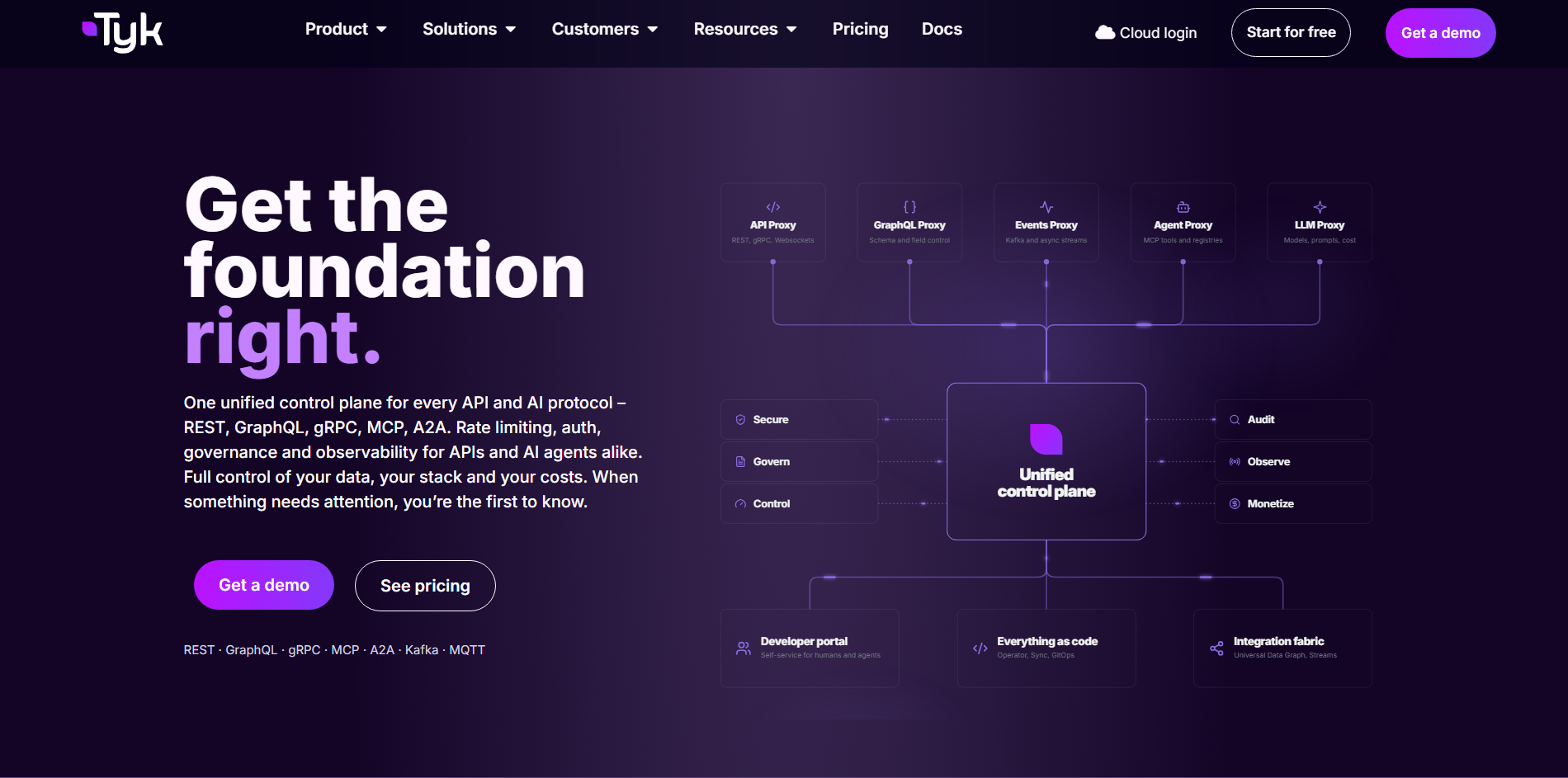
Tyk is an independent, London-based API gateway company, with its gateway written from the ground up in Go. Tyk AI Studio brings that same approach to LLM traffic, with a Community Edition that's free, open-source, and includes the core LLM Proxy Gateway, no license required.
Tyk's provider coverage and routing
According to Tyk, AI Studio connects to OpenAI, Anthropic, AWS Bedrock, and other LLM providers through its Edge Gateway, giving you one proxy layer across the models you use.
Tyk's security and credential management
Tyk AI Studio includes built-in filter scripts for PII redaction and content blocking, along with native MCP support for managing how AI agents access tools and data sources.
Tyk's deployment and observability
You can deploy Tyk AI Studio via Docker or Kubernetes using Helm charts. Tyk Gateway exports logs, traces, and metrics through OpenTelemetry, with documented integrations for Prometheus, Loki, Tempo, and Grafana.
What Does Your AI Provider Actually See?
With Enclave API, your data stays encrypted until it reaches a hardware-isolated enclave, and even Prem can't read what's inside.
Start BuildingHow to evaluate gateway pricing and verify security claims
Published pricing rarely tells you the whole story, and a security claim is only as good as your ability to check it. Use this table to look past the marketing before putting production traffic through a gateway.
| What to check | What it means |
|---|---|
| Free core vs. paid features | Confirm which features are actually in the open-source version and which sit behind a commercial tier, like Traefik Hub or Tyk Enterprise. |
| Self-hosting cost | If you're self-hosting, factor in the infrastructure you'll need to add, like PostgreSQL or Redis, not just the license cost. |
| Patch history | Check how quickly a gateway's maintainers disclosed and fixed past vulnerabilities, and whether the fix required you to take action. |
| Credential storage | Check how API keys are protected and whether the gateway supports a dedicated secrets manager instead of storing credentials in plain configuration files. |
| Production readiness | Check whether a gateway's own documentation describes it as production-ready, or whether it explicitly says to avoid sensitive workloads. |
| Observability included | Check whether metrics, logs, and tracing are part of the free tier, or whether you need the paid version to see what's happening. |
| Independent evidence | Look for third-party benchmarks, security research, and publicly disclosed vulnerabilities alongside the vendor's own claims. |
Need your best LLM Gateway? Get Started With Prem AI.
At Prem AI, our Enclave API gives teams confidential inference across multiple model families through one integration, so you don’t have to choose between flexibility and data protection.
For teams evaluating LLM gateways, we focus on keeping your data processing verifiable, not just convenient.
Want to see how Enclave API can support your workloads? Start building with Enclave API to get started
FAQs about open-source LLM gateways
What is an open-source LLM gateway?
An open-source LLM gateway is a routing layer, built with publicly available source code, that sits between your application and the AI providers you use. It gives you one endpoint and one API format, instead of separate integrations for every provider.
Is an open-source LLM gateway the same as a reverse proxy?
Not quite. A reverse proxy routes network traffic generally. An LLM gateway adds AI-specific features on top, like provider-neutral model IDs, token-level rate limiting, and failover between models when one provider has an issue.
Does "open-source" mean a gateway is free to use in production?
Not always. Several gateways keep their core proxy genuinely free and open-source, but put AI-specific features like semantic caching or advanced governance behind a paid enterprise tier. Check what's actually included before you commit.
Can a gateway introduce security risks of its own?
Yes. A gateway holds every provider API key your organization uses, which makes it a high-value target. The SQL injection vulnerability covered earlier in this article shows what can happen when a gateway's own authentication path has a flaw.
What should I check before self-hosting a gateway?
Check what external infrastructure it needs to run, like a database or cache, since that adds to your operational overhead. Also check whether it has disclosed security issues in the past, and how quickly those were patched.
Can a gateway fail over automatically if a provider has an outage?
Most gateways designed for production support this. If your primary provider returns an error or times out, the gateway can automatically send your request to a backup provider or model.
Do I need a gateway if I only use one AI provider?
Probably not yet. A gateway's value shows up once you're running more than one model or provider, since it gives you one place to manage credentials, routing, and failover instead of rebuilding each integration separately.
How do I know if a gateway is ready for production, or just for prototyping?
Check the vendor's own documentation. Some gateways are explicit that they're meant for evaluation or non-sensitive workloads, and recommend a separate, more secure path for production or confidential data.
Does using a gateway mean my prompts are stored somewhere?
It depends on the gateway and how it's configured. Some gateways are stateless by design; others store conversation history or logs for debugging. Check the specific gateway's data retention behavior rather than assuming either way.