
5 Best HIPAA-Compliant AI Platforms & Tools for Healthcare in 2026
For about six weeks in late 2024, a database belonging to the agentic AI company Serviceaide stayed open on the internet with no password protecting it. Serviceaide handled IT support for Catholic Health in Buffalo, and The HIPAA Journal's breach report puts the number of affected patients at almost 483,000.
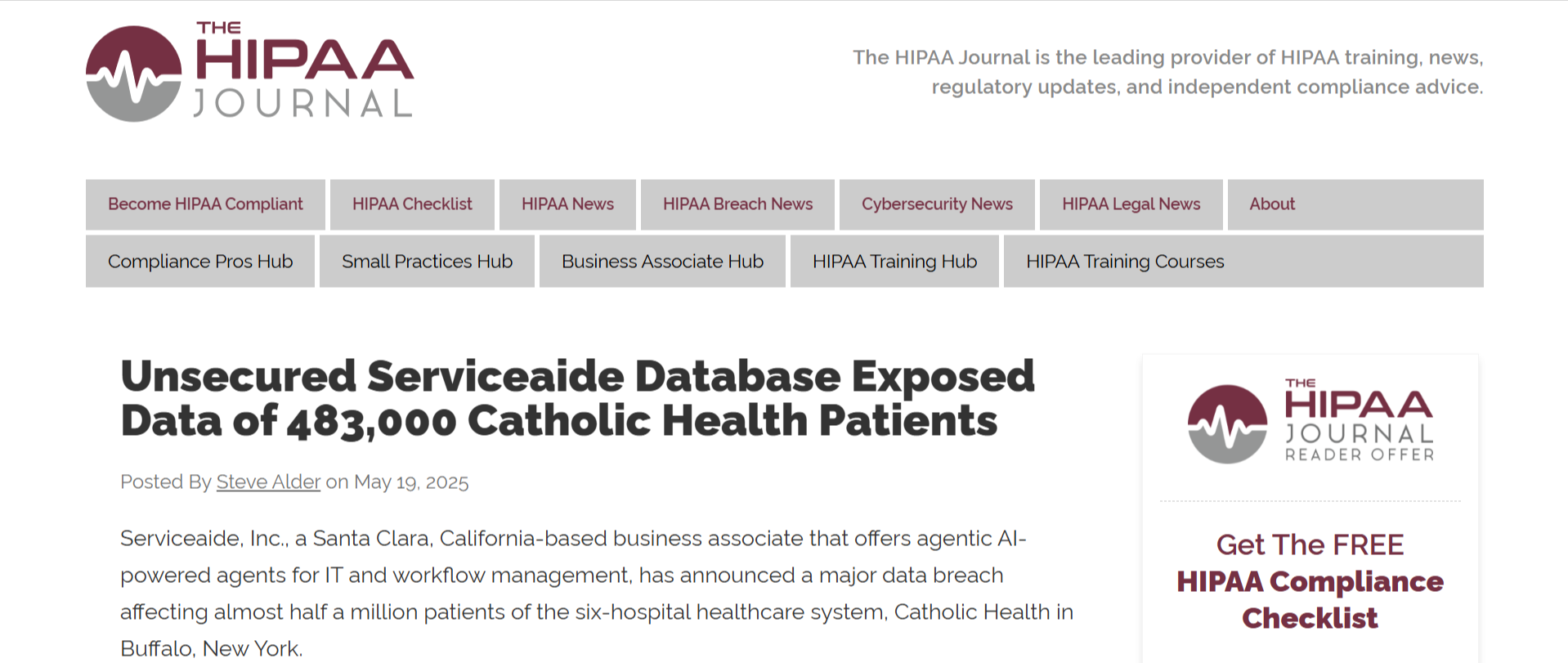
Those patients had no direct relationship with Serviceaide. Still, their medical and insurance data was exposed because one business associate misconfigured a database.
Your organization faces the same risk when protected health information (PHI) enters an AI tool your team adopted. A HIPAA-compliant AI platform gives you a signed agreement along with encrypted processing and audit trails. This helps your clinicians use AI without putting sensitive patient data at unnecessary risk.
In this blog, we've put together some of the best HIPAA compliant AI platforms for your healthcare enterprise to handle sensitive patient data in 2026.
Key Features to Look for in HIPAA-Compliant AI Tools
When choosing a HIPAA-compliant AI tool, focus on the features that help protect sensitive healthcare data. The table below highlights the key features to look for in HIPAA-compliant AI tools for your organization.
| Key feature to look for | What your organization should check |
|---|---|
| Business Associate Agreement (BAA) | Confirm the vendor signs a BAA before processing PHI and check which products and features it covers. |
| Zero data retention (ZDR) and deployment control | Confirm prompts, files, and outputs are deleted after inference. Check log retention and whether deployment can run on infrastructure you control. |
| PHI handling and data residency | Check where PHI is processed or stored and whether any third-party model provider receives the data. |
| Model training | Get written confirmation that patient data is never used to train or improve models. |
| Encryption | Check encryption in transit and at rest, plus protection during processing through confidential computing or isolated hardware. |
| Access control and auditability | Review authentication, permissions, administrative access, and whether access logs can be exported. |
| Healthcare integrations | Review EHR, FHIR, API, and identity integrations before adding the tool to clinical workflows. |
Best HIPAA-Compliant AI Tools for Healthcare in 2026
The comparison table below helps you see how each HIPAA-compliant AI platform fits your compliance and healthcare needs.
| Platform | Deployment models | HIPAA support | Best suited for |
|---|---|---|---|
| Prem AI | Managed Enclave API | Prem AI's encryption, access controls, and attestation are designed to support HIPAA-aligned workflows | Organizations that need SOC 2 Type I, GDPR, and Swiss FADP compliance, confidential inference inside Trusted Execution Environments (TEEs), no retention of prompts or completions during confidential inference, hardware-signed attestation verified on an ongoing basis, and hybrid post-quantum encryption |
| Mistral AI | Cloud, VPC, or on-premises | BAA for qualifying services | Teams that want open-weight models they can self-host |
| Corti | Hosted API, sovereign EU cloud or on-premises | BAAs offered with SOC 2 Type II | Developers building clinical speech and documentation apps |
| Aleph Alpha (Cohere) | VPC or on-premises | BAA for custom model development through Cohere | Organizations training private models on their own clinical data |
| Scaleway | Serverless Generative APIs or Managed Inference in a private network | HDS-certified health data hosting with no reuse of prompts or outputs | Healthcare teams that need EU-hosted inference outside US jurisdiction |
Prem AI
Prem AI is a Swiss company founded in 2023 by Simone Giacomelli, with a simple belief that you should be able to use AI on patient data without handing it to someone who can read it. We, at Prem, help healthcare organizations run AI on sensitive data while keeping control over how that data is processed and where it is stored.
When you send a request through Prem, it runs on encrypted GPUs inside a hardware-sealed environment, and nothing is stored once the answer comes back. Cryptographic attestation lets you verify the hardware yourself, checked on an ongoing basis rather than just once at setup.
Your data is never used to train or fine-tune any model. Our compliance includes SOC 2 Type I, GDPR, and Swiss FADP. With encrypted inference and cryptographic attestation, private AI in healthcare helps hospitals and clinics keep patient data under their own control.
Deployment models of Prem AI for your healthcare setup
Prem AI's Enclave API gives you managed private inference: your data runs inside hardware-sealed Trusted Execution Environments, with cryptographic attestation you can verify yourself. Prem also offers a separate Zero Data Retention mode for standard inference.
The Prem AI product suite for healthcare
Fluso: your private healthcare agent
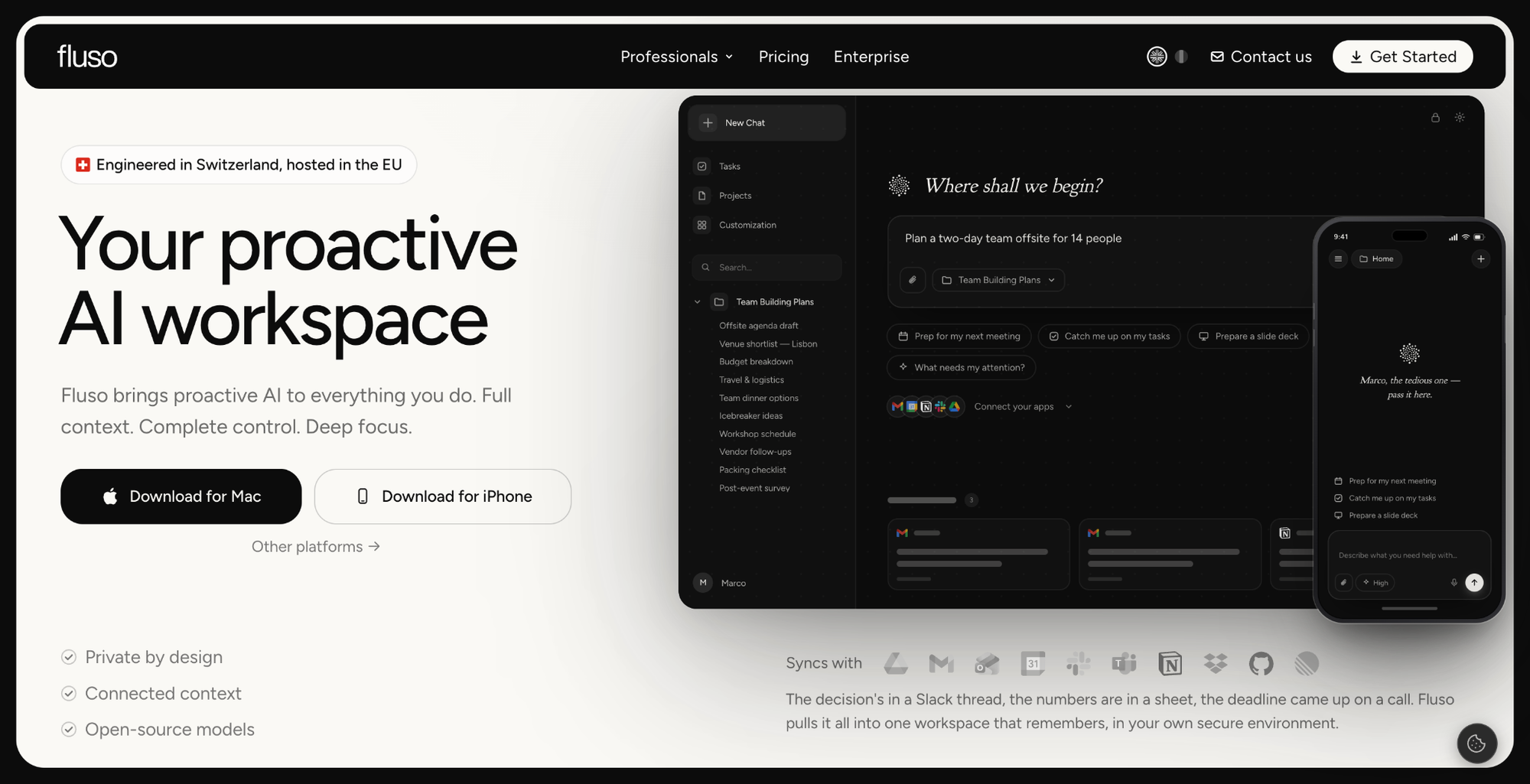
Fluso connects to the systems your team already uses and keeps outputs linked to their source, so your team isn't switching between tools to get context. It's built for enterprise teams handling sensitive, internal workflows that need to stay under your organization's control.
Enclave API for building your own healthcare agents
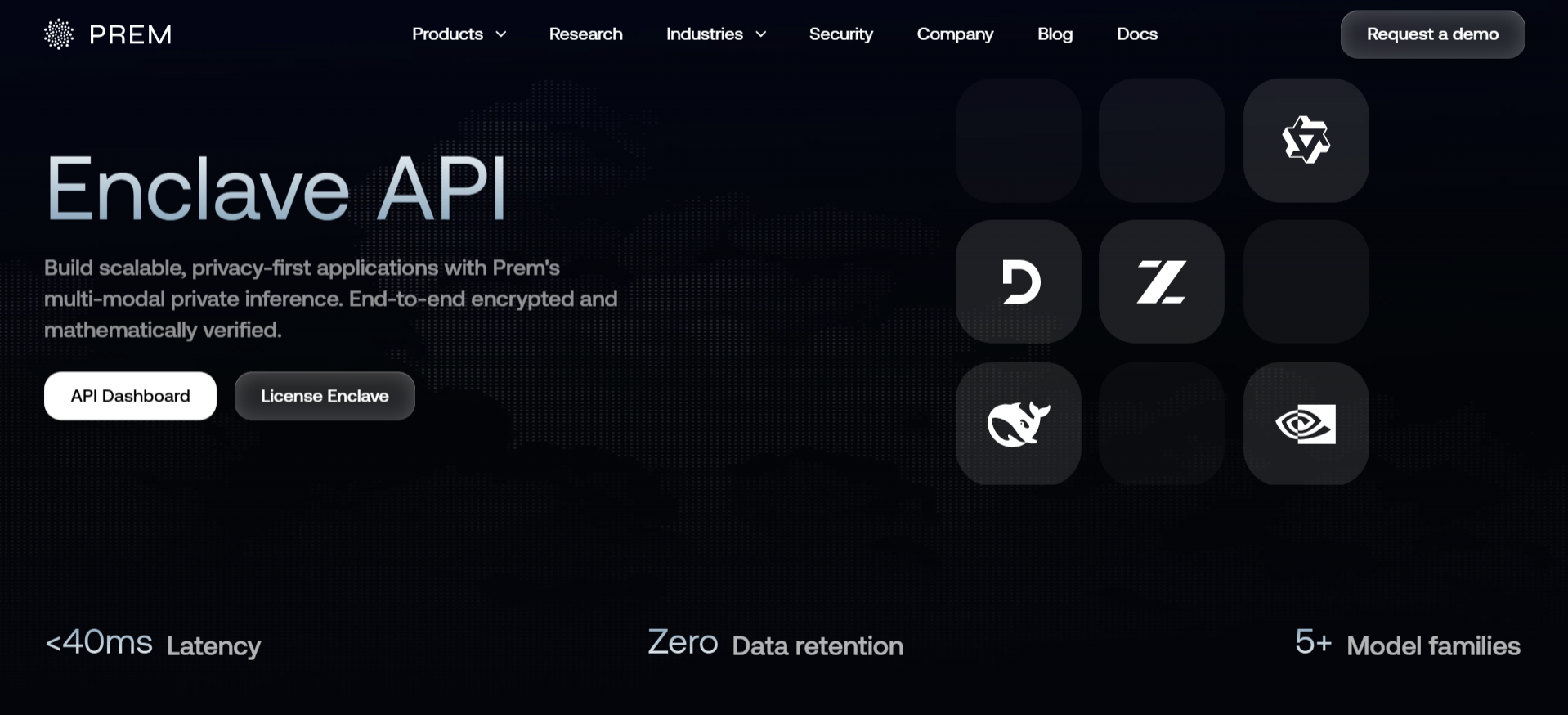
If your team wants to build its own tools, Enclave API gives you access to confidential model families including Qwen 3.8, DeepSeek v4 Flash, and DeepGram for audio transcription, with more added as they become available. Your prompts and outputs are encrypted before they reach the enclave and are deleted after the response is returned. You can use it for diagnostic workflows across imaging and lab data. It also supports research projects where multiple hospitals work together without sharing raw data.
Prem Studio for training models on your own data
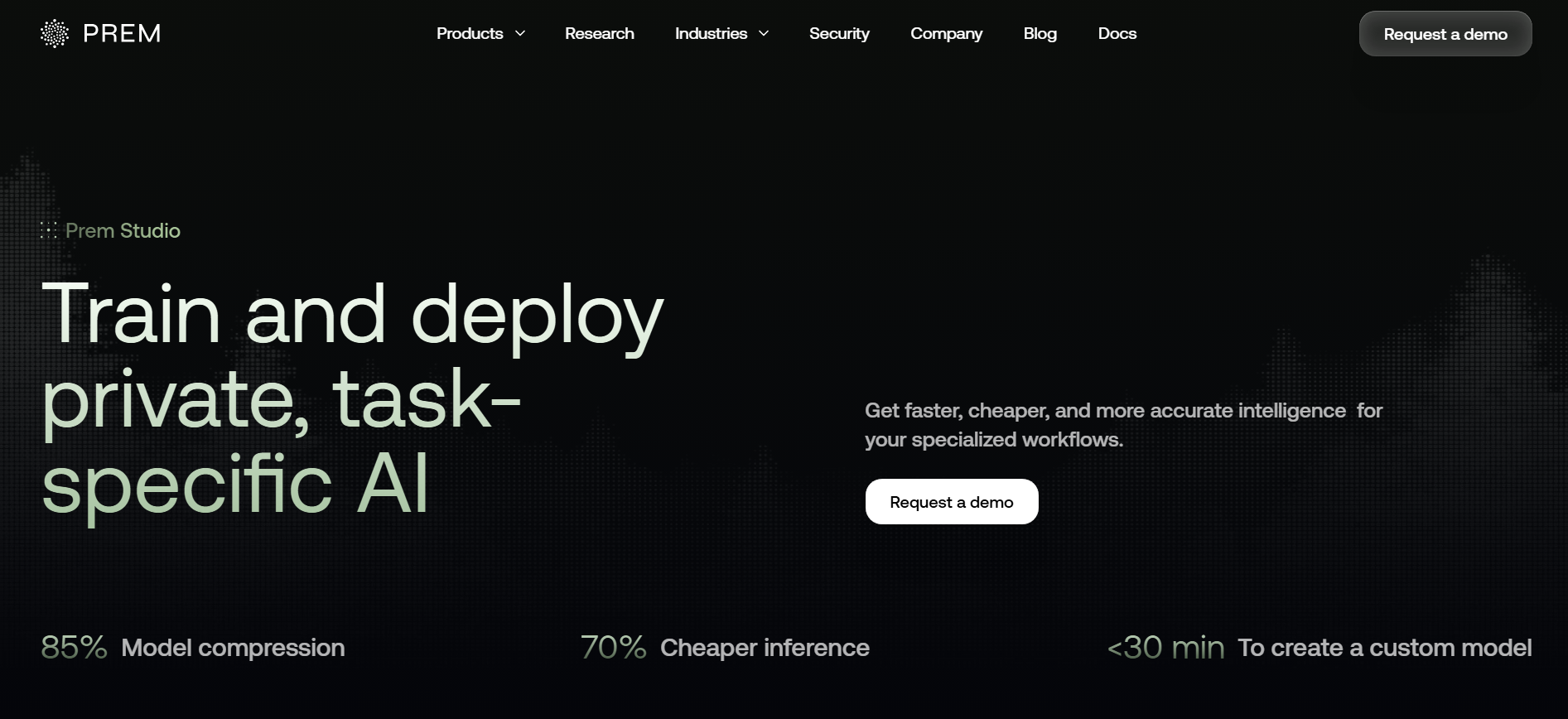
Prem Studio lets you train and fine-tune a model on your own data, with all data processed inside cryptographically secure enclaves. Your data stays under your control throughout training.
For a private healthcare AI setup that fits your infrastructure and privacy requirements, contact our sales team or email us at sales@premai.io.
Mistral AI (Vibe, formerly Le Chat)
Arthur Mensch, Guillaume Lample, and Timothée Lacroix launched Mistral AI in 2023 after research roles at Google DeepMind and Meta. Because its models are open-weight, your team can download them and run them on servers with no internet connection at all, which keeps PHI off every third-party system.
As per Mistral AI, its document-processing models extract text and structure from scanned files, which helps with faxed referrals and paper intake forms that still arrive at many clinics.
Location & founding year
Paris, France, founded in 2023
Supported models of Mistral AI
Mistral Medium 3.5, Mistral Small 4, and document-processing (OCR) models, along with its wider open-weight family
Notable clients of Mistral AI
- Synapse Medicine
- Pierre Fabre
- CMA CGM
Corti
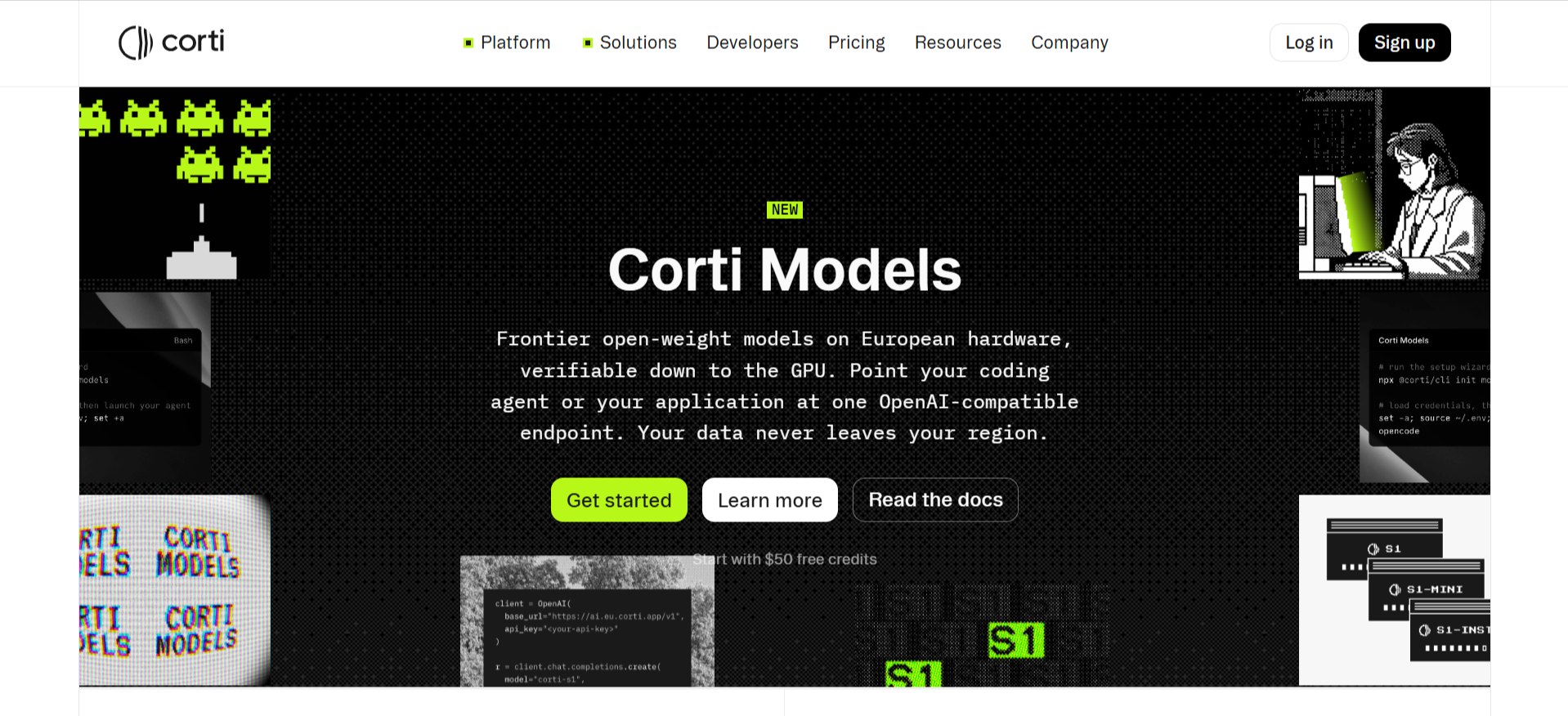
Corti was founded in Copenhagen in 2016 to help emergency dispatchers identify cardiac arrests during live calls. As per Corti, its models are trained on medical data and built to understand clinical speech from the start.
In July 2025, Corti launched what it describes as Europe’s first sovereign healthcare AI cloud. You can run it on your preferred cloud or on your own infrastructure without relying on a single hyperscaler.
Location & founding year
Copenhagen, Denmark, founded in 2016
Supported models of Corti
Symphony, which covers medical speech-to-text, documentation, coding and clinical reasoning through one API
Notable clients of Corti
NHS, with partnerships including Voicepoint and Wolters Kluwer Health
Aleph Alpha (Cohere)

Aleph Alpha was founded in Heidelberg in 2019 and later became part of Cohere in 2026. According to Aleph Alpha, its PhariaAI suite lets you run AI on your own infrastructure and trace answers back to the source content behind them.
That helps your compliance team explain how an AI-generated summary or recommendation was produced. Through Cohere, you can also use a BAA for custom model development and train private models on your own clinical data under HIPAA terms.
Location & founding year
Heidelberg, Germany, founded in 2019, now part of Toronto-based Cohere
Supported models of Aleph Alpha
The PhariaAI suite plus Cohere's Command, Embed, and Rerank models, with the North workspace for private deployments
Notable clients of Aleph Alpha
- Baden-Württemberg's state administration through the F13 assistant
- Oracle
- RBC
- Fujitsu
Scaleway

Scaleway launched in Paris in 2015 as part of Iliad Group. Its French ownership gives you more control over where your data is governed. Its HDS-certified GPU infrastructure is built for hosting health data in France. Scaleway also states that it does not reuse the prompts or outputs you send through its Generative APIs.
According to Scaleway, with Managed Inference, you can keep models inside your own private network and control who gets access. This supports the security and access safeguards expected in HIPAA-regulated environments.
Location & founding year
Paris, France, launched in 2015
Supported models of Scaleway
Mistral Medium 3.5 and Mistral Small 3.2, plus Pixtral, Voxtral, and Qwen3.5
Notable clients of Scaleway
Galeon, which hosts hospital EHR data on Scaleway's HDS-certified cloud
Use cases for HIPAA-compliant AI tools in healthcare
Below are some use cases for HIPAA-compliant AI tools in healthcare, from clinical documentation and patient communication to prior authorization and medical coding.
Ambient Clinical Documentation
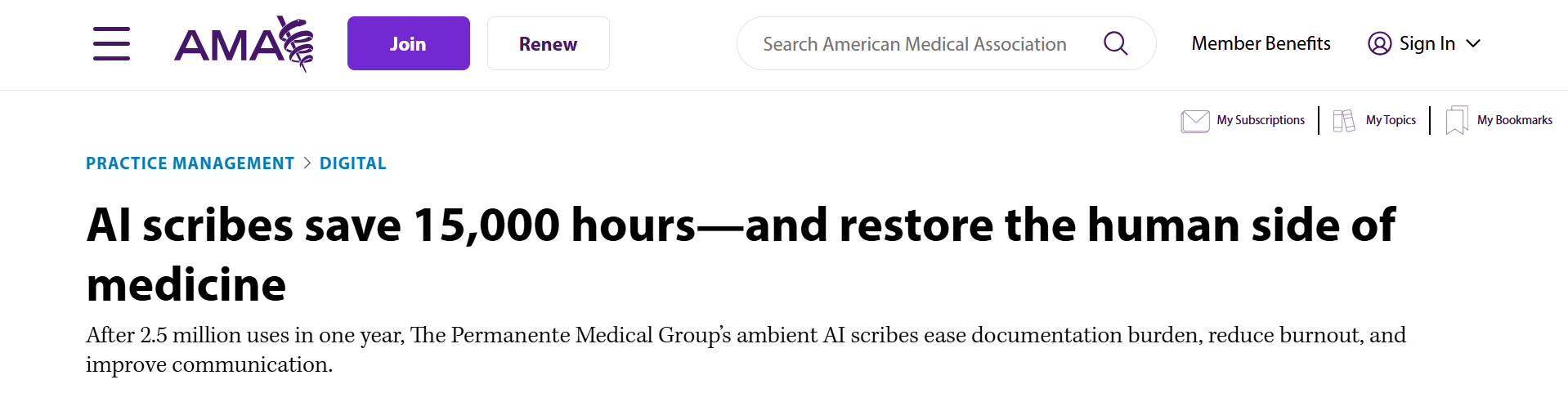
The Permanente Medical Group gave ambient AI scribes to its physicians in late 2023 and tracked the results across 2.5 million patient encounters. According to the AMA News Wire report on the follow-up study, the scribes saved an estimated 15,000 hours of documentation, which is around 1,800 eight-hour workdays.
Each of those encounters involved a recorded conversation full of diagnoses and medication details, so the audio handling had to hold up to HIPAA scrutiny. If you plan a rollout like this, build patient consent into the workflow from day one, because several California health systems now face class actions over visits recorded without it.
Drafting Replies to Patient Portal Messages
Stanford Health Care tested a HIPAA-compliant language model inside its EHR that drafted replies to patient portal messages for clinicians to review. HealthDay's study summary reports that the 162 participating clinicians found the drafts easy to adopt and showed lower burden and burnout scores after the pilot.
The Stanford team pointed out that portal messages climbed 157% during the pandemic, so even partial help with the inbox gives your clinicians real time back. Clinicians reviewed every draft before it reached a patient, which kept a human in charge of the final answer.
Prior Authorization and Denial Prevention
Community Medical Centers in Fresno started running AI checks on claims before submission to catch missing prior authorizations and coverage problems. As HFMA's revenue cycle coverage explains, the health system saw a 22% drop in prior authorization denials from commercial payers within six months, along with an 18% drop in denials for services not covered.
The team also saved 30 to 35 hours a week on appeals without hiring more staff. Claims data carries names, diagnoses, and procedure codes, so any AI touching it has to meet the same HIPAA bar as your EHR.
Automated Medical Coding
Mercyhealth, which runs six hospitals across northern Illinois and southern Wisconsin, moved high-volume coding across 10 specialties to an autonomous AI platform. Healthcare Finance News reported that the system saw a 5.1% revenue increase and cut its days in accounts receivable in half, while coders moved on to more complex claims.
Coding pulls from the full clinical note, so the platform needs the same encryption and audit controls you'd expect from any system holding complete patient charts.
Build HIPAA-Compliant AI on infrastructure you control with Prem AI
Healthcare AI needs more than a private-data policy when your applications process patient records or clinical conversations. Your technical team should be able to control where that processing happens and verify the environment behind it.
With Prem AI, you get both managed private inference and deployment on infrastructure you control.
Prem Enclave protects model execution with hardware-isolated confidential computing, while cryptographic attestation gives you evidence about the environment processing each request. You can use the Enclave API when you want private model access without managing GPUs. Prem Enclave also gives you an on-premises or VPC path when sensitive healthcare workloads need to remain inside your infrastructure.
If you are planning a private healthcare AI deployment, contact our sales team or email us at sales@premai.io and our team can help you choose the right setup for your workloads.
FAQs About HIPAA-Compliant AI Platforms for Healthcare in 2026
What makes an AI tool HIPAA compliant?
A HIPAA-compliant AI tool needs strong safeguards for protecting PHI throughout the workflow. You should check how the vendor handles encryption and access control. Audit logs and data retention policies also matter. If the vendor processes PHI for your organization, a Business Associate Agreement may be required. You should also confirm which products and services the agreement covers.
Do you need a BAA when using AI with patient data?
You may need a Business Associate Agreement if an AI vendor handles PHI for your organization. The agreement sets out how that vendor must protect the data. You should confirm whether the BAA covers the exact AI service you plan to use. Some agreements may not cover every model or deployment option, so check the scope before sending patient data.
Can you use generative AI with protected health information?
Yes, you can use generative AI with PHI when the right safeguards are in place. You should know where the data is processed and how long it is retained. It is also important to check whether another model provider can access it. Your team should review the vendor's security controls and contractual terms before using the tool with patient information.
Why does data residency matter for healthcare AI?
Data residency tells you where your patient information is stored and processed. This matters when your organization has requirements around privacy or data sovereignty. You may need to keep data within a specific country or region. In that case, look for platforms that support regional hosting or private cloud deployment. On-premises infrastructure may also give you more direct control.
Is private AI better for healthcare organizations?
Private AI gives you more control over how sensitive healthcare data is processed. You may be able to keep inference inside your own VPC or infrastructure. This is useful when your workflows involve clinical notes or patient records. It can also reduce exposure to external AI providers. Your team still needs the right access controls and security policies around the system.
What is zero data retention in healthcare AI?
Zero data retention means the provider does not keep your prompts or model responses after processing finishes. This can reduce the amount of patient data left with an external provider. You should still ask how the vendor handles logs and uploaded files. Backups may also follow different retention rules. Check each part of the service before relying on a zero-retention claim.
How should you choose a HIPAA-compliant AI platform for healthcare?
Start with the healthcare workflow you want to support. Then look at the type of patient data the AI will receive. Compare BAA availability and deployment options next. You should also review encryption and data residency. Retention policies matter as well. If infrastructure control is your priority, private or sovereign AI platforms may be a better fit for your organization.