
Context Compounding: Why Enterprise AI Should Get Smarter Every Time Your Team Uses It
Every day, your team asks AI the same questions, refines prompts, solves familiar problems, and makes important decisions. By the next day, your AI starts from scratch again.
That happens because most enterprise AI systems don't remember what your enterprise has already learned. Every new conversation begins with limited context, even when someone across your enterprise solved the same problem before.
Anthropic's own research points to the same underlying problem. Their applied AI team has documented what they call "context rot," the finding that simply feeding a model more information doesn't mean better recall. A model's ability to accurately use context actually degrades as that context grows, since attention is a finite, not infinite, resource. More context isn't the same as smarter context.
Over time, that becomes an expensive knowledge gap. Valuable expertise stays locked inside chats, documents, and workflows instead of becoming part of your AI.
This is where context compounding comes in. Instead of treating every interaction as temporary, your AI builds a compounding memory of trusted knowledge from previous work. The more your team uses it, the smarter it becomes.
Let's explore what context compounding means, how it works, and why your enterprise should treat it as a core capability for building smarter AI.
What context compounding means in Enterprise AI
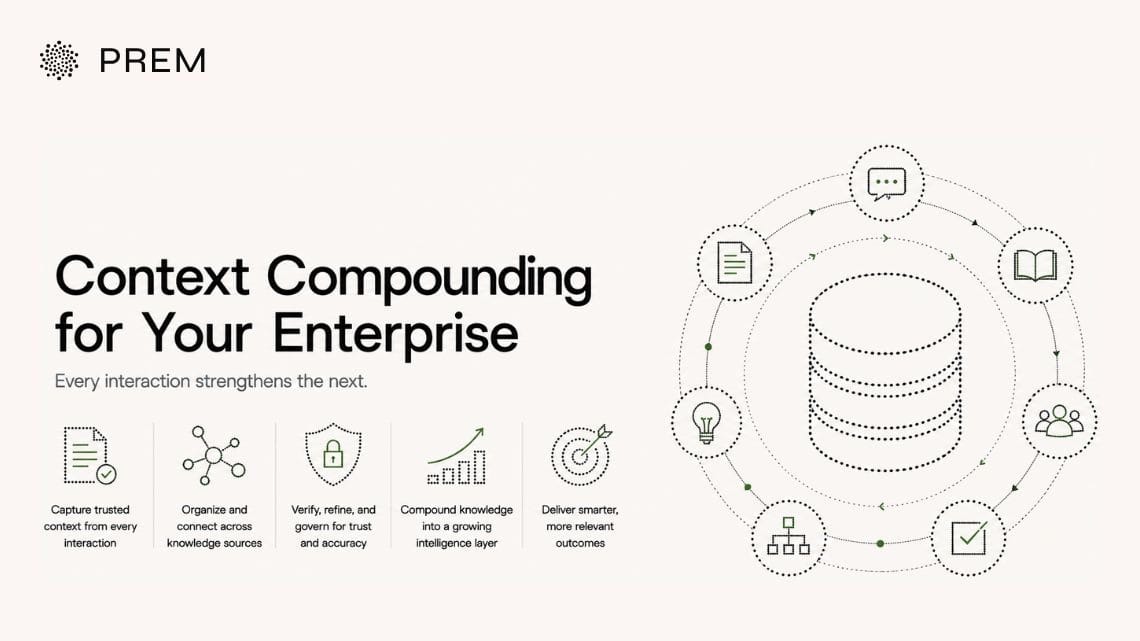
Context compounding is the process of continuously building on the knowledge your enterprise creates every day. Instead of treating each AI interaction as a separate event, your AI captures trusted context that can improve future responses and decisions.
That context can come from many places. It includes approved workflows, successful prompts, internal documentation, business decisions, domain expertise, and the corrections your team makes while working with AI. Together, these become a growing knowledge foundation.
As that knowledge grows, so does the value of your AI. Rather than relying only on a model's pre-trained knowledge, your AI can draw from what your enterprise has already learned, making every future interaction more informed and relevant.
This is what makes context compounding different from simply having a larger context window or storing documents in a knowledge base. It focuses on helping your enterprise preserve, refine, and reuse trusted knowledge over time, so every verified interaction strengthens the next one.
The Enterprise AI memory gap
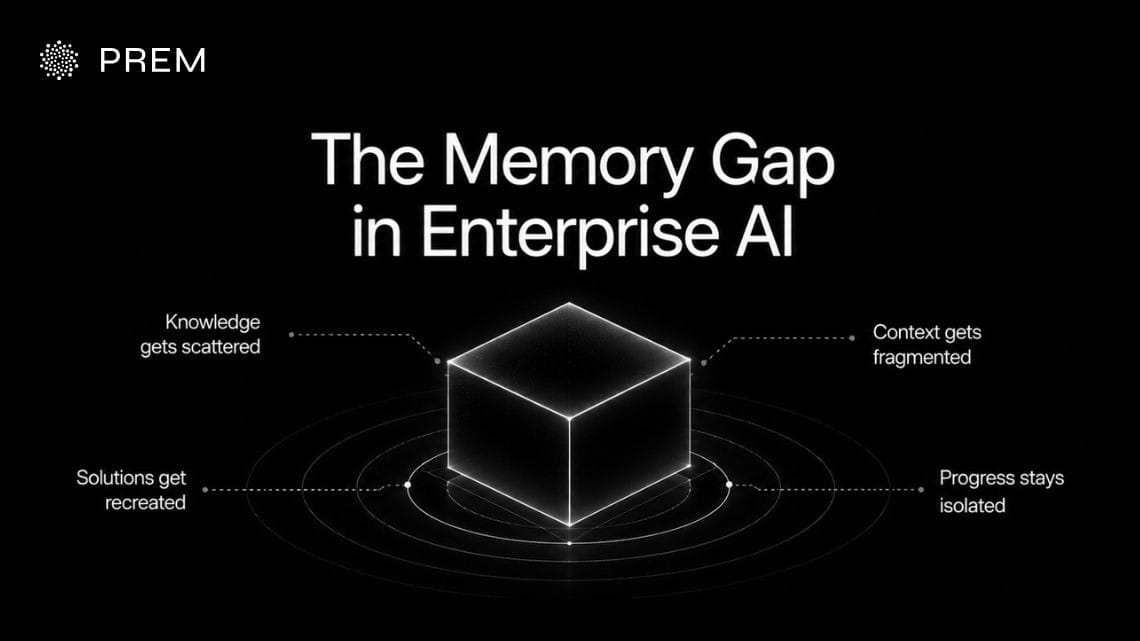
Most enterprise AI tools are designed to answer questions, not build lasting knowledge. Even when your team solves a complex problem, improves a workflow, or discovers a better way of working, that progress often stays inside a single conversation.
As a result, the same knowledge gets recreated again and again. Different teams write similar prompts, solve the same problems, and repeat decisions that your enterprise has already made instead of building on them.
This challenge becomes even harder as work grows more fragmented. Microsoft's 2025 WorkLab Special Report found that employees are interrupted every two minutes on average by meetings, emails, or messages during the workday. As context gets scattered across conversations and tools, preserving and reusing enterprise knowledge becomes increasingly difficult.
The problem isn't that AI lacks intelligence. The problem is that it rarely remembers what your enterprise has already learned in a way that can be safely reused across future work.
Without a trusted memory layer, every interaction becomes an isolated event. That makes it harder for your AI to deliver consistent answers, preserve institutional knowledge, or improve with continued use.
How compounding actually works for your enterprise
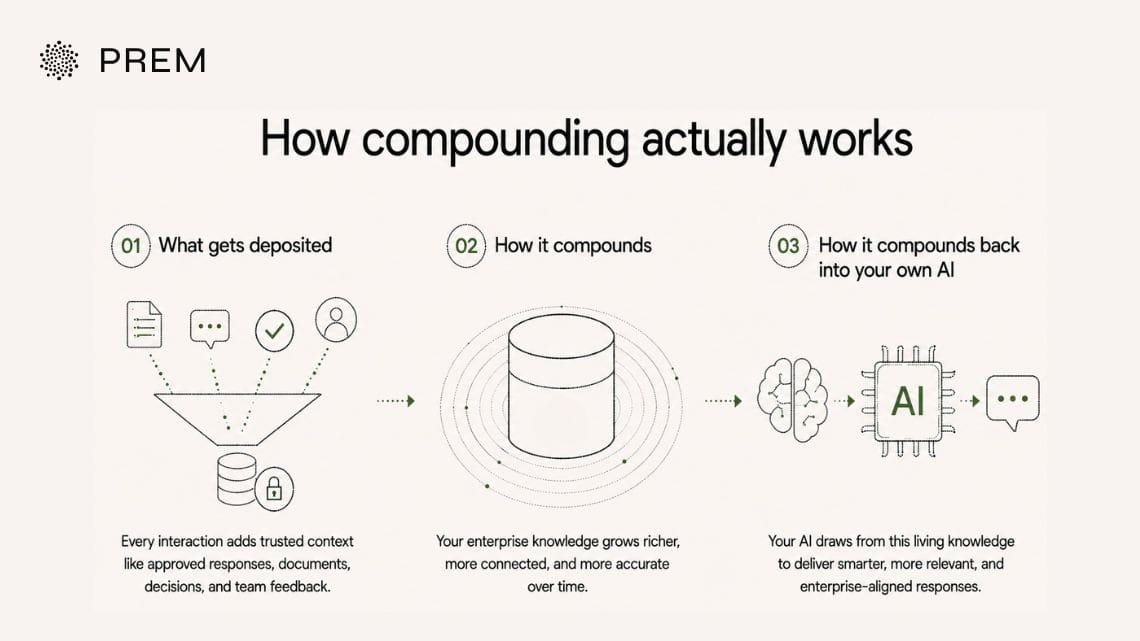
Context compounding doesn't happen automatically. Your enterprise needs a way to capture valuable knowledge, verify it, and make it available whenever AI is solving a similar problem in the future.
What gets deposited
Every successful interaction can contribute something valuable. That includes approved prompts, business decisions, workflow improvements, expert feedback, internal documentation, standard operating procedures, and the corrections your team makes while working with AI.
According to McKinsey, approximately 75% of the annual value generative AI can create comes from customer operations, marketing and sales, software engineering, and R&D. As these functions rely heavily on enterprise knowledge, preserving and reusing trusted context becomes essential for delivering consistent AI outcomes at scale.
Not everything should become part of your enterprise memory. Temporary conversations, unverified responses, and outdated information should be filtered out so only trusted knowledge continues to grow.
How it compounds back into your own AI
Once trusted knowledge has been captured, it becomes part of your enterprise's compounding memory, something your AI can reference and build on during future interactions. Instead of relying only on its original training, it can also use what your enterprise has already approved and learned.
That means every verified workflow, correction, and business decision strengthens future responses. Over time, your AI becomes more accurate, more consistent, and better aligned with how your enterprise actually works, without your team having to teach it the same lessons again.
Industry adoption is moving in the same direction. Gartner predicts that by 2028, 80% of generative AI business applications will be developed on existing enterprise data management platforms, reducing application delivery complexity and time by up to 50%. Gartner also highlights retrieval-augmented generation (RAG) as a key approach for connecting AI with trusted enterprise knowledge, making context and traceability central to enterprise AI.
Why context can't compound safely without ownership and verification
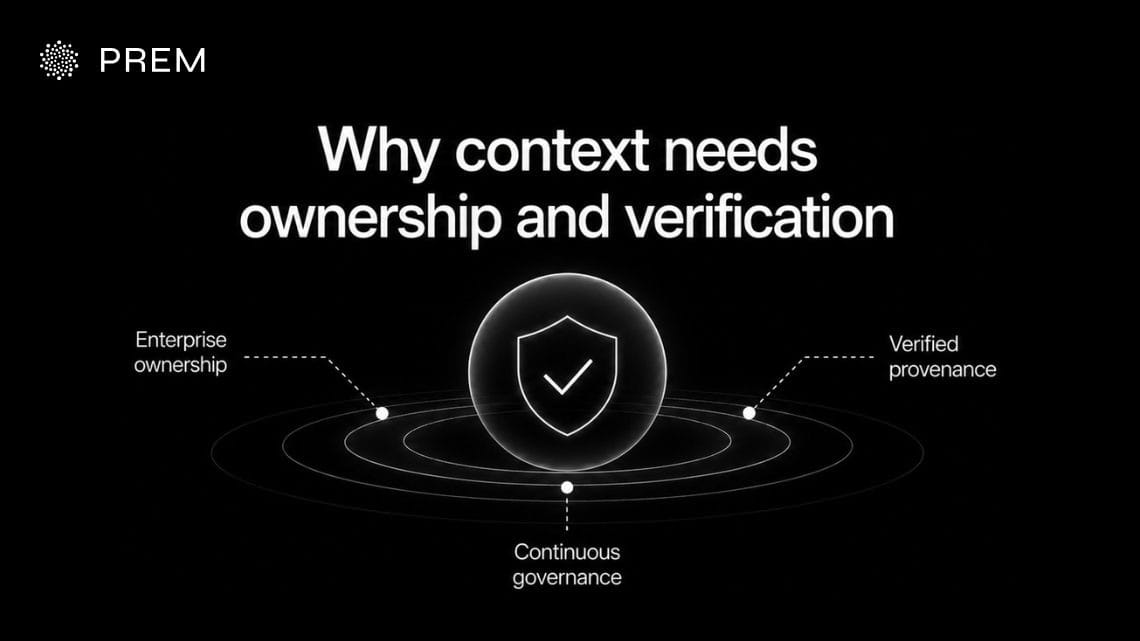
The more knowledge your AI reuses, the more important it becomes to know where that knowledge came from. If outdated, incorrect, or sensitive information enters your enterprise memory, your AI can continue repeating those mistakes at scale.
That's why context compounding depends on ownership and verification. Your enterprise should decide what knowledge becomes part of its long-term memory, who can approve it, and how it is updated over time. Without those controls, reusable context becomes a governance risk instead of a competitive advantage.
The concern is becoming widespread as enterprises scale AI. Deloitte's State of Generative AI in the Enterprise (2024 Q4) found that managing risk and regulatory compliance are the top two concerns for enterprises expanding their generative AI strategies. As enterprise memory grows, proving where knowledge came from and how it is governed becomes just as important as generating accurate responses.
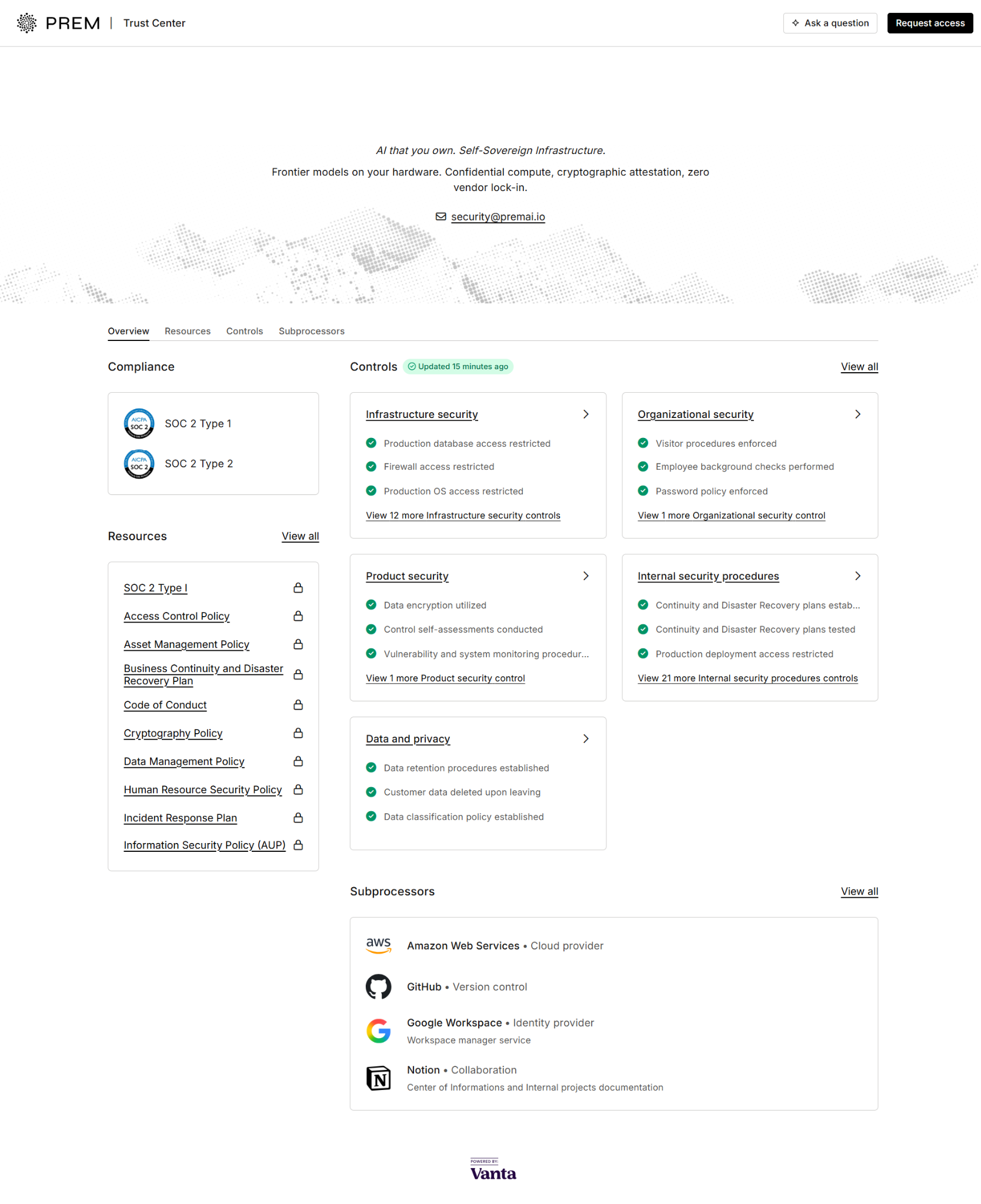
This is exactly the challenge Prem Enclave is designed to address. Instead of relying on trust alone, it gives your enterprise infrastructure that allows your security team to independently verify ownership and data protection.
You don't have to take our word for it either. Visit Prem's Trust Center to see exactly how your data stays protected, how ownership is verified, and how our security controls hold up on their own.
Strong ownership also protects your enterprise's intellectual property. The knowledge your team creates should remain under your control, not become part of someone else's AI model or training data.
Why context compounding is worth protecting
Every approved workflow, business decision, and lesson learned represents knowledge that your enterprise has already invested time and expertise to create. Protecting that knowledge means future teams can build on it instead of recreating it.
You can already see this play out publicly. In a recent interview, Stack Overflow CEO Prashanth Chandrasekar described ChatGPT's rise as "a code red situation" and "an existential moment" for the platform, one of the largest programming knowledge bases ever built.
Even as 80% of its users say they want to use AI, according to Chandrasekar, the trust in AI-generated answers remains low; only around 29% actually trust AI to do useful work, and the company had to restructure around the shift. The knowledge itself didn't disappear, but the incentive to keep contributing to something the whole community could reuse did.
As your enterprise memory grows, your AI becomes more consistent across departments. Teams spend less time searching for information, repeating prompts, or explaining the same business context, allowing them to focus on higher-value work.
Over time, context compounding turns AI from a tool that simply answers your questions into a strategic knowledge asset that keeps learning and improving with your enterprise.
How to start building context compounding in your enterprise
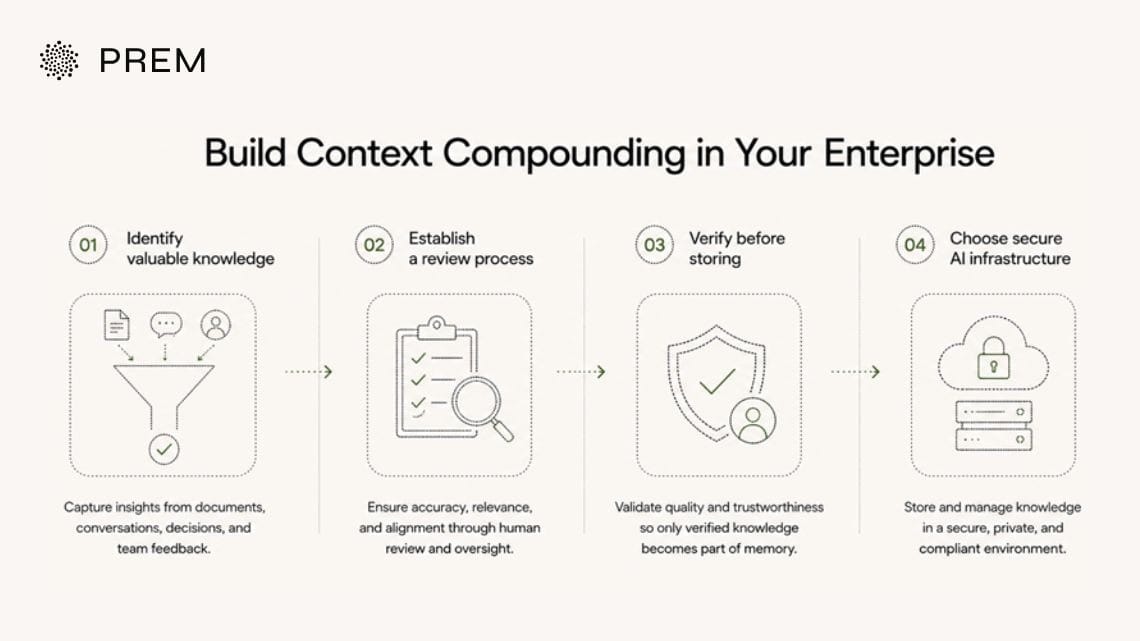
Building context compounding doesn't require capturing every AI interaction. You can start by identifying the knowledge that delivers lasting value, such as approved workflows, internal documentation, standard operating procedures, and expert decisions that your team uses repeatedly.
Next, establish a review process so trusted knowledge can be verified before becoming part of your enterprise memory. Clear ownership, governance policies, and regular updates help ensure that your AI continues learning from accurate and relevant information.
And then, choose private AI infrastructure that allows your enterprise to securely retain, govern, and reuse its own knowledge. When ownership, verification, and enterprise memory work together, context compounding becomes a long-term capability instead of a one-time feature.
Prem AI is built around independently verifiable security and governance, giving enterprises confidence in how their AI infrastructure protects sensitive data and enforces control.
How Prem AI supports context compounding
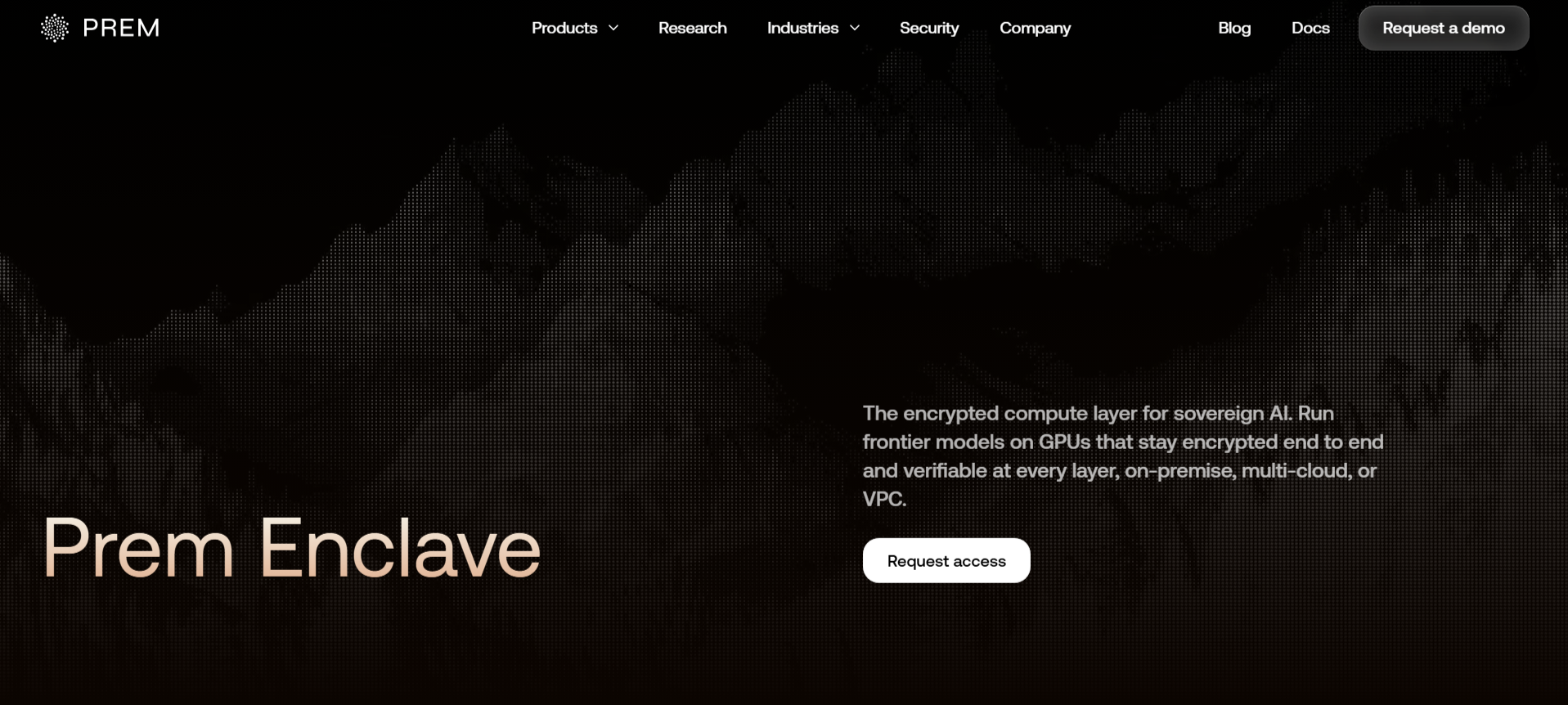
Building context compounding requires more than deciding what knowledge to keep. Your enterprise also needs infrastructure that securely captures, governs, and verifies enterprise knowledge as it grows.
Prem Enclave provides that foundation. Inference runs inside a hardware-isolated Trusted Execution Environment (TEE), allowing your enterprise to retain ownership of its AI interactions, workflows, and institutional knowledge without exposing them to external providers. Cryptographic attestation provides verifiable proof that your data remains protected throughout the inference process, ensuring 100% private ai for your enterprise.
Enclave also supports zero data retention (ZDR), ensuring your prompts and enterprise data are never stored or used to train third-party models. As your team creates new knowledge, your enterprise can securely retain and reuse it while maintaining full control over how it is governed.
The result is context compounding that your enterprise can trust. Instead of building valuable AI knowledge on infrastructure you cannot verify, your enterprise continuously strengthens its own AI with knowledge that remains private, governed, and under your control.
Build Context Compounding into enterprise AI with Prem AI
Compounding context is valuable exactly because it's sensitive, and it's sensitive exactly because it's valuable. You can't protect one without the other.
This is exactly the problem Prem AI is built to solve. Private, verifiable, and compounding are the three commitments behind everything Prem AI builds, and Enclave is where that shows up directly for context compounding every correction, workflow, and decision your team makes accumulated inside infrastructure you control, not a third-party vendor's next model update.
If you're ready to build enterprise AI that actually gets smarter with your team instead of forgetting everything overnight, Prem AI can help. Contact our sales team to discuss your enterprise requirements, or email us at sales@premai.io.
FAQs about context compounding in Enterprise AI
What is context compounding in AI?
Context compounding is when every interaction with an AI system adds to what it understands about your enterprise, so the system builds on prior work instead of starting from scratch with each new session.
Why doesn't most enterprise AI compound context today?
Most AI tools are built stateless by default, treating each session as a fresh start. That works for general-purpose consumer tools serving millions of unrelated users, but it means your enterprise re-explains the same context repeatedly instead of the system retaining it.
What kind of information actually compounds in an AI system?
Corrections your team makes to outputs, decisions about how specific requests should be handled, refined workflows, and institutional knowledge like vendor relationships or client preferences. None of it is exotic. It's the ordinary detail of how your business runs.
Why is compounding context risky if it isn't done carefully?
Reuse means exposure. If an AI system accumulates sensitive information about your clients, pricing, or strategy, that information has to live somewhere. If it's stored in a vendor's infrastructure without verification, you're trusting a policy rather than a guarantee.
How does context compounding relate to enterprise AI memory?
They describe the same underlying idea from different angles. Memory refers to the system retaining information across sessions. Compounding refers to retained information actively making future interactions better, not just longer.
What should I check before adopting an AI system meant to scale across my organization?
Ask where the accumulated context actually lives and who can verify that. If the answer is a policy statement instead of an architectural guarantee, treat that as an open question rather than a settled one.
How is context compounding different from a longer AI context window?
A larger context window lets a single conversation hold more information at once. Compounding is about information persisting and improving future interactions across separate sessions entirely, not just within one long conversation.
Why does ownership matter for compounding context?
If your institutional knowledge accumulates inside infrastructure a vendor owns, that vendor's system gets smarter across every customer's usage, not specifically yours. Ownership means the value your team builds concentrates inside your own organization instead.
Can compounding context work without giving up privacy?
Yes, but only if the underlying infrastructure is built for it. That means verifiable data custody, so accumulated context stays inside your own boundary, and you can independently confirm it, rather than taking a vendor's word for where the data lives.
See how Prem AI can help your enterprise build private AI without compromising control over your data and infrastructure. Contact our sales team, or email us at sales@premai.io.