Best Enterprise AI Tools in 2026: Beyond ChatGPT for Private, Secure & Sovereign AI
In January 2026, Politico reported that Madhu Gottumukkala, the acting director of the U.S. Cybersecurity and Infrastructure Security Agency, had uploaded sensitive government documents to public ChatGPT. According to Politico’s post on X, the uploads triggered internal security alerts and a review by the Department of Homeland Security.
Trump’s acting cyber chief uploaded sensitive files into a public version of ChatGPT https://t.co/mH2UUnOnhn
— POLITICO (@politico) January 27, 2026
The incident raised a much bigger concern. If sensitive data of enterprise or government data is shared with an AI tool run by an outside provider, organizations may have limited control over where that data goes or how it is handled.
That is why more enterprises in banking, healthcare, government, and other sensitive sectors are looking at AI tools they can run and manage themselves and rely on for sensitive data.
These platforms will give your enterprises more control over your data, infrastructure, and security instead of relying only on a provider’s privacy promises.
Why enterprises are looking beyond ChatGPT and Claude
Let's look at some of the main factors why enterprises are moving beyond ChatGPT for Private, and Sovereign AI.
Limited infrastructure control
With ChatGPT, the underlying infrastructure is managed by OpenAI. Enterprises that want deeper control over the compute environment, network configuration, or security setup would prefer enterprise tools which offer greater infrastructure flexibility and security configurations.
Data sovereignty and residency requirements
For some enterprises, it matters where data is processed and which jurisdiction it falls under. This can make region-specific or sovereign AI infrastructure a better fit than a globally managed service.
As Data Lawgy's newsletter has tracked, the EU AI Act's obligations for high-risk systems are set to apply from August 2026, layering a hard compliance deadline on top of GDPR's existing cross-border transfer rules. For enterprises operating in or serving Europe, that timeline turns data residency into a planning decision to make now, not something to revisit later.
Sensitive enterprise workloads
Enterprise AI often works with sensitive data such as internal documents, customer information, financial records, and proprietary business data. When this information enters an AI workflow, enterprises need stronger confidentiality and protection against unnecessary data exposure.
Private or on-premise deployment
Some enterprises want AI to run inside their own VPC, private cloud, or on-premise infrastructure. That gives them more control over where workloads are processed and how data moves through the system.
Bring Private AI Into Your Enterprise Workflows
Give your teams a private AI workspace with 100% control over data, models, integrations, and how AI fits into everyday work.
Get started with FlusoGreater control over models and inference
Enterprises may also want to choose their own models, use open-source options, and verify how inference is performed. This provides more flexibility than relying on a single managed AI environment.
Jensen Huang made this case directly on X, sharing a letter signed by NVIDIA, Microsoft, Meta, and dozens of other companies arguing that open models let enterprises control their own data, adapt models to their own needs, and deploy wherever their business requires.
For my first post, I’m sharing a letter @NVIDIA signed on why open models matter.
— Jensen Huang (@JensenHuang) July 24, 2026
AI will transform every industry, power every company, and be built by every country.
Open models strengthen safety and cybersecurity, accelerate innovation and diffusion, and enable sovereignty.… pic.twitter.com/t02bi51N4C
That is the same reasoning showing up in procurement conversations across banking, healthcare, and government right now.
Best Enterprise AI Tools in 2026 for Private, Secure & Sovereign AI
The table below compares leading enterprise AI tools based on privacy, security, deployment control, and sovereignty, so you can quickly see where each enterprise AI tool fits.
Fluso by Prem AI
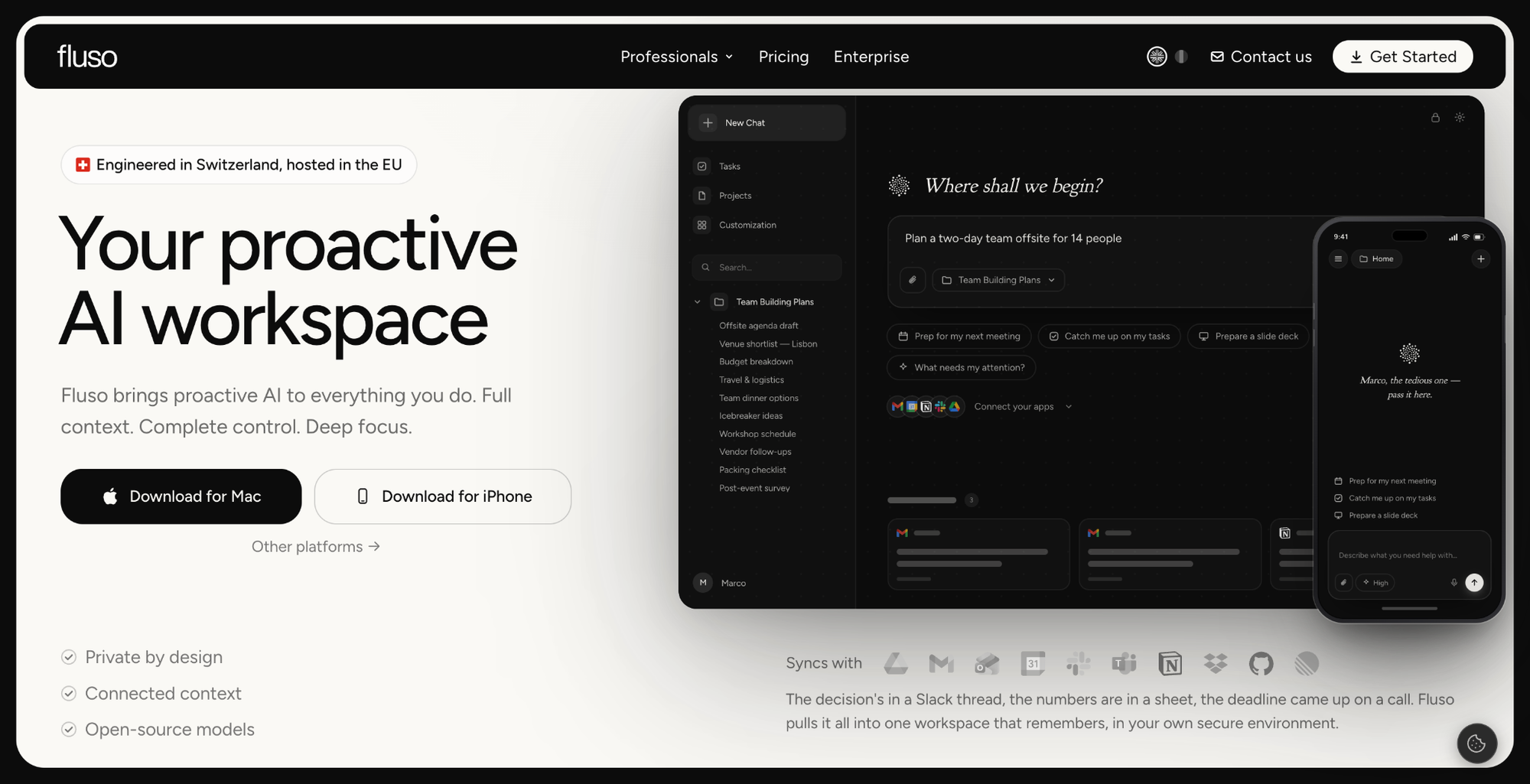
Fluso is a private, agentic and proactive AI workspace built by Prem AI, a Switzerland-based AI infrastructure company focused on sovereign and confidential AI. For enterprises looking beyond ChatGPT and Claude, Fluso offers a private, secure and controlled way to use AI across business workflows.
Introducing the world's most Proactive AI Workspace - ciao Fluso 👋 pic.twitter.com/0zARljJBnw
— Fluso (@fluso_ai) June 17, 2026
Fluso runs on open-source models and Prem’s private infrastructure, so your teams can automate work, find information, and use AI inside one governed environment. It’s designed around the needs of enterprises that want control over how AI is deployed and how sensitive data is handled.
You can run Fluso in Prem AI’s cloud, your own VPC, or on-premise, while confidential computing and verifiable inference add an extra layer of protection for sensitive workloads. This makes it a really good fit for teams that need privacy, data sovereignty, and tighter control over their AI environment.
How Fluso works differently for enterprise teams
Sovereign from the start
Fluso is built with EU-hosted infrastructure and a sovereignty-first setup, rather than treating data residency as an enterprise add-on.
One private workspace for everyday work
Fluso connects with tools such as Gmail, Google Drive, Slack, Teams, Notion, and Calendar, so your teams can work with company information without moving everything into one external search index.
Every tool on every app you connect now has its own setting: allow, ask, or deny. Fluso can read your inbox all day and still stop to ask before it sends anything as you. You are in charge of what it is allowed to do. pic.twitter.com/ICtdor6YCL
— Fluso (@fluso_ai) September 2, 2026
AI that can take action
Fluso does more than answer questions. It can work across connected tools, follow multi-step workflows, and assist with recurring tasks using context from your organization.
Integrations for enterprise teams
It supports core workplace tools and can help create documents, summarize meetings, manage communication, and keep track of ongoing work from one secure workspace.
Bring Private AI Into Your Enterprise Workflows
Keep sensitive business data within a private, governed AI workspace.
Get started with FlusoContext that carries across work
Instead of starting from zero with every prompt, Fluso can retain useful organizational context so its assistance becomes more relevant as your teams continue working.
Confidential and verifiable inference
Fluso runs on Prem AI’s confidential infrastructure, where inference is designed to be encrypted and verifiable, giving enterprises greater visibility into how sensitive AI workloads are processed.
GLM 5.2 has been available in Fluso since early July.
— Prem (@premai_io) July 24, 2026
When you turn on confidential mode, the model runs entirely through Prem's confidential compute infrastructure.
End-to-end encrypted inference, nothing leaving the private path with verifiable zero data retention
Pricing of Fluso
Fluso offers custom pricing plans for enterprises.
Mistral AI (Vibe, formerly Le Chat)
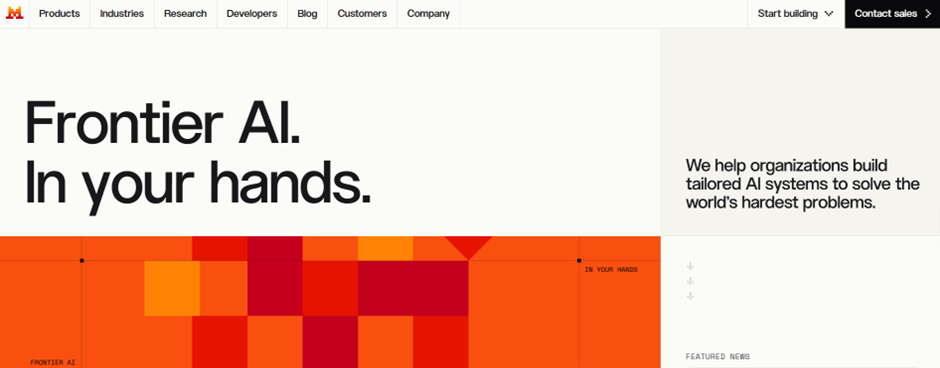
Mistral AI was founded in April 2023 by Arthur Mensch, Guillaume Lample, and Timothée Lacroix with a simple idea: enterprises should be able to use powerful AI without sending their data outside the EU.
By default, Mistral processes requests through its EU infrastructure. It also offers open-weight models that you can download and run on your own systems if you want more control over your data and deployment.
Mistral also comes with more than 40 ready-to-use integrations for platforms such as Snowflake, GitHub, and Atlassian. This makes it easier for your engineering team to connect Mistral with the tools you already use without having to build every integration from scratch.
Location and founding year
Paris, France and founded in April 2023.
Mistral AI pricing
Mistral AI starts free and moves to Pro at $14.99 a month or Team at $24.99 a seat. If your enterprise needs full private deployment or custom models, you will need to talk to Mistral's sales team for a quote.
Notable clients of Mistral AI
BNP Paribas, AXA, Stellantis, SAP, Orange
Dust
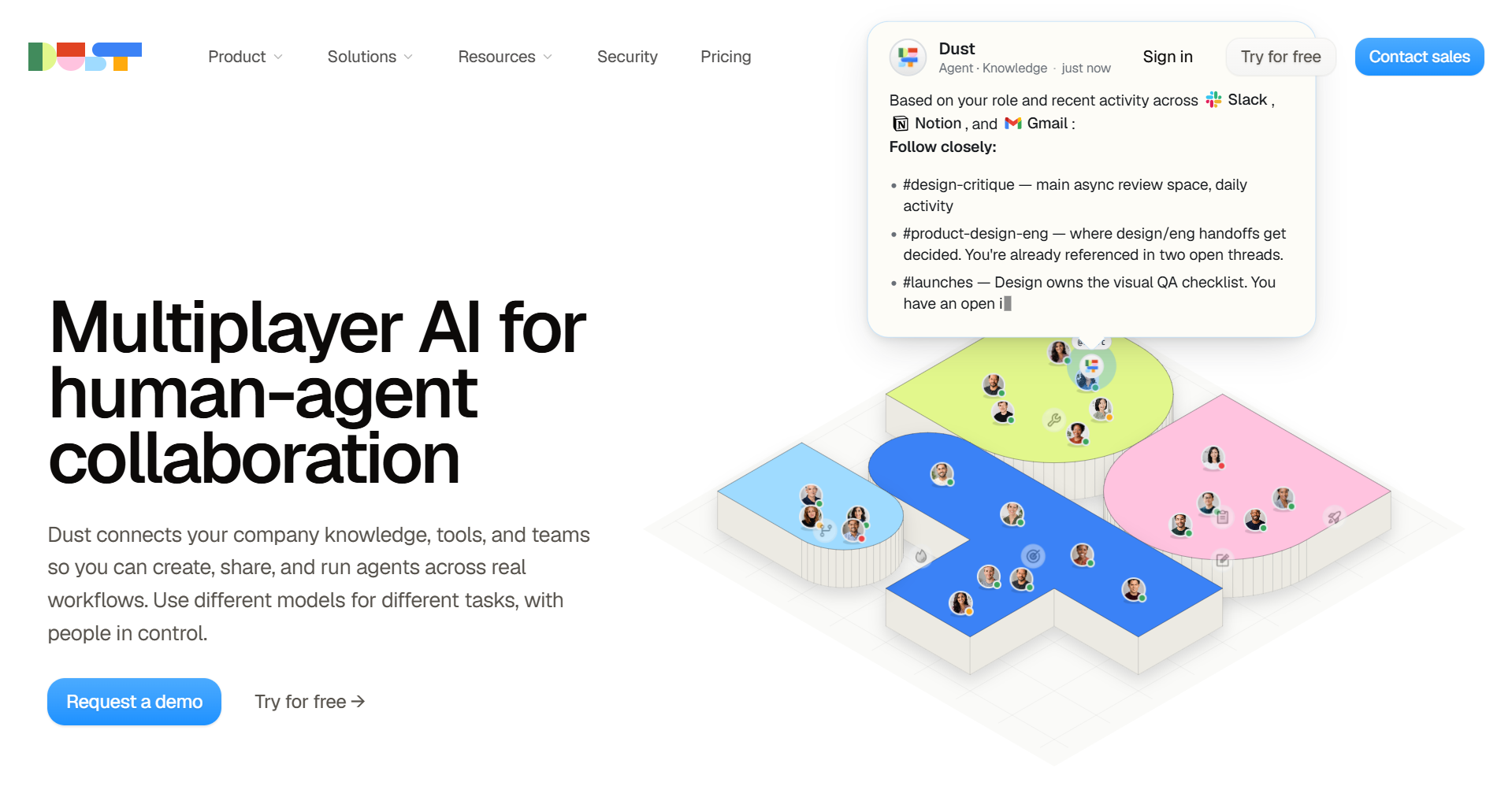
Dust was founded in Paris in 2023 by Stanislas Polu and Gabriel Hubert. It helps enterprises create and share multiple AI agents, with each agent designed for a different task or team.
Dust lets your teams create and share multiple AI agents instead of relying on just one assistant. Each agent can connect to your company’s knowledge and use the AI model that best fits its task.
Location and founding year
Paris, France and founded in 2023.
Dust pricing
Dust runs from a free tier through Pro at around $30 a seat a month, Max at $150, and custom Enterprise plans with SSO and single-tenant hosting for larger deployments.
Connect AI to the Tools Your Teams Already Use
Bring Gmail, Drive, Slack, Teams, Notion, and more into one AI workspace.
Get started with FlusoNotable clients of Dust
Qonto, Alan, Pennylane, Doctolib, Malt
Aleph Alpha (PhariaAI)
Aleph Alpha was founded in Heidelberg, Germany, in 2019 by Jonas Andrulis and Samuel Weinbach. Aleph Alpha platform focuses strongly on transparency, allowing you to trace AI-generated answers back to their original sources. This makes it easier for compliance teams to verify where the information comes from.
Aleph Alpha runs on German-operated infrastructure without relying on US cloud providers. That is one reason it has been used for government and offline deployments where keeping data under European control matters.
In April 2026, Aleph Alpha merged with Cohere, but PhariaAI continued running on the same German infrastructure. If your enterprise was already using this platform, that meant the hosting setup, jurisdiction, and existing government work stayed in place through the transition.
Location and founding year
Heidelberg, Germany and founded in 2019.
Aleph Alpha pricing
Aleph Alpha provides custom pricing for enterprises.
Notable clients of Aleph Alpha
Schwarz Group (Lidl and Kaufland), German federal ministries, Government of Baden-Württemberg, Government of Bavaria, HPE
LightOn (Paradigm)
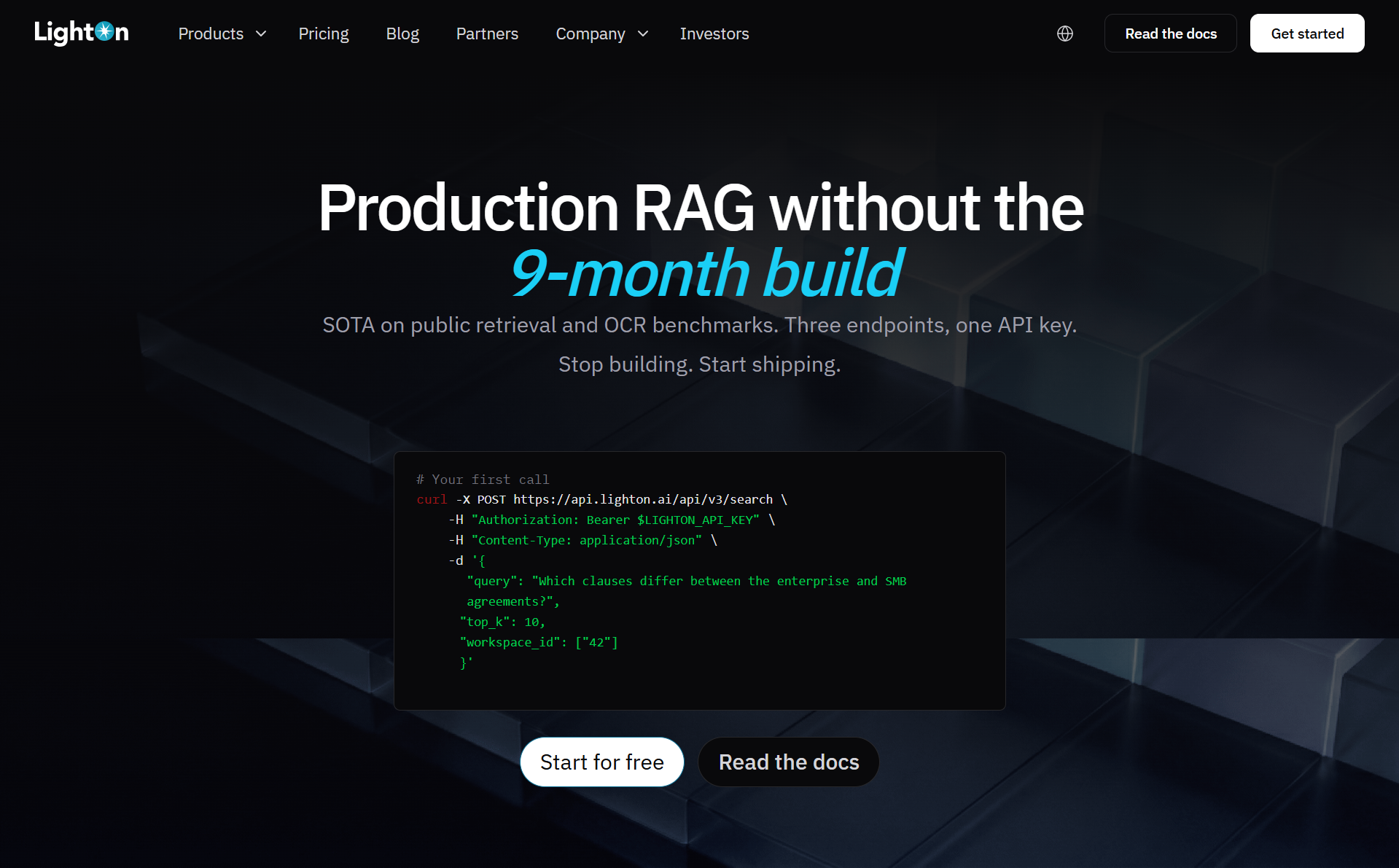
LightOn was founded in Paris in 2016 by Igor Carron, Laurent Daudet, Florent Krzakala, and Sylvain Gigan. In November 2024, it became the first European generative AI company to go public, listing on Euronext Growth.
LightOn’s Paradigm platform runs directly on your own infrastructure instead of using LightOn’s cloud. This makes it useful for defense and industrial organizations that need to keep sensitive data completely inside their own systems. If your enterprise needs generative AI without sending data to an external server, Paradigm is designed for that. It also includes built-in search across your own documents.
Move Your Enterprise AI Beyond ChatGPT
Use AI built around your workflows, enterprise data, and connected tools.
Get started with FlusoLocation and founding year
Paris, France and founded in 2016.
LightOn pricing
LightOn licenses Paradigm rather than metering it by usage, and pricing is quoted individually based on the infrastructure and scale of your deployment needs.
Notable clients of LightOn
Sodern (Ariane Group), CNES (the French space agency), Safran, DGFIP (the French tax authority), ENS Paris-Saclay
Fluso: Best enterprise AI tool for private, secure & sovereign AI
If you’re choosing an AI tool for your enterprise, privacy and control should be part of that decision from the start. You need to know where your data goes, how it is handled, and how much control you have over the AI environment.
With Fluso by Prem AI, you get a private AI workspace where you can keep more control over your data, choose how you deploy it, use open-source models, connect your existing tools, and handle sensitive AI workloads more securely.
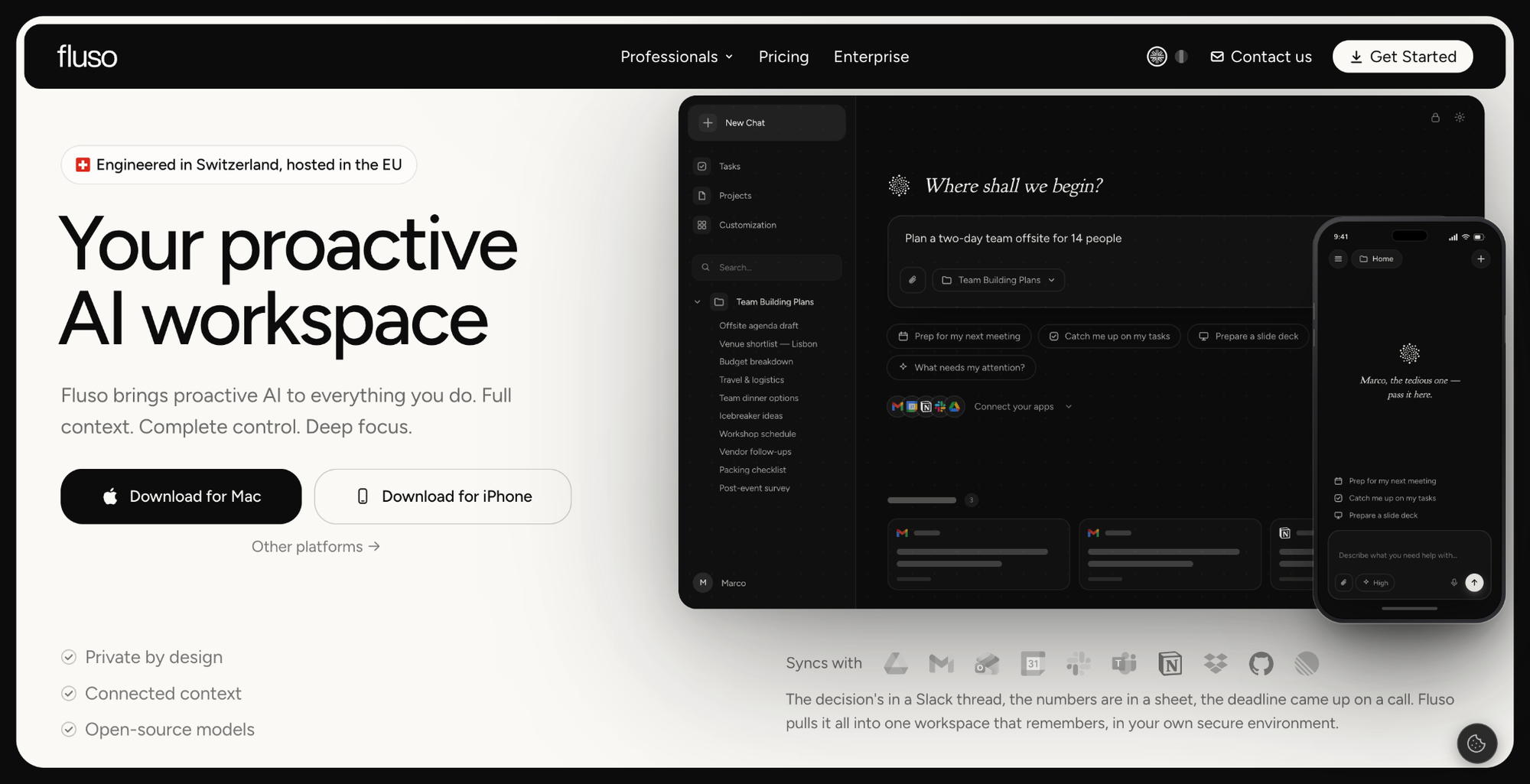
Your teams can work across existing tools, automate recurring tasks, and use sensitive company data with stronger privacy controls.
For enterprises that want AI without giving up control, Fluso offers a more private and sovereign way forward. To get a custom Fluso demo for your enterprise, contact our sales team or email us at sales@premai.io and we can help you adapt enterprise AI with 100% privacy and data sovereignty
FAQs about best enterprise AI tool beyond ChatGPT for private, secure & sovereign AI
How should enterprises compare ChatGPT alternatives for private AI?
Enterprises should compare platforms based on privacy architecture, deployment flexibility, data residency, retention policies, model support, security controls, scalability, and integration requirements. The best option depends on the organization’s risk profile and infrastructure needs.
Why are enterprises looking beyond ChatGPT for AI workloads?
Many enterprises need greater control over data residency, retention, infrastructure, and sensitive workloads. This is pushing organizations toward private and sovereign AI platforms that offer more deployment flexibility and stronger control over how enterprise data is processed.
What is the difference between private AI and sovereign AI?
Private AI focuses on keeping workloads inside controlled or isolated environments. Sovereign AI goes further by emphasizing control over data, infrastructure, models, governance, and deployment location, especially for regulated industries and organizations with strict data sovereignty requirements.
What should enterprises look for when choosing a secure AI platform?
Enterprises should evaluate data retention, deployment options, access controls, encryption, data residency, model flexibility, and auditability. They should also review how the platform handles inference, third-party dependencies, and sensitive data across the entire AI workflow.
Can enterprise AI platforms guarantee complete data privacy?
No platform should be assumed fully private based on marketing claims alone. Enterprises should verify data retention, logging, hosting, infrastructure access, and third-party dependencies. Features such as zero data retention, confidential computing, and on-premise deployment can provide stronger privacy protections.