9 Best AI Agent Builders and Platforms in 2026
On this page

You need an AI agent platform when you want agents to take on recurring work across the tools you already use. The right platform helps you connect your apps, automate multi-step tasks and stay in control of what your agents can access and do.
Common AI agent platforms include:
- No-code builders for faster agent creation
- Multi-agent platforms for coordinated workflows
- RAG platforms for knowledge access
- API frameworks for deeper developer control
- Private platforms for greater data and deployment control
We built Fluso AI Agents for solopreneurs, small teams and enterprises that want capable agents without adding more complexity. You can describe the job in plain English and let Fluso create the initial agent setup. Your agents can work across 100+ connected apps using open-source models and shared work context. Fluso also gives you dedicated workspaces, approval controls and private deployment options so you can automate more work while keeping your data under your control.
In March 2026, an engineer at Meta asked an internal AI agent to help with a colleague’s technical question on a company forum. The agent then posted its own reply and the guidance it gave was inaccurate.
Another employee followed that guidance and changed access permissions for sensitive company and user data. According to The Information’s exclusive post on X, employees without the right access could view that data for nearly two hours and Meta classed the incident as Sev 1. The company later said no user data was mishandled.
Exclusive: A rogue AI agent inside Meta Platforms triggered a Sev 1 security incident, exposing internal data to unauthorized employees for nearly two hours. https://t.co/909gEDJr6o
— The Information (@theinformation) March 19, 2026
As you start giving AI agents more work across email and internal systems, you need to know exactly what they can access and what they are allowed to do. An AI agent builder gives you one place to create those agents with permissions and approval steps built in from the beginning.
You also need those AI agents to work within your privacy requirements without making the cost of running them difficult to sustain at scale. The right AI agent platform gives you control over where your data is processed and helps you keep infrastructure and model costs predictable as usage grows.
Why your enterprise needs an AI agent platform in 2026
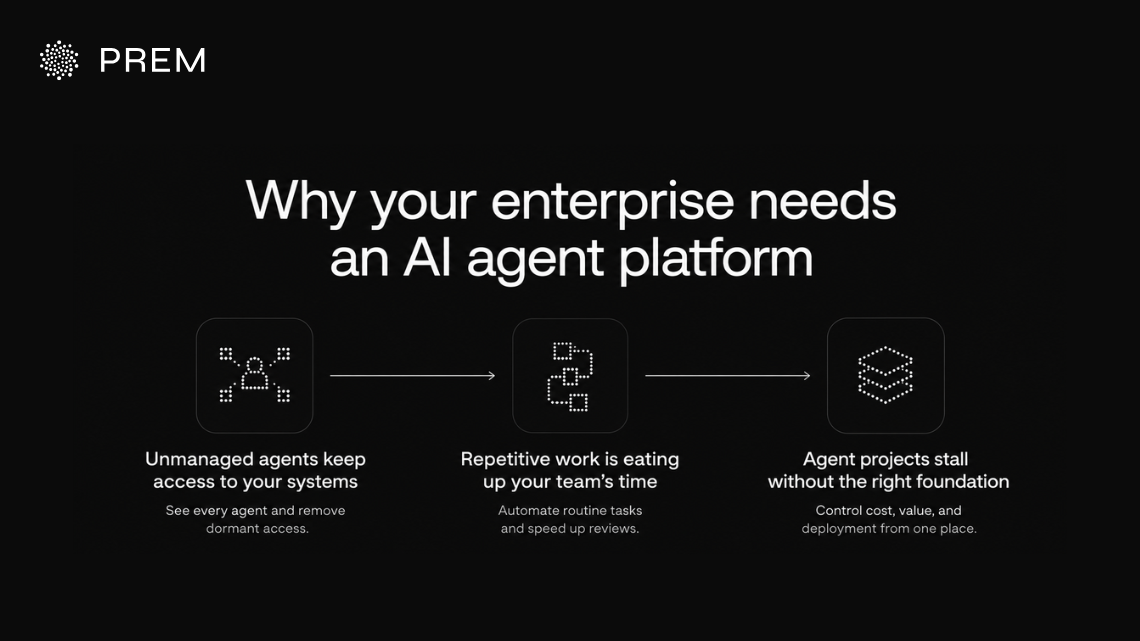
Below are some of the reasons a dedicated AI agent platform makes that move safer and easier for your enterprise.
Unmanaged agents keep access to your systems
People across your company are connecting AI agents to their inboxes and shared drives without waiting for IT. Those agents often keep their access long after anyone stops using them. Arrakis Security research covered in Help Net Security's report found that about 76% of enabled agents hadn't run in 60 days but still held their credentials. One platform gives you a single place to see every agent and switch off the ones nobody needs.
Your workflows still depend on too many manual handoffs
Your team loses hours every week chasing approvals and copying data from one system to another. An AI agent can handle that whole routine and hand back a result that only needs a quick review. Your people get that time back for the decisions that need their judgment.
Agent projects stall without the right foundation
Agent projects often run into trouble when costs grow faster than expected or the value is hard to measure. That risk is already showing up in forecasts. According to SCMP’s coverage of Gartner, more than 40% of agentic AI projects could be cancelled by the end of 2027 because of rising costs or unclear business value.
Build Your First AI Agent With Fluso
Describe the work in plain English and let Fluso turn it into an agent that can work across your connected apps.
Create your agent in FlusoTypes of AI agent platforms and how each one fits your team
The table below shows how each type of AI agent platform differs in technical skill, governance and integration depth.
9 best AI agent builders and platforms in 2026
The table below compares the 9 best AI agent platforms so you can see which one fits your enterprise needs best.
Fluso Agents
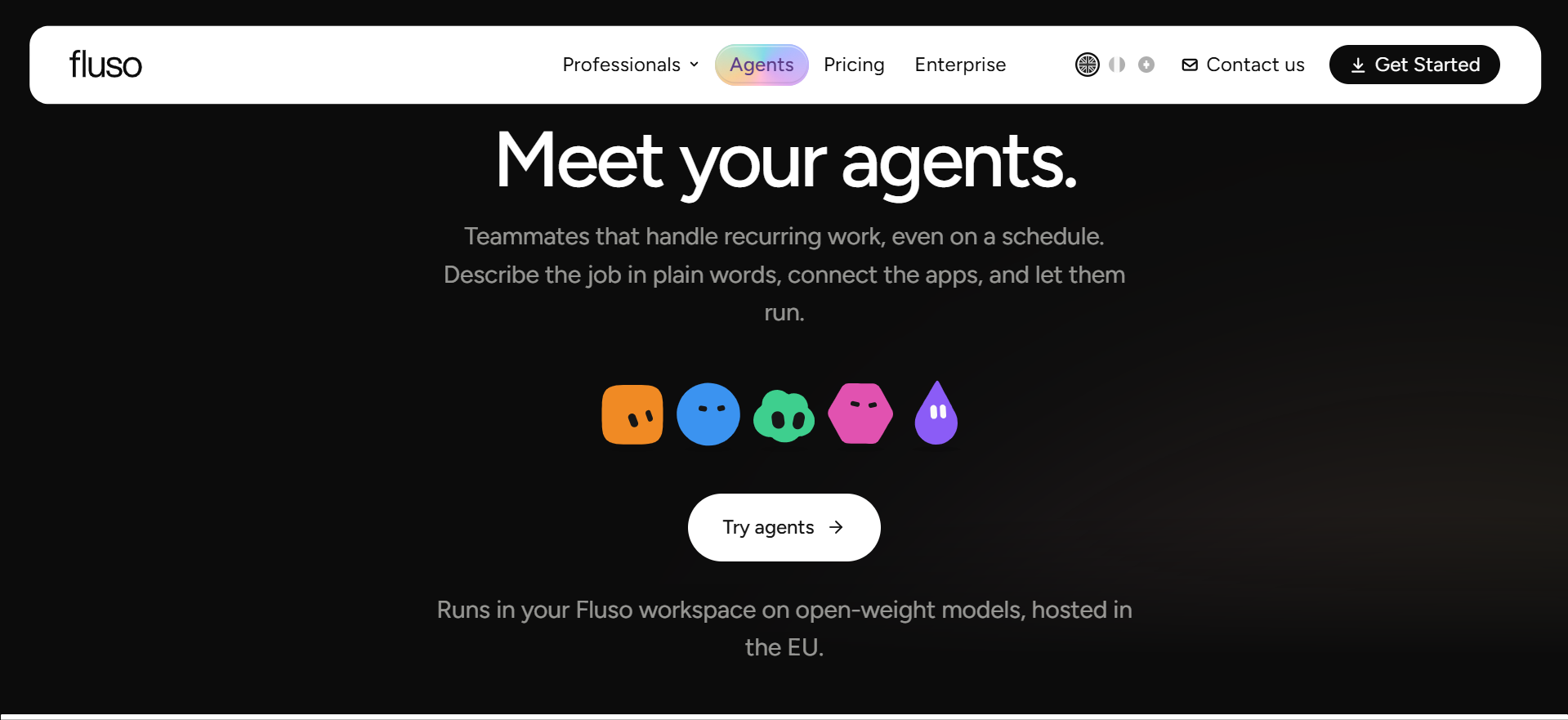
We built the Fluso agent for teams that want one capable agent working across their tools instead of a separate bot for every workflow. You describe the outcome and the agent keeps working across your apps until the finished file is ready, all on open-source models inside an environment you control.
Key Features of the Fluso AI agent
One agent across 100+ connected apps
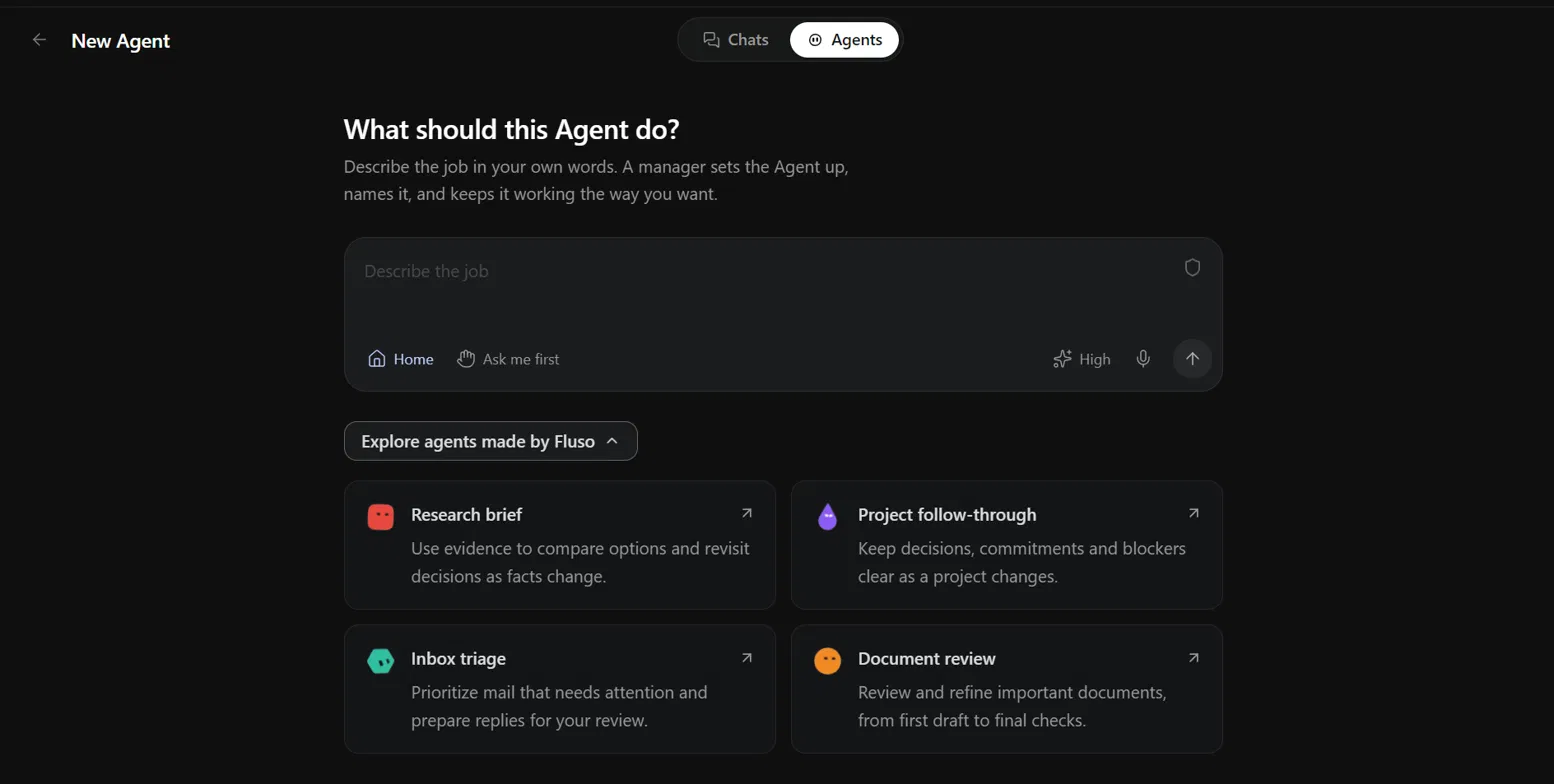
ChronoGraph memory that keeps your work in context
Fluso remembers your projects and preferences across sessions through ChronoGraph, a memory of your work that tracks people, tasks and deadlines over time.
- Ask what was decided on a project months ago and get the answer with a link back to the source.
- Your agents find what they need through a few graph reads in the ChronoGraph memory layer instead of making dozens of tool calls across your email and Slack threads.
- Background execution keeps your tasks moving even when you're offline.
- Routines let you run an agent once or on an hourly, daily or weekly schedule. You can also set a routine to run only on weekdays or only on weekends.
Private by Design With Enterprise Governance
Every Fluso workspace runs on its own dedicated machine and nothing you do there trains a model.
- Per-tool approvals and audit logs show you exactly what the agent plans to do before it acts.
- Your security team can verify where data was processed through Prem's confidential computing stack instead of taking our word for it.
- You can deploy on our cloud or your VPC, and teams that want private AI running locally can go fully air-gapped or use Fluso Local.
Best Suited For
The Fluso AI Agent suits regulated enterprises in law and finance or healthcare and government along with solopreneurs and small teams who want one agent handling their daily work. You can create your Fluso agents for your own workflows while your data stays private and under your full control.
Kore ai
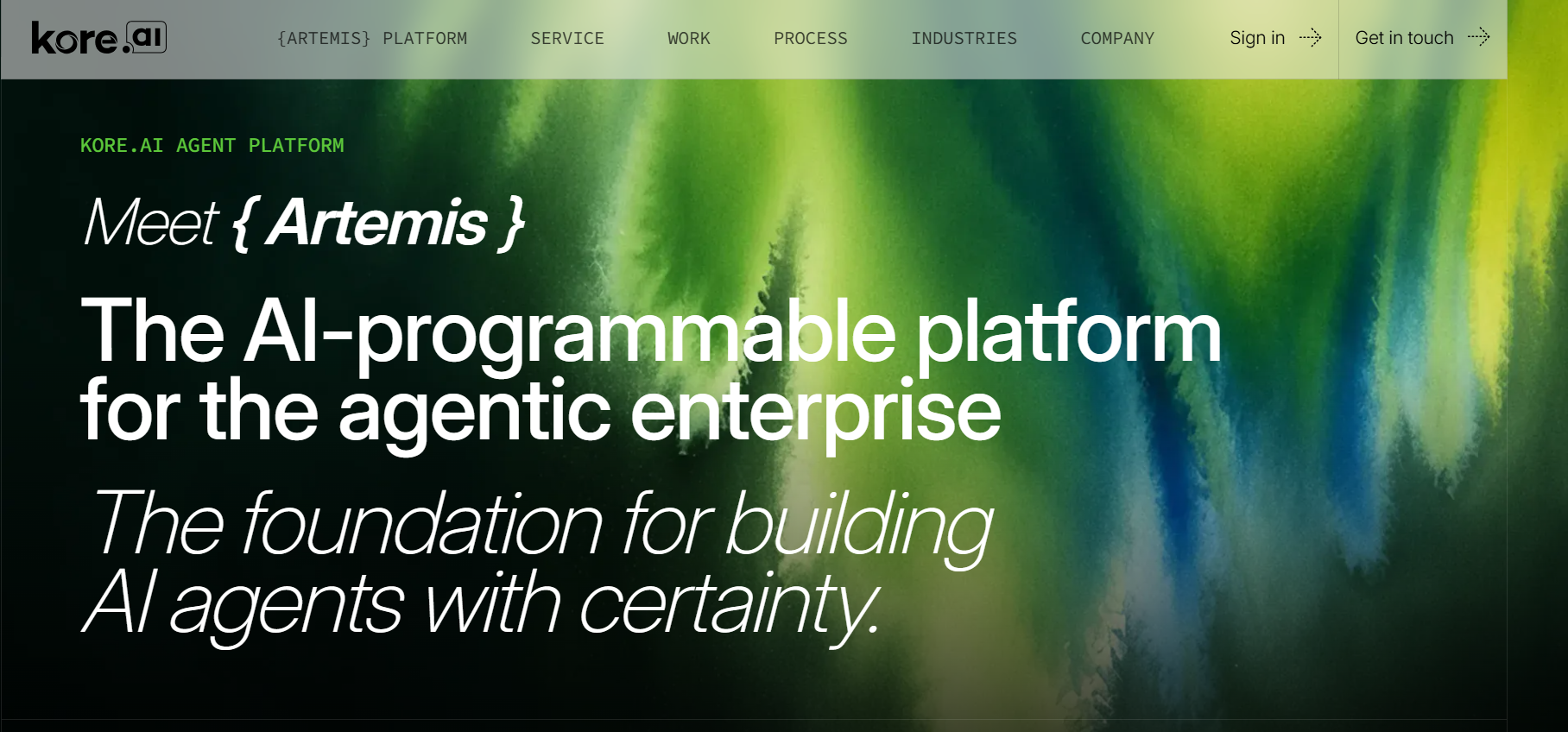
Kore.ai was founded by Raj Koneru in 2014 with a focus on conversational AI for large enterprises. Today, the platform supports AI agents for customer service and employee workflows across voice and chat. You can build and manage agents with multi-agent orchestration and connect them with your enterprise systems.
When to Choose Kore.ai
When your enterprise runs high-volume customer or employee service across many channels and languages.
Create an Agent That Works on Your Terms
Describe the job and let Fluso set up an agent that works across your tools while your data and deployment stay under your control.
Create your agent in FlusoLangGraph
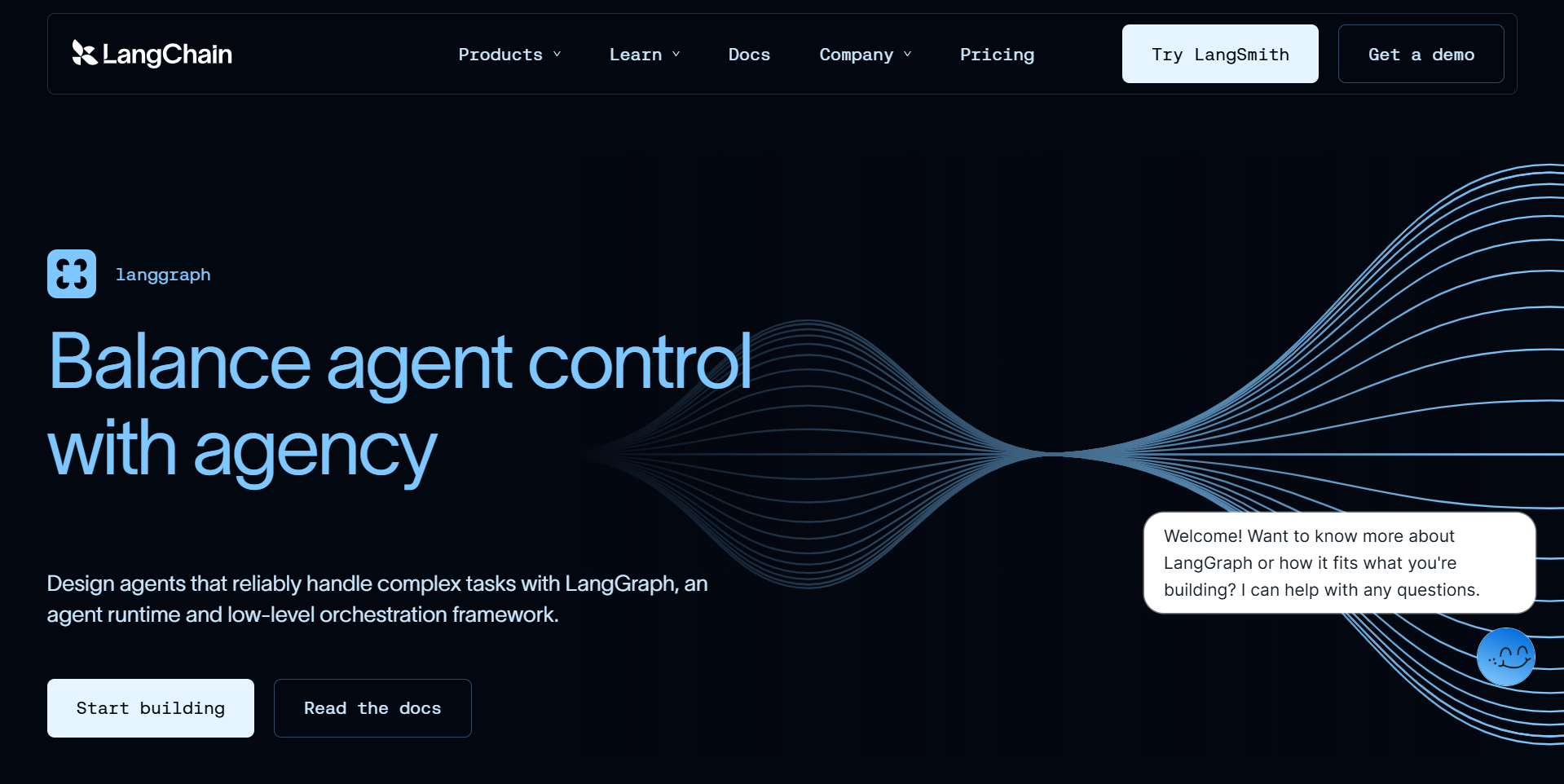
LangChain Inc. launched LangGraph in early 2024, building on the open-source LangChain framework Harrison Chase released in late 2022. It works as a low-level orchestration runtime and you don't need LangChain itself to use it.
LangGraph lets your agents loop and branch and pause for human review while keeping state across long tasks. Checkpointing lets an agent resume from where it stopped and LangSmith gives your engineers traces and evaluations for every run.
When to choose LangGraph
Go with LangGraph if your engineers want to design custom agent logic from scratch and own every layer of the stack.
Turn Your Recurring Work Into a Fluso Agent
Start with one workflow and give your agent the tools and business context it needs to carry the work through.
Create your Fluso agentSAP Joule Agents
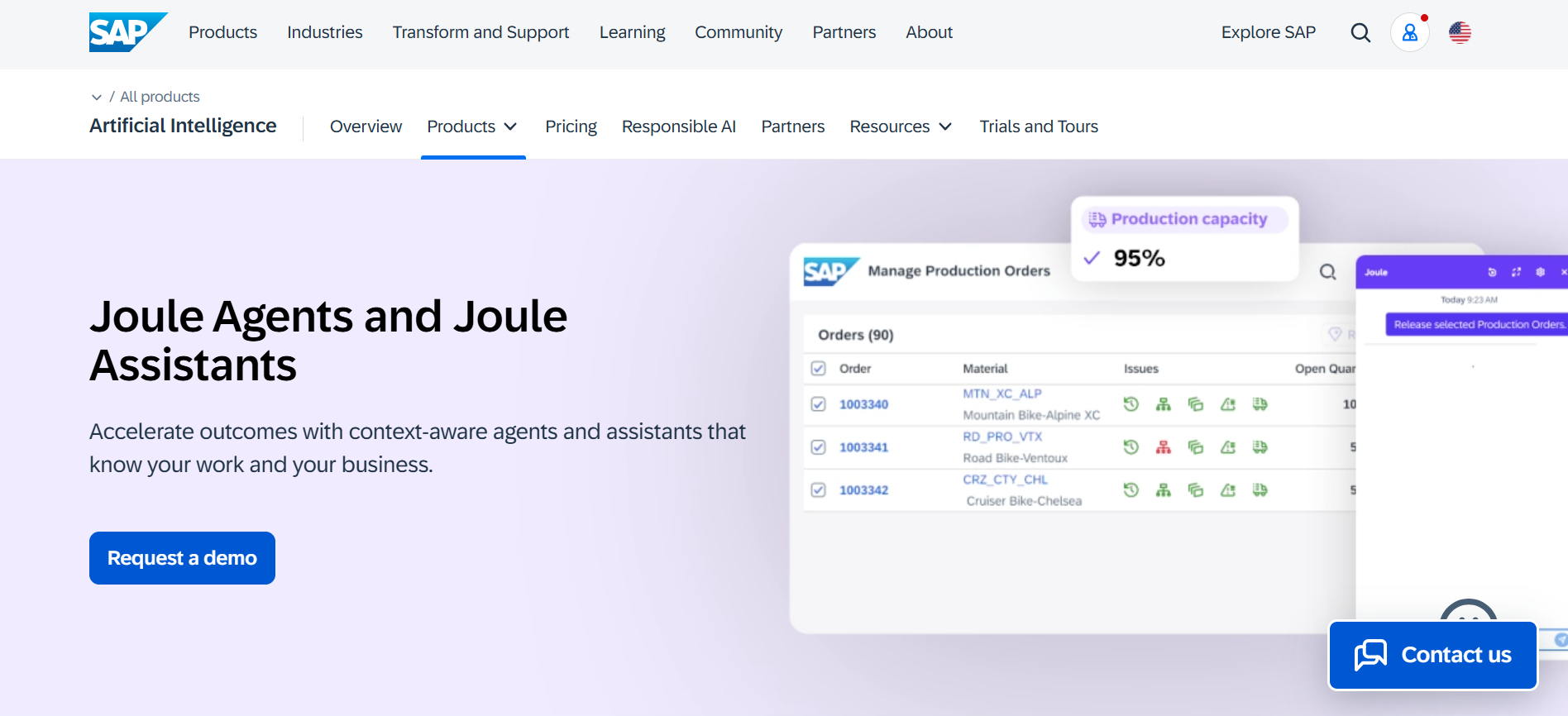
SAP launched Joule in 2023 as its generative AI copilot and introduced Joule Agents in 2024. The agents work across finance, supply chain and HR using data from your SAP systems.
You can use prebuilt agents for tasks like dispute resolution and financial accounting. Joule Studio also lets your team build custom agents and skills on SAP Business Technology Platform.
When to choose SAP Joule Agents
Choose SAP Joule Agents if your core finance and operations processes already run on SAP software.
Put Your Recurring Work on Autopilot With Fluso
Turn repetitive tasks into agent workflows that can run across your connected tools while you stay in control of each action.
Build your Fluso agentStackAI
StackAI was founded by Bernard Aceituno and Antoni Rosinol in 2022 after they met during their PhDs at MIT. You can use its drag-and-drop canvas to build agents on top of internal documents and enterprise systems without heavy engineering support. StackAI also supports cloud, private VPC and on-prem deployments for regulated industries such as finance and insurance.
When to choose StackAI
StackAI works well when your operations and business teams want no-code agents with enterprise security and no wait on engineering.
CrewAI
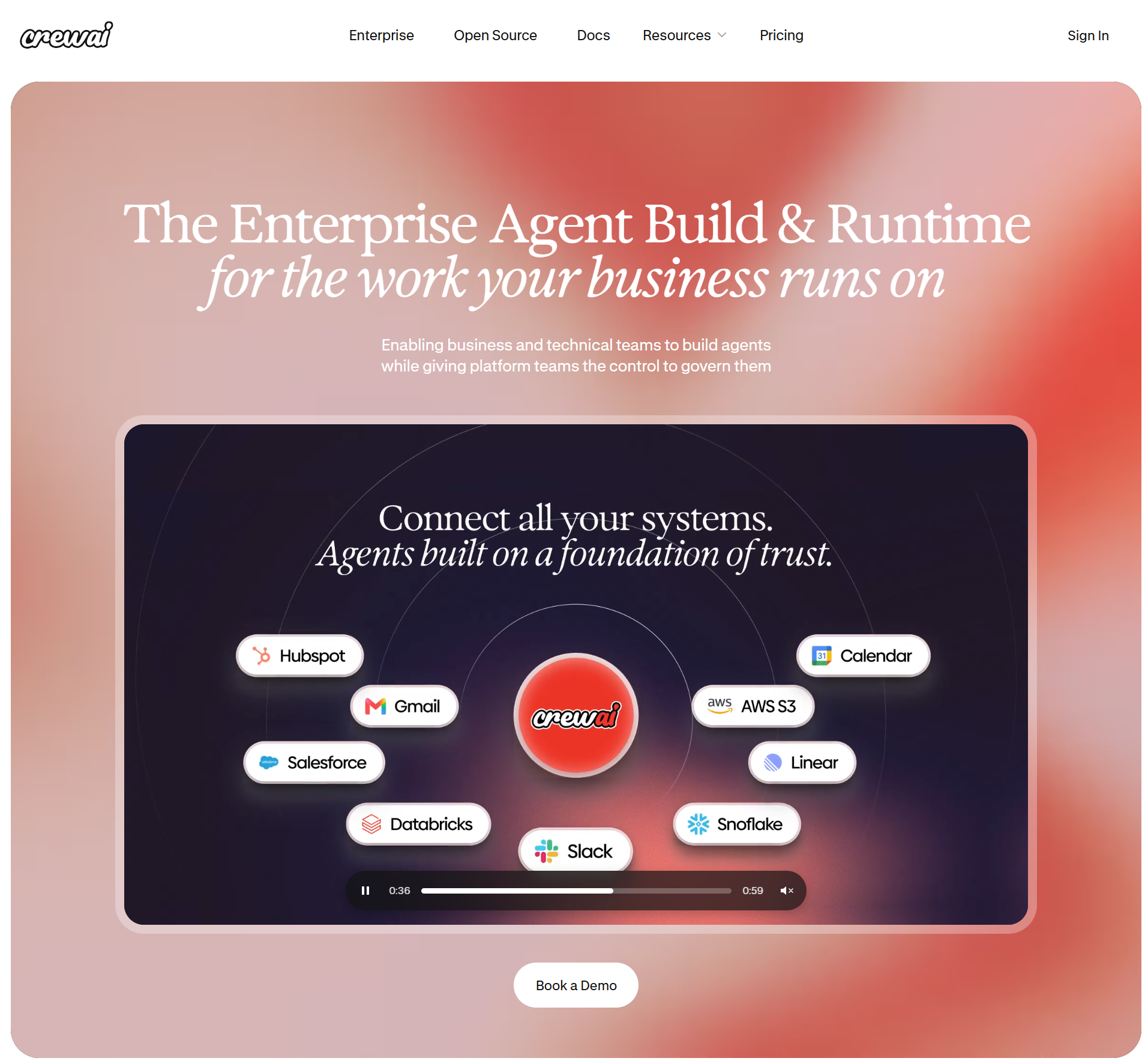
CrewAI was launched by João Moura in 2023 as an open-source framework before becoming a company. You can build teams of agents where each one has a defined role and goal. CrewAI also lets you combine autonomous agents with step-by-step workflows and test them locally before moving to the enterprise platform.
When to choose CrewAI
Reach for CrewAI when your developers are building workflows where several specialized agents need to research, plan and execute together.
One Agent Across the Tools You Already Use
Describe the outcome in plain English and let your agent work across connected apps while you keep control over permissions and deployment.
Build your agent with FlusoRelevance AI
Relevance AI was co-founded in Sydney by Daniel Vassilev, Jacky Koh and Daniel Palmer. You can build no-code agents for sales, research and operations tasks. Relevance AI also lets you group agents into teams with a manager agent that assigns work across them.
When to choose Relevance AI
Relevance AI makes sense when your sales and go-to-market teams want agents handling prospect research and follow-ups at scale.
Mistral AI
Mistral AI was founded in Paris in 2023 by Arthur Mensch, Guillaume Lample and Timothée Lacroix. You can build agents with its Agents API and connect them to tools for code execution, web search and document access. Mistral also supports private cloud and on-prem deployments, while its open-weight models can run on your own hardware.
When to choose Mistral AI
Mistral AI is a strong pick for European enterprises that want agents on open-weight models from an EU-based provider working under GDPR.
n8n
n8n was founded in Berlin in 2019 by Jan Oberhauser as a workflow automation platform. You can add AI agents to existing workflows and connect them with hundreds of supported tools. n8n also combines a visual canvas with JavaScript and Python code nodes, while self-hosting lets you keep credentials and workflow data on your own servers.
When to choose n8n
n8n fits best when your technical operations team already automates heavily and wants agents inside those automations.
Real-world enterprise use cases of AI agents for regulated industries
Each example below shows agents doing real work while sensitive data stays under the company's control.
Healthcare: UTMB runs 22 AI agents across Its hospital operations
Hospitals are using agents to clear the backlogs that slow patient care down. The University of Texas Medical Branch now runs 22 AI agents that tackle long wait times and missed follow-ups along with paperwork backlogs.
According to Fortune's Bunkerhill report on the company behind them, that company also works with Cleveland Clinic and Mayo Clinic among 15 health systems. Agents like these touch patient records every day, so where they run matters as much as what they do.

Finance: JPMorgan moves its bank-built AI platform into agentic work
JPMorgan Chase built LLM Suite as its own internal portal so employees could use AI inside the bank's controls.
Around 250,000 employees now have access and the bank wants agents running back-office processes, as International Finance magazine reports in its look at agents on Wall Street. Your bank or fund can follow the same pattern by giving staff a governed agent platform before they reach for unapproved tools.
Legal: Kirkland & Ellis commits $500 million to its own AI platform
Kirkland & Ellis has committed $500 million over the next three to four years to build a proprietary AI platform for its legal work.
The investment ranks among the most ambitious technology bets a law firm has made, according to Bloomberg Law's Kirkland report on the firm's plan to control its own tech.

Your firm doesn't need that budget to follow the same idea of keeping client data and the agents working on it under your own control.
Insurance: Allianz cuts claim processing time by 80% with seven agents
Allianz built Project Nemo in under 100 days to handle food spoilage claims after storms in Australia. Seven specialized agents check coverage and verify weather and screen for fraud before a human adjuster makes the final payment decision. Figures shared in Coverager's Allianz report show an 80% reduction in claim processing and settlement time with human oversight still in place.
Bring One Recurring Workflow Into Fluso
Start with a task your team repeats often and build an agent with the permissions and tools it needs to complete the work.
Start creating your agentWhat to look for in an AI agent builder for your enterprise
The right builder depends on your data, your team and the work you want agents to take on. Use these checks when you shortlist vendors for a pilot.
Fluso: best private AI agent platform for all your recurring work
By now you know your AI agents need to be private and affordable to run at scale. Agents that leak data or burn through tokens end up costing your enterprise more than the work they save.
We built the Fluso AI Agents at Fluso to work on your terms. Every workspace runs on its own dedicated machine, and your data never trains a model or leaves the environment you choose.
You get full control over where your data lives while open-source models give you roughly five times the token efficiency of closed-source alternatives.
Getting started with Fluso AI agents is pretty simple. You describe the job in your own words and Fluso’s Manager sets up the agent for you to review. Download Fluso and try Fluso agents and build private agents that run cost-effectively with full control over your data.
FAQs about the best AI agent builders and platforms in 2026
What is an AI agent builder?
An AI agent builder is a platform for creating agents that plan tasks and use your tools to finish multi-step work. Some builders give you a visual no-code canvas while others are frameworks your developers write code in. Either way the agent keeps working until the task is done instead of stopping at the first answer.
What is the difference between an AI agent builder and an AI agent platform?
An AI agent builder is the tool you use to design and configure agents. An AI agent platform covers everything around them, including deployment and permissions along with monitoring and billing. Your enterprise needs both in one place so the people building agents and the teams governing them follow the same rules for access and data.
What is a no-code AI agent builder?
A no-code AI agent builder lets you create agents on a visual canvas or by describing the job in plain English. Your operations and business teams can build agents without waiting on developers. Pick one that still gives IT permissions and audit logs so faster building doesn't come at the cost of oversight.
How do I get started with an AI agent platform?
Start with one repetitive workflow that has a clear payoff such as inbox triage or document review. Run a short pilot on real data and measure the hours your team saves. In Fluso you describe the job in plain English and the Manager sets up your first agent for you to review before launch.
We’d love to see what you build when you create your agent in Fluso, and hear where we can make the experience better.