7 Best Open Source LLM API Providers for Enterprises Handling Sensitive Data
On this page
On September 10, 2026, Anthropic’s report made a claim that caught the AI industry’s attention: seven China-based AI companies had been sending customer requests to Claude and using its answers to help train their own models.
Two of the companies were DeepSeek and Moonshot AI, the company behind Kimi. According to Quartz, China's Cyberspace Administration is now investigating DeepSeek and Moonshot over user data that may have reached Anthropic's servers without customers knowing.
One example in Anthropic's report makes the problem easier to understand.
Anthropic said a Kimi user asked the chatbot to analyze surveillance footage from hundreds of police cameras. According to the report, Moonshot then sent the request and footage to Claude without the user's knowledge.
Then look at the scale.
Anthropic said Moonshot sent more than 23 million exchanges through Claude between May and July. DeepSeek sent more than 12.1 million exchanges during a 14-day period in July.
Put yourself in the user's position for a moment. You think you're sending data to one AI provider. Behind the scenes, that data could be sent somewhere else.
And notably, DeepSeek and Kimi are both open-weight models. In both cases, the data exposure happened at the API provider level, where requests were forwarded without users knowing.
The case for open-weight models is still strong. They give enterprises more flexibility over the models they use and how they deploy them. The Federal Trade Commission has also highlighted their potential to drive innovation, reduce costs, and increase consumer choice.
Yann LeCun shared the FTC's statement on X:
A heart-warming statement from the Federal Trade Commission expressing strong support of open-weight/open-source AI models. Conclusion: https://t.co/n9Sjpw7U9a
— Yann LeCun (@ylecun) July 12, 2024
But as the FTC notes, those upsides aren't guaranteed. That brings us back to an important question for enterprises: what happens after you choose the model?
Your LLM API provider sits between your application and the model. It controls how your requests are processed and where your data goes. It also determines what happens to that data afterward. An open-weight model gives you more flexibility, and you also need to verify how the API provider handles your data.
So when you're choosing one for sensitive workloads, you need to look beyond the model itself.
Where is your data processed? How long is it retained? Can it be used for training? Who can access it? And can you verify what the provider says?
Let's look at seven open-source LLM API providers and see how they handle these questions.
Why enterprises use open-source LLM APIs
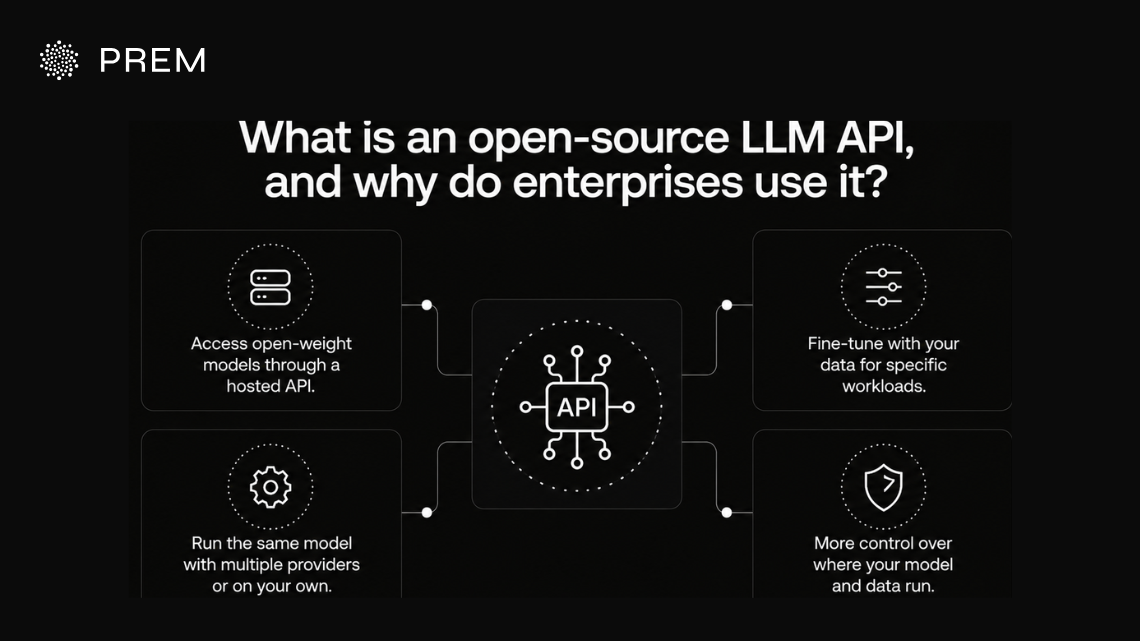
An open-source LLM API gives you access to an open-weight language model through a hosted API. Open-weight models make their trained parameters available for others to download and run. The training data and model code may remain private.
You can use the same model through another provider or run it on your own infrastructure. That gives you more flexibility around pricing and deployment.
You can also fine-tune some open-weight models with your own data and adapt them to specific workloads.
For sensitive workloads, control becomes even more important. You have more options for deciding where your model runs and how your AI infrastructure is managed.
Want Your Open-Source LLM API Protected During Inference?
Looking for the best open-source LLM API for secure AI inference? Start here.
Try Enclave API NowParameters to check before choosing an open-source LLM API provider
An open-weight model gives you flexibility over the model itself. Your API provider determines how your data is handled once you send a request.
Use this checklist before putting sensitive data through a provider.
| What to check | What it means for you |
|---|---|
| Model licensing | Check the model's actual license, such as Apache 2.0 or MIT. Confirm whether you can self-host it if you change providers later. |
| Data retention | Check whether your prompts and outputs are retained, for how long, and under what exceptions. |
| Training use | Check whether your data can be used to train or fine-tune models. Check this separately from the retention policy. |
| Data residency | Confirm where your requests are processed and stored. Check which jurisdiction's laws apply to your data. |
| Deployment options | Check whether you can use a managed API, dedicated infrastructure, private cloud, or self-hosted deployment. |
| Compliance certifications | Check for relevant certifications such as SOC 2, ISO 27001, or C5 and understand what they actually cover. |
| Personnel access | Check who can access your data and whether access is restricted to specific teams or regions. |
7 best open-source LLM API providers for enterprises handling sensitive data
Your requirements will depend on your workload. You may care most about ZDR. You may need European data residency. You may want the option to self-host a model later.
Here is how seven providers approach those requirements.
The table below compares deployment options and key differentiators at a glance. The sections after it go into each provider's data handling and privacy approach in detail.
| Platform | Country | Deployment options | Key differentiator |
|---|---|---|---|
| Enclave API | Switzerland | Managed, hosted service | Confidential inference inside hardware-enforced TEEs, cryptographic attestation checked on an ongoing basis |
| Scaleway | France | Serverless or Dedicated Deployment | No prompt retention by default; two-week exception for abuse investigation, 24-hour exception for batch |
| OVHcloud | France | Fully managed serverless | Zero Data Retention; only billing data retained; 40+ open-weight models |
| IONOS | Germany | Managed inference (OpenAI-compatible REST API) | Stateless by design; processing exclusively in Germany |
| Regolo AI | Italy | OpenAI-compatible API; bring your own Hugging Face model | Zero data retention with European (Seeweb) infrastructure |
| Mistral AI | France | Hosted API or self-host open-weight models | Genuine Apache 2.0 releases; ZDR requires a request and approval, not automatic |
| STACKIT | Germany, Austria | Managed API (AI Model Serving) | Schwarz Group-backed; ISO 27001 and BSI C5 certified; billing-only data retention |
Enclave API by Prem AI: private inference through one API
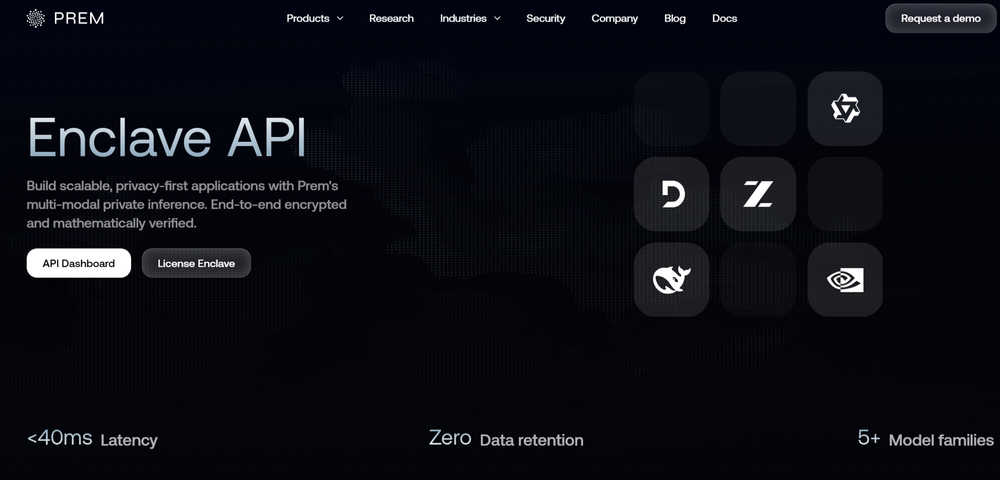
For enterprises looking for open-weight LLM APIs, our Enclave API gives you OpenAI-compatible access to open-weight models through a confidential inference environment.
You can connect your existing AI applications to Enclave API and use supported models without managing the underlying inference infrastructure yourself.
The API is designed for those who need access to capable open-weight models while also requiring stronger privacy and security controls around sensitive workloads.
What you get with our Enclave API
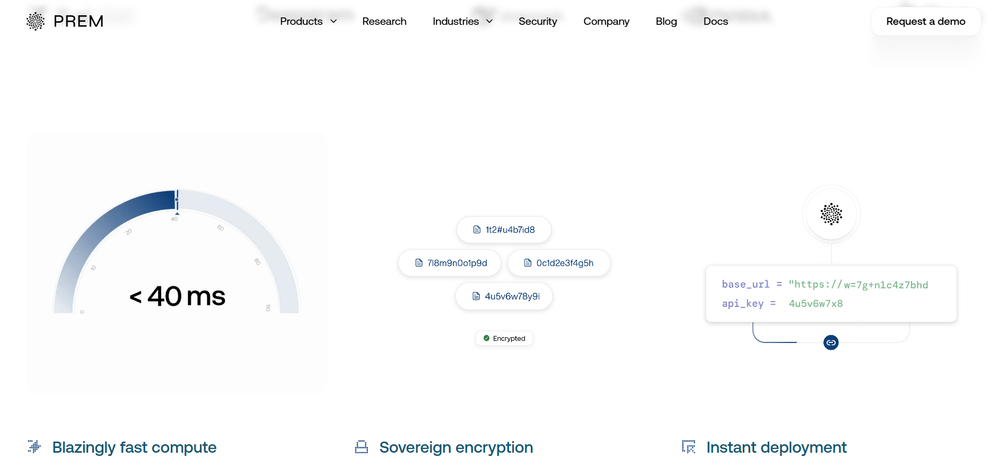
When you need to run open-weight models with sensitive data, Enclave API gives you the security controls to protect your workload.
Your data is encrypted before it leaves your system and processed inside a protected environment. You can also verify that environment through cryptographic attestation and choose from multiple supported models through one API. Here's what that includes.
Access open-weight models through one API
We bring multiple open-weight models behind one API, so you can build applications without tying your entire AI stack to a single model.
You can choose the model that fits your workload based on factors such as performance, cost, etc.
This gives your team more flexibility as models continue to change.
OpenAI-compatible integration
If your application already uses an OpenAI-compatible API, you can connect it to Enclave API using the same general integration pattern.
This can make it easier to move an existing application to private AI inference without changing your entire application architecture.
Zero Data Retention
We also offer Zero Data Retention (ZDR) for standard inference.
With ZDR, your prompts and outputs are not retained after processing. This gives you a retention-focused option when persistent storage of your AI requests is a concern.
ZDR is separate from Enclave's confidential computing environment. Enclave API provides an additional layer of protection for your data while it is being processed.
Confidential computing with Enclave API
When your workload requires protection while your data is being processed, Enclave API uses hardware-enforced Trusted Execution Environments (TEEs).
Your data is encrypted before it leaves your system and is processed inside the protected environment.
This adds a security layer around the inference process itself, which is important when you're sending sensitive enterprise data to an AI model.
Verify the environment with cryptographic attestation
Enclave API also provides cryptographic attestation, verified on an ongoing basis.
The signed attestation report gives your security team a way to verify the environment processing your workload.
You can use this verification to establish that your request is being processed inside the expected confidential computing environment before sending sensitive data.
Built for sensitive enterprise workloads
We built our infrastructure for teams working with data that requires stronger privacy and security controls.
This can include business information, internal knowledge, customer data, regulated information, and other sensitive workloads.
You can use ZDR when your primary requirement is data retention control. When you also need protection during processing and a way to verify the execution environment, Enclave API provides those additional controls.
Who Enclave API is suited for
Enclave API is suited to developers and organizations that want to run open-weight models with stronger privacy and security controls. You can use it to build AI applications, add confidential inference to existing applications, or handle sensitive data through a private inference layer.
If you need OpenAI-compatible integration and model flexibility along with protection while your data is being processed, Enclave API gives you the controls to run sensitive AI workloads without any worry.
Your Sensitive Data Deserves Hardware-Level Protection. Now.
Grab $20 in free credit and let Enclave API keep your data safe at the hardware level.
Claim Your Free CreditCompliance controls you can verify
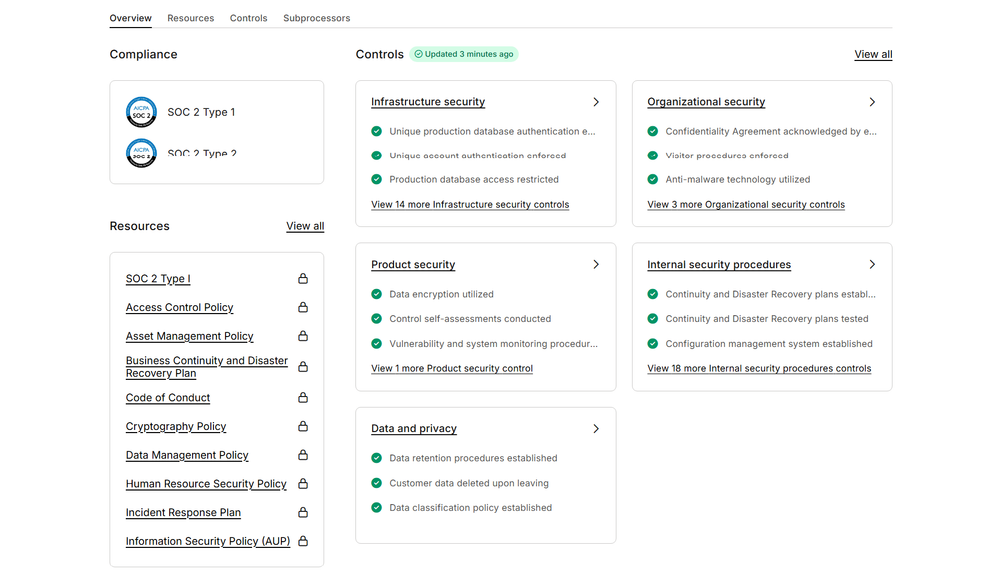
We hold a SOC 2 Type I report, along with FADP and GDPR controls. These give you additional safeguards when you are handling sensitive data and managing privacy requirements.
Ready to run open-weight models with confidential inference? Get started with Enclave API and run your AI workloads with stronger privacy and security controls.
Scaleway
Scaleway provides European cloud infrastructure alongside managed AI services. Its Generative APIs give you access to open-weight models through managed endpoints.
You can choose between shared serverless inference and dedicated infrastructure depending on how much control your workload requires.
Data handling and privacy approach
According to Scaleway's documentation, its Generative APIs do not retain prompt content during standard processing. Scaleway does retain API metadata such as HTTP calls, status codes, timestamps, and token counts.
If a request causes an abnormal error or is suspected of malicious activity, Scaleway may temporarily retain the relevant HTTP request content for investigation. Batch Processing has a separate exception, with input data stored temporarily for up to 24 hours.
Deployment options
Scaleway offers Serverless and Dedicated Deployment options.
Serverless gives you managed inference through preconfigured endpoints. Dedicated Deployment gives you dedicated GPU infrastructure and private network access.
OVHcloud
OVHcloud offers managed AI infrastructure alongside its broader cloud services. Its AI Endpoints service gives you access to open-weight models through a managed API.
You can use the service without managing the underlying GPU infrastructure yourself.
Data handling and privacy approach
According to OVHcloud, AI Endpoints uses Zero Data Retention and keeps only the data required for billing. OVHcloud also states that prompts and outputs are not retained for other purposes.
Deployment options
According to OVHcloud, AI Endpoints is a fully managed serverless service with more than 40 open-weight models and an OpenAI-compatible API.
You can also use its sandbox to test models before putting them into production.
Open-Weight Models, Zero Trust Issues
Grab your multi-model, OpenAI-compatible access, with confidential inference built in.
Try Enclave APIIONOS
IONOS provides cloud infrastructure from Germany and offers AI Model Hub as a managed inference service.
You can access open-source and open-weight models while keeping AI processing within IONOS infrastructure in Germany.
Data handling and privacy approach
According to IONOS's documentation, AI Model Hub operates as a stateless service. IONOS says prompts and outputs are discarded at the end of each session and are not logged or reused for model training.
IONOS also states that processing and inference take place exclusively in Germany.
Deployment options
According to IONOS, AI Model Hub provides OpenAI-compatible REST APIs for managed inference.
You can access LLMs, embedding models, rerankers, image generation, and OCR models through the platform.
Regolo AI
Regolo AI is an Italian AI infrastructure provider focused on managed inference and GPU compute.
You can access open-weight models through an OpenAI-compatible API while keeping your workloads within European infrastructure.
Data handling and privacy approach
According to Regolo, its inference infrastructure provides ZDR with European data residency. Regolo says prompts and outputs are not stored or reused.
Regolo also states that it uses Seeweb infrastructure in Italy for its European AI workloads.
Deployment options
According to Regolo, you can access its model catalog through an OpenAI-compatible API.
You can also bring a model from Hugging Face and deploy it on dedicated GPU infrastructure.
Try Private Inference, $20 On Us
Grab $20 in free credit and let Enclave API protect your data the moment it's decrypted for processing.
Claim Your Free CreditMistral AI
Mistral AI is a French AI company known for releasing open-weight models alongside its hosted API platform.
Several models in its portfolio are available under Apache 2.0 licenses. You can download supported models and run them on infrastructure you control.
Data handling and privacy approach
According to Mistral's documentation, ZDR is available for paid plans and supported stateless API calls.
You need to request ZDR, and Mistral reviews the request before enabling it.
Mistral treats ZDR and training opt-out as separate controls. Its documentation also lists features outside ZDR coverage, including Agents, Conversations, Libraries, Batch processing, and the Files API.
Mistral says data is hosted in the EU by default, with an option to use a US API endpoint.
Deployment options
According to Mistral's model documentation, you can use its hosted API or download supported open-weight models for self-hosting.
This gives you a path to move a workload onto infrastructure you control when your requirements change.
STACKIT
STACKIT is the cloud platform of the Schwarz Group and operates its cloud infrastructure from Germany and Austria.
Its AI Model Serving service gives you access to open-weight models through a managed API.
Data handling and privacy approach
According to STACKIT's service documentation, customer data is not collected or evaluated beyond data required for billing.
The service is also designed to meet GDPR requirements.
STACKIT's cloud infrastructure carries certifications including ISO 27001 and a BSI C5 attestation.
Deployment options
According to STACKIT's documentation, AI Model Serving provides shared models through an OpenAI-compatible API.
Its catalog includes models such as Qwen, Llama, and GPT-OSS. STACKIT continues to add and replace models as its portfolio changes.
Are You Sure Your AI Is as Private as They Say?
We don't just claim it, Enclave API lets you check it yourself.
Try Enclave APIHow to evaluate open-source LLM API pricing and verify provider claims
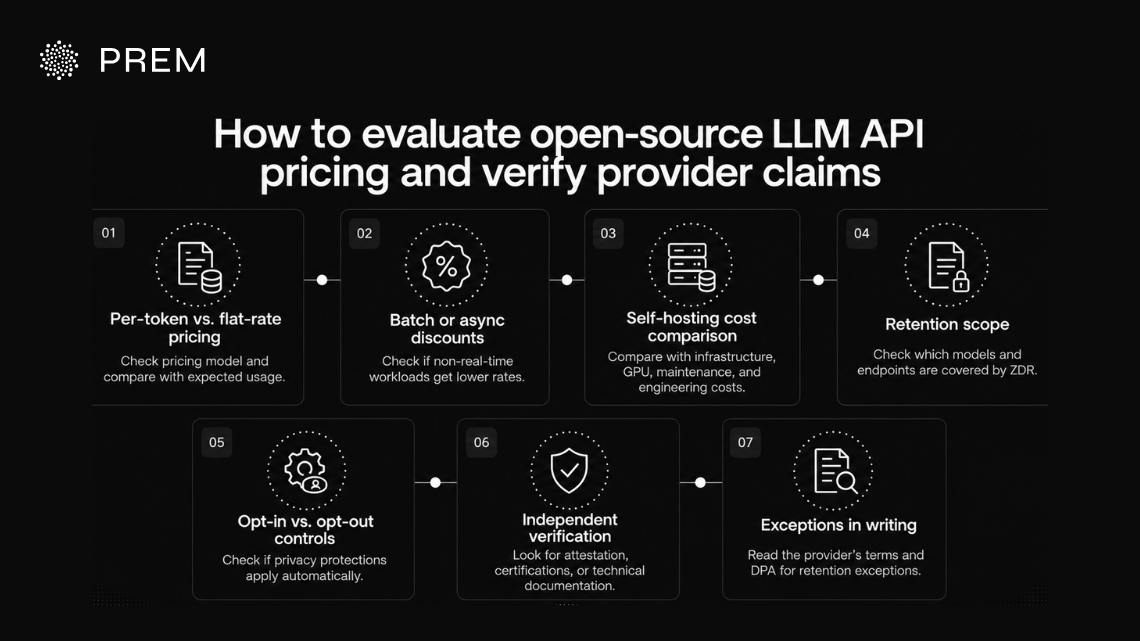
Per-token pricing rarely tells you the full cost of running an AI workload.
The same applies to privacy claims. You need to understand exactly what the provider covers and where the exceptions sit.
Use this checklist when comparing providers.
| What to check | What it means for you |
|---|---|
| Per-token vs. flat-rate pricing | Check whether you pay per token, per GPU hour, or at a fixed rate. Compare the cost against your expected usage. |
| Batch or async discounts | Check whether your non-real-time workloads qualify for lower rates. |
| Self-hosting cost comparison | Compare the hosted API price with the infrastructure, GPU, maintenance, and engineering costs of running the model yourself. |
| Retention scope | Check which models and endpoints are covered by ZDR. Check whether features such as file storage or batch processing have separate retention rules. |
| Opt-in vs. opt-out controls | Check whether privacy protections apply automatically or require a separate request and approval. |
| Independent verification | Look for cryptographic attestation, security certifications, or technical documentation that lets you verify the provider's claims. |
| Exceptions in writing | Read the provider's terms and DPA. Pay particular attention to retention exceptions and special processing conditions. |
Enclave API: Access multi-model, open-weight families through one API
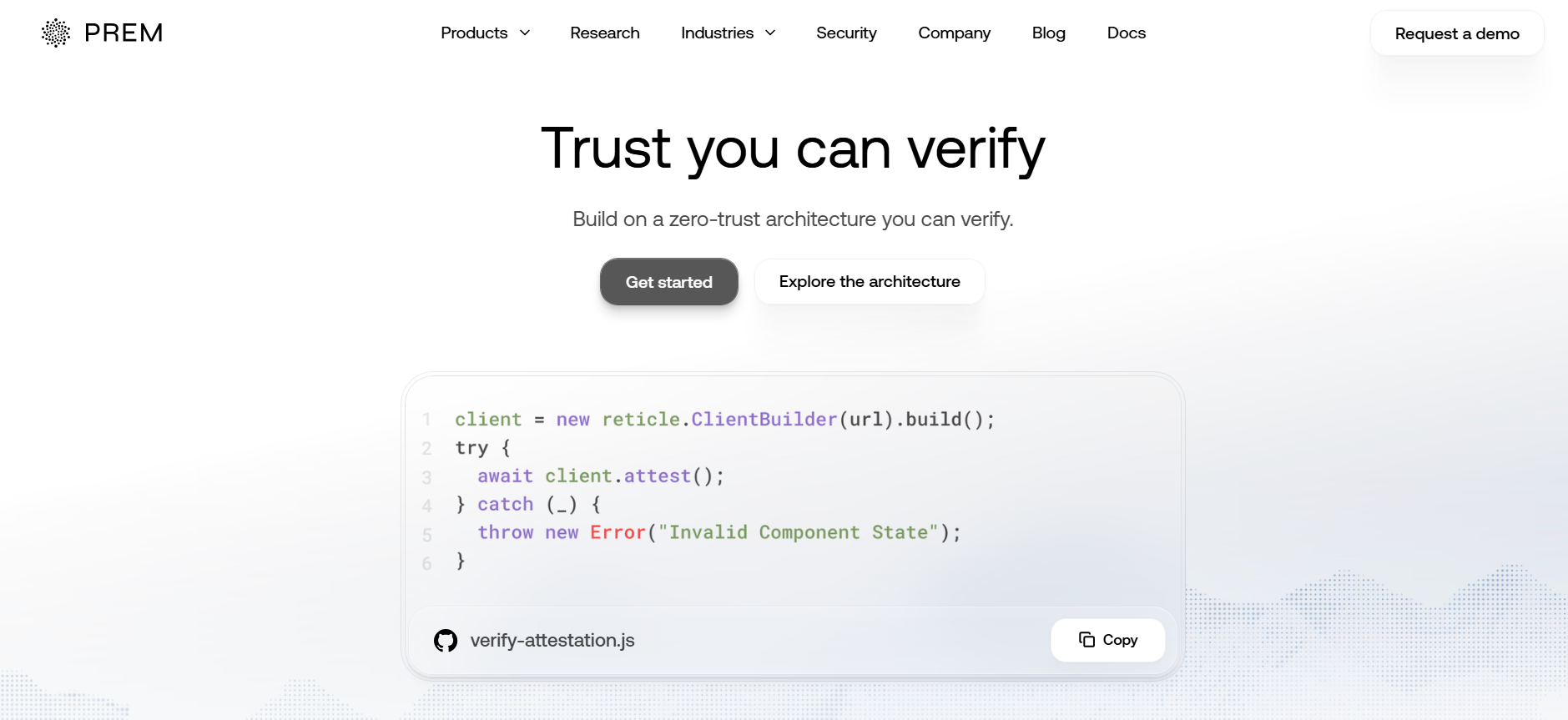
When you choose an open-source LLM API for sensitive data, your provider plays a key role in how your data is processed and protected.
Enclave API gives you OpenAI-compatible access to open-weight models inside hardware-protected Trusted Execution Environments.
Your data is encrypted before it leaves your system. It is then processed inside the protected environment. Cryptographic attestation, verified on an ongoing basis, gives you a way to check the environment processing your workload before sending sensitive data.
Prem AI also offers ZDR for standard inference. ZDR and Enclave provide different controls, giving you options based on the requirements of each workload.
Since Enclave API is OpenAI-compatible, you can connect your existing applications through the API without rebuilding your entire integration.
Want to see how we can support your sensitive AI workloads? Get your Enclave API and run open-weight models with confidential inference while keeping your data protected during AI processing.
FAQs about open-source LLM API providers
What does "open source" actually mean for an LLM API?
Most providers use "open source" to describe open-weight models. The trained parameters are published and downloadable, while the training data and model code may remain private. When you're comparing providers, check the actual model license and what you are allowed to do with the model.
Does using an open-weight model automatically make your data more private?
No. The model's license and your provider's data practices are separate questions. Your provider may log requests, retain outputs, or use data for other purposes depending on its policies. Check the provider's retention and training terms before sending sensitive data.
Is zero data retention the same as not training on your data?
No. ZDR controls whether your prompts and outputs are retained after processing. Training opt-out controls whether your data can be used for training. Check both settings separately.
Can you avoid vendor lock-in with an open-weight model?
You have more flexibility because you can often download the model weights and run the model elsewhere. Your options still depend on the model's license, infrastructure requirements, and any provider-specific services you use.
Does zero data retention apply to every model and endpoint?
You need to check the exact scope. A provider may apply ZDR to standard inference while excluding features such as file storage, batch processing, conversations, or persistent agents. Check the models, endpoints, and features covered by the policy before sending sensitive data.
Is ZDR always enabled by default?
No. The setup varies by provider. Some providers apply ZDR automatically. Others require you to submit a request and receive approval. Check how ZDR is enabled before you send sensitive workloads through the API.
How can you verify a provider's privacy claims instead of just trusting them?
Look for evidence you can inspect yourself. That can include cryptographic attestation, third-party certifications, audit reports, security documentation, and clearly defined contractual terms. Technical verification can give you evidence about how an environment is operating. Policy documents explain the provider's commitments. You should understand both.
Does self-hosting an open-weight model remove all privacy concerns?
No. Self-hosting gives you direct control over the infrastructure, but your team still needs to secure the environment. You need to manage access controls, network security, encryption, patching, monitoring, and data protection during processing. Self-hosting moves more responsibility to your team.
Are open-weight models less capable than closed, proprietary models?
Not necessarily. Many open-weight models perform competitively with closed models across reasoning, coding, and general tasks. Performance varies by model and workload. Compare the benchmarks and real-world performance that matter to your use case.
What should you prioritize when choosing a provider for sensitive enterprise data?
Start with the requirements that affect your workload directly. Check data retention, training use, data residency, deployment options, personnel access, security controls, and model licensing. Then compare pricing against your expected usage and the infrastructure you may need as your workload grows.
See how Prem AI can help your enterprise build private AI without compromising control over your data and infrastructure. Contact our sales team, or email us at sales@premai.io.