7 Best Open-Source Platforms for Building AI Agents in 2026
On this page

Open-source AI agent platforms let you build and run AI agents with access to the underlying code. You can choose how your agents work and where they run instead of depending on a single provider.
Building AI agents on open-source platforms gives you more flexibility and control over your setup. Here are some of the key benefits:
- Lower costs with open models.
- More control over your agents.
- Flexibility to choose your hosting.
- Better visibility into data processing.
We built Fluso Agents to help you automate everyday work without managing servers yourself. Fluso takes a multi-model approach using several open-source models to run agentic workflows across your connected apps.
You can create agents through chat-based setup and review their actions before they start working. Your workspace runs on a dedicated machine in the EU and your data is never used to train AI models. ChronoGraph also helps your agents remember important details from your work.
A few weeks ago, I was testing no-code AI agent builders for a client project. OpenAI's Agent Builder was on my shortlist until I noticed a message in its docs saying it would shut down on November 30, 2026. According to OpenAI's deprecations page, existing users would need to move to the Agents SDK or ChatGPT Workspace Agents and set up their agents again.
That's when I started looking into open-source AI agent platforms. With access to the code or open models underneath, you're less dependent on a single provider. But many of these platforms still require you to manage your own servers and connect the models yourself.
That's why we built Fluso Agents. Fluso takes a multi-model approach using several open-source models to keep costs manageable as your agentic workflows grow. Each workspace runs on its own private machine and your data is never used to train AI models.
Why you should build AI agents on open-source platforms in 2026
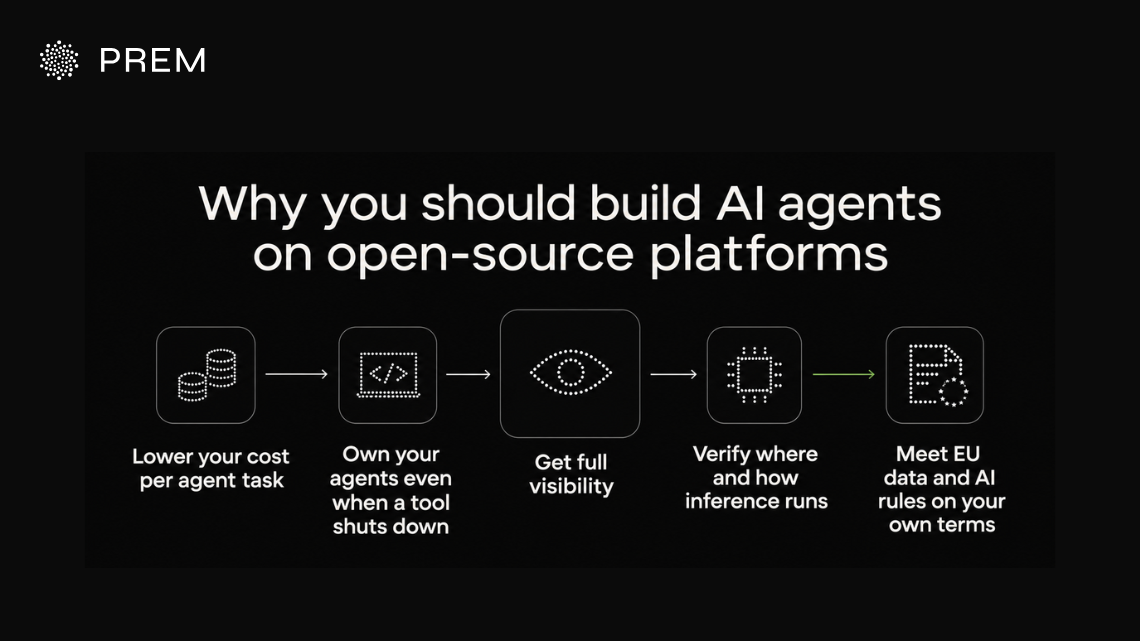
Your agents end up holding your client files, your schedules and your daily decisions. Building them on an open-source platform keeps that work in your hands as you grow.
Lower your cost per agent task with open models
Your agent makes many model calls for a single job, so the price of each call shapes what every run costs you. The MIT Sloan open models report shows that open models cost about 23 cents per million tokens on average against $1.86 for closed models.
Own your agents even when a tool shuts down
When you build on a closed agent builder, your agents only exist inside that company's product. If it raises prices or shuts down like OpenAI's Agent Builder, you lose the workflows you built. An open-source platform gives you the code and the open models underneath, so you can move your agents to another server and keep them running.
Get full visibility into how your agents work
Open code and open models let you or a developer you trust check how your agent makes decisions and handles your data. You can add a tool or tighten a permission yourself instead of waiting on a vendor's roadmap.
Verify where and how your agent's inference runs
With private AI inference, you can run open models inside confidential computing hardware that verifies which model processed your data and where it ran. This gives you cryptographic proof for clients and auditors instead of relying only on a vendor's privacy promises.
Meet EU data and AI rules on your own terms
Since August 2026 the transparency rules in the EU AI Act text apply to chatbots and AI agents that talk to people in Europe, with fines of up to €15 million or 3% of global turnover. Running your agents on an open-source platform hosted in the EU or on your own servers makes it far easier to show where your data goes and what your agent does with it.
Build Your AI Agent on Open-Source Models for workflow automation.
Use the chat-based setup to turn your work into an agent that runs on open-source models across your connected apps.
Create your agent in Fluso7 best open-source platforms for building AI agents in 2026
The table below compares 7 open-source AI agent platforms built in Europe so you can pick the one that fits your work.
Fluso
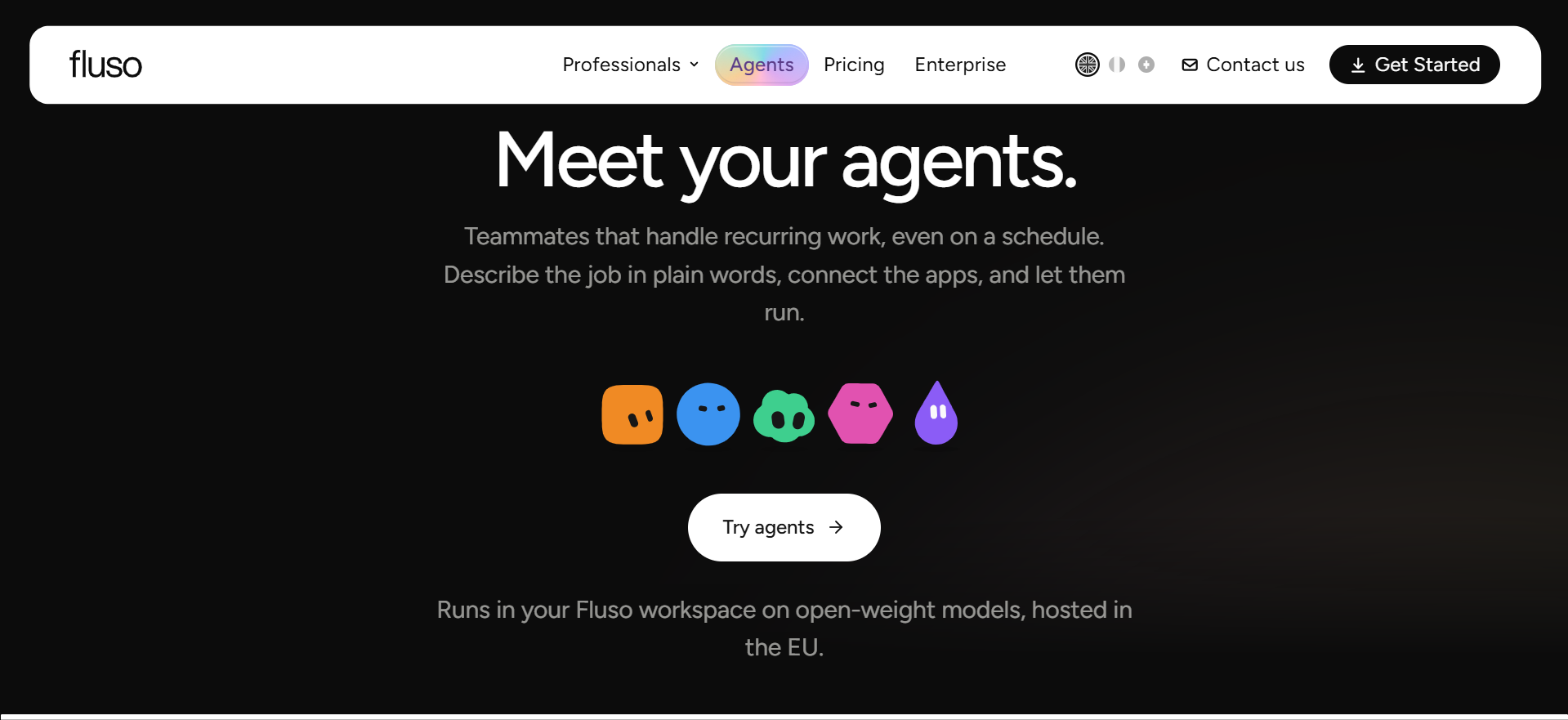
We built Fluso Agents to turn your recurring work into agentic workflows that run on open-source models. You describe the outcome through a chat-based setup and your autonomous agent breaks it into multi-step tasks, calls the right tools and carries the work across your apps until the finished file is ready.
Fluso runs your autonomous agents on multiple open-source models to handle multi-step tasks across your apps. Each session uses confidential computing with cryptographic attestation for verifiable inference.
Your workspace runs on a dedicated machine in the EU and your data is never used to train models. Your agents also improve through context compounding. ChronoGraph connects your projects and people with past decisions. As the Fluso memory docs explain, it saves important facts instead of every message. You can review or correct this private knowledge graph and delete it whenever you want. Every draft you approve or revise helps your agent understand how you work.
what makes Fluso best open-source ai agent platforms
Best suited for
Fluso is built for anyone who wants private AI agents to handle everyday work. It works for freelancers and small teams as well as large organizations. Law and finance teams can use approval steps and verifiable inference for sensitive client work, while individuals can use one agent to manage daily tasks.
Fluso hosting options
Open source matters most when you get to choose where your agents run. Fluso gives you a managed cloud for a quick start and a self-hosted option when you want the workspace on your own hardware.
Fluso pricing
You can start for free and upgrade for USD USD 10 per month as you scale your workflows. If you are running an enterprise with multiple team members, you can contact our team for custom plan and pricing.
AgenticOS
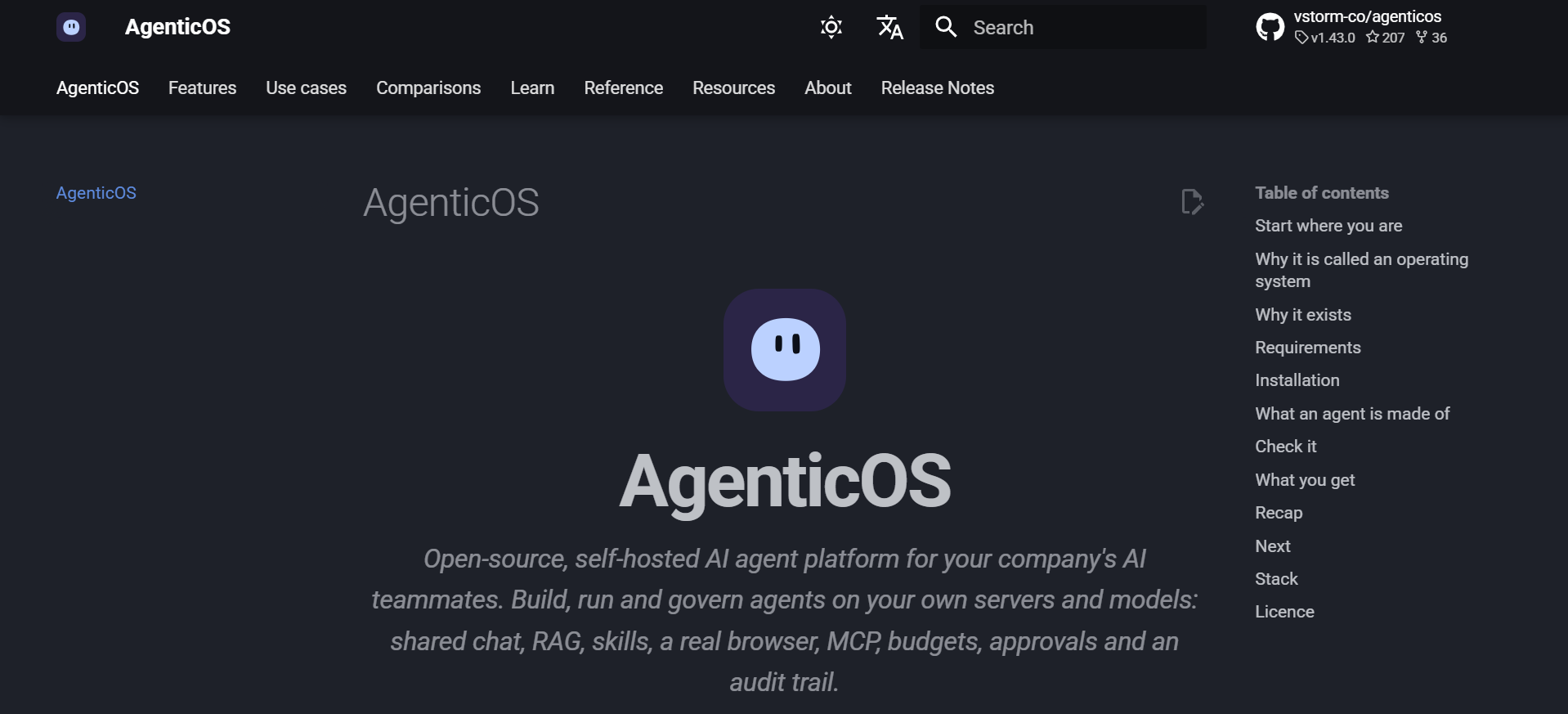
Antoni Kozelski founded Vstorm in Wrocław in 2017. His team now builds AgenticOS as an open-source platform for running AI agents on your own servers.
You can create agents through a browser and export their versions as YAML files without writing code. Each agent has a monthly budget and requires human approval for risky actions. MCP also lets you connect agents to tools like GitHub and Notion.
When to choose AgenticOS
Choose AgenticOS when your team wants many small agents with budgets and approvals running fully on your own infrastructure.
AgenticOS pricing
AgenticOS is free and open source under Apache 2.0, and Vstorm offers paid engineering help for teams that want support.
One Agent Across the Tools You Already Use
Describe the outcome in a chat and let your agent work across connected apps while you keep control over permissions and deployment.
Build your agent with FlusoAgenta
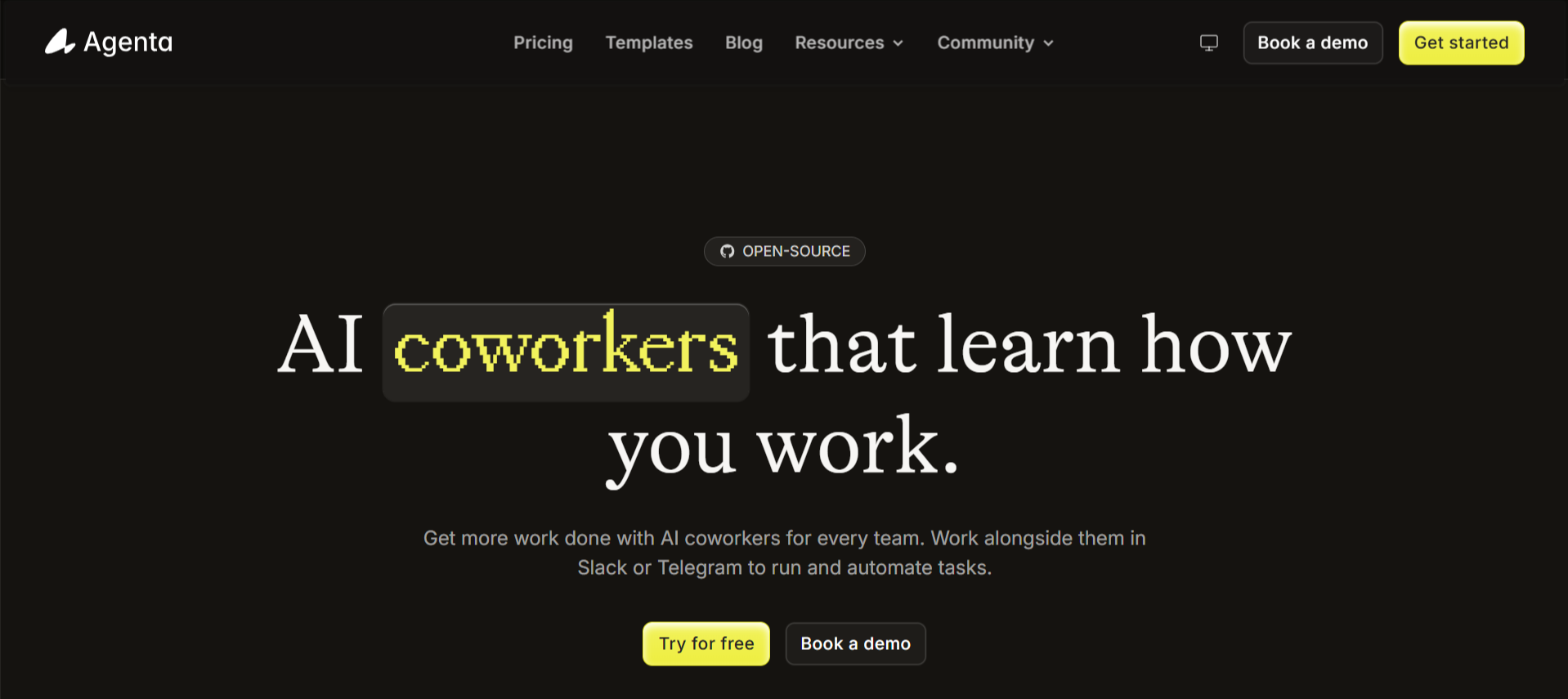
Magenta is one of the best ai agent builders founded by Mahmoud Mabrouk and Akrem Abayed in 2023 during Antler's Berlin residency. The project began as an open-source tool for managing prompts and evaluations before Agenta 2.0 turned it into an agent workspace you use through chat.
Your agents get their own computer and browser along with a shared drive for files and knowledge. You can publish them to Slack, WhatsApp or Telegram and set approval rules for each tool they use.
When to choose Agenta
Pick Agenta when your small team wants to build agents in chat and keep the option to self-host them later.
Agenta pricing
Self-hosting the open-source edition is free, and Agenta Cloud offers a free Hobby plan with Starter at $29 a month and Business at $299 a month.
Tiledesk
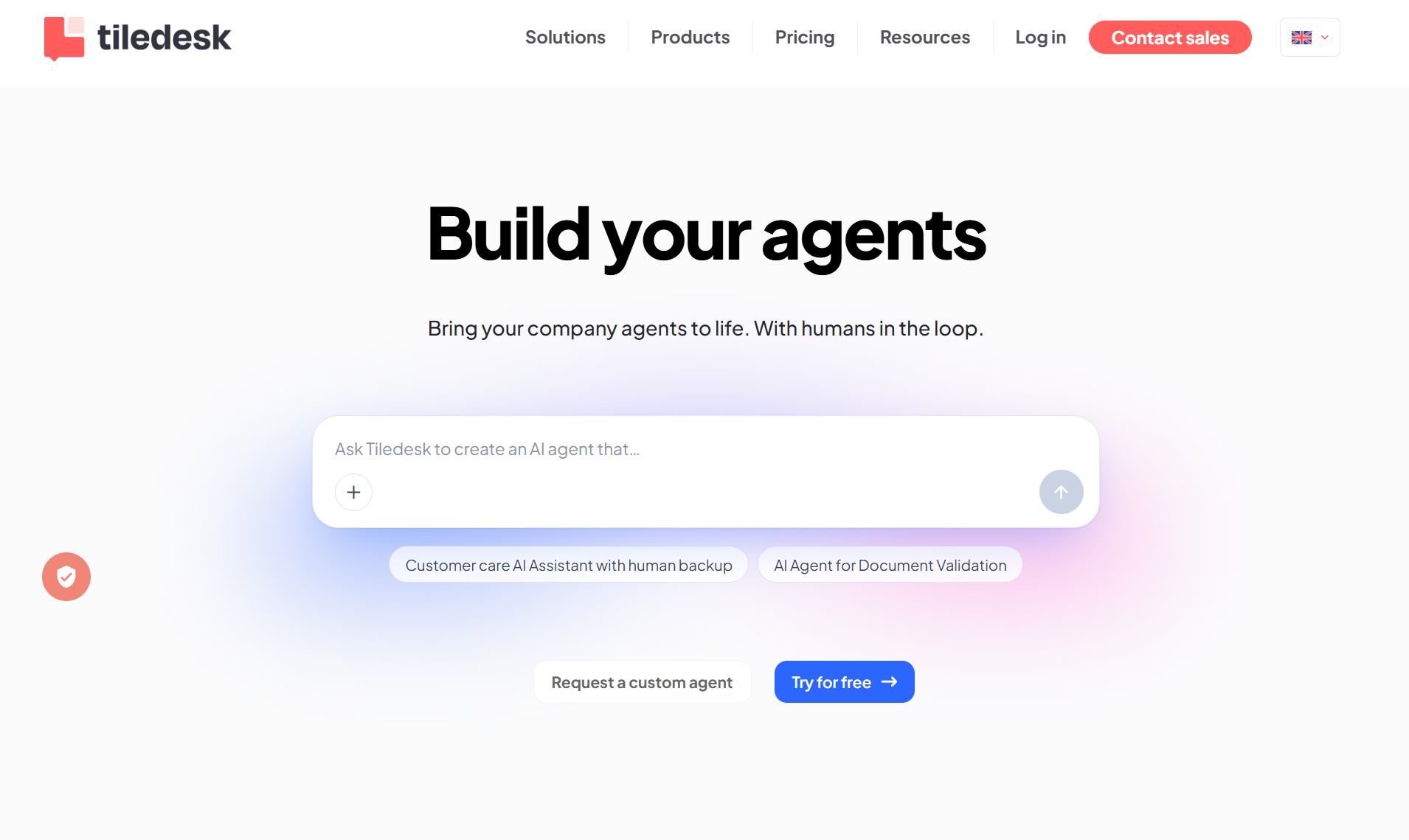
Tiledesk grew out of Chat21, an open-source messaging toolkit that Andrea Sponziello and his team built in Salento in southern Italy. Today the platform gives you a drag-and-drop builder for AI agents that answer customers and hand the chat to a person when needed.
Agents pull answers from a knowledge base built from your own files and web pages. They can also take actions through MCP and work across WhatsApp and Telegram alongside your website chat.
When to choose Tiledesk
Tiledesk works well when you run a small business and want an AI agent answering customers across your chat channels.
Tiledesk pricing
The self-hosted open-source edition is free, and cloud plans begin with a free tier before paid plans from €15 a month.
Create an Agent That Works on Your Terms
Use the chat-based setup to build an agent on open-source models while your data stays under your control.
Try Fluso agentWindmill
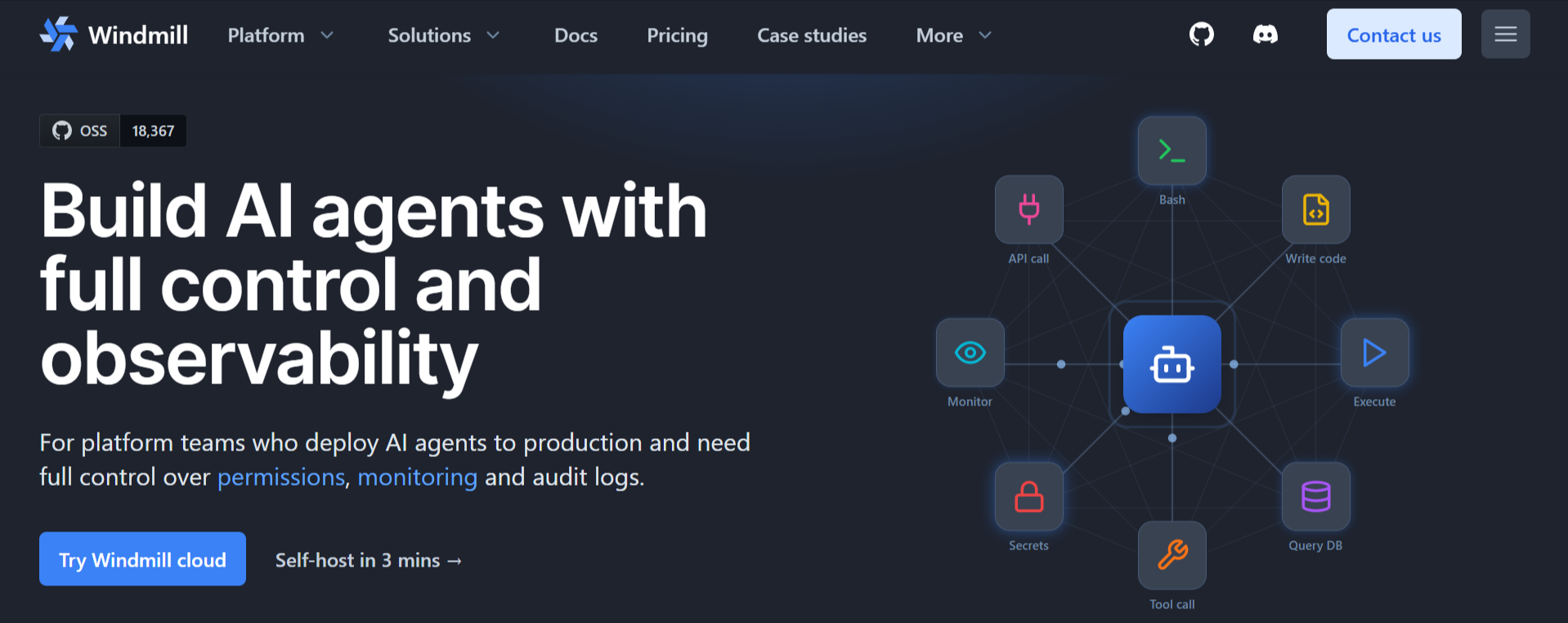
Ruben Fiszel founded Windmill in Paris in 2022 after working as an engineer at Palantir. The open-source platform turns scripts into workflows and internal tools with an AI agent step you can drop into any flow.
Your agents call tools through MCP or through scripts written in more than 20 languages. Windmill keeps secrets and API keys away from the model and supports self-hosted and air-gapped setups.
When to choose Windmill
Go with Windmill if you write scripts and want agents as one step inside the workflows you already run.
Windmill pricing
The open-source edition is free to self-host, and the Enterprise plan starts from $120 a month.
Kestra
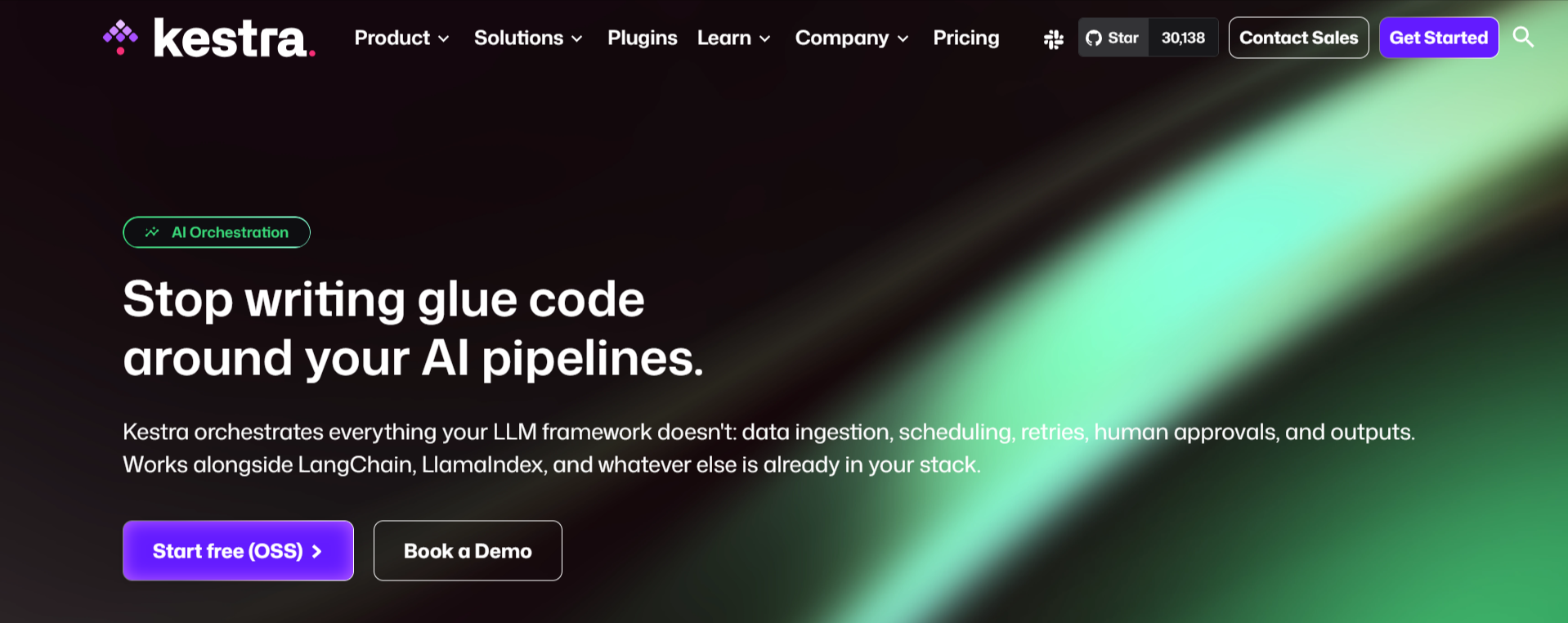
Kestra comes from Paris and is led by CEO Emmanuel Darras. It started as an open-source engine for orchestrating data pipelines and now runs AI agents next to regular workflows for users such as Apple and Toyota.
Kestra 2.0 arrived in September 2026 with a rewritten engine. Any flow can now register as a tool on an MCP server, so your agents call approved workflows instead of touching your systems directly.
When to choose Kestra
Choose Kestra when your agents need to run on a schedule next to your data and infrastructure jobs.
Kestra pricing
The open-source edition is free, while Kestra Enterprise and Kestra Cloud are priced on request.
Spend Less Time Setting Up Your Automation
Fluso handles the technical setup so you can focus on the work you want your agent to finish.
Start with Fluso agentsAgent Zero
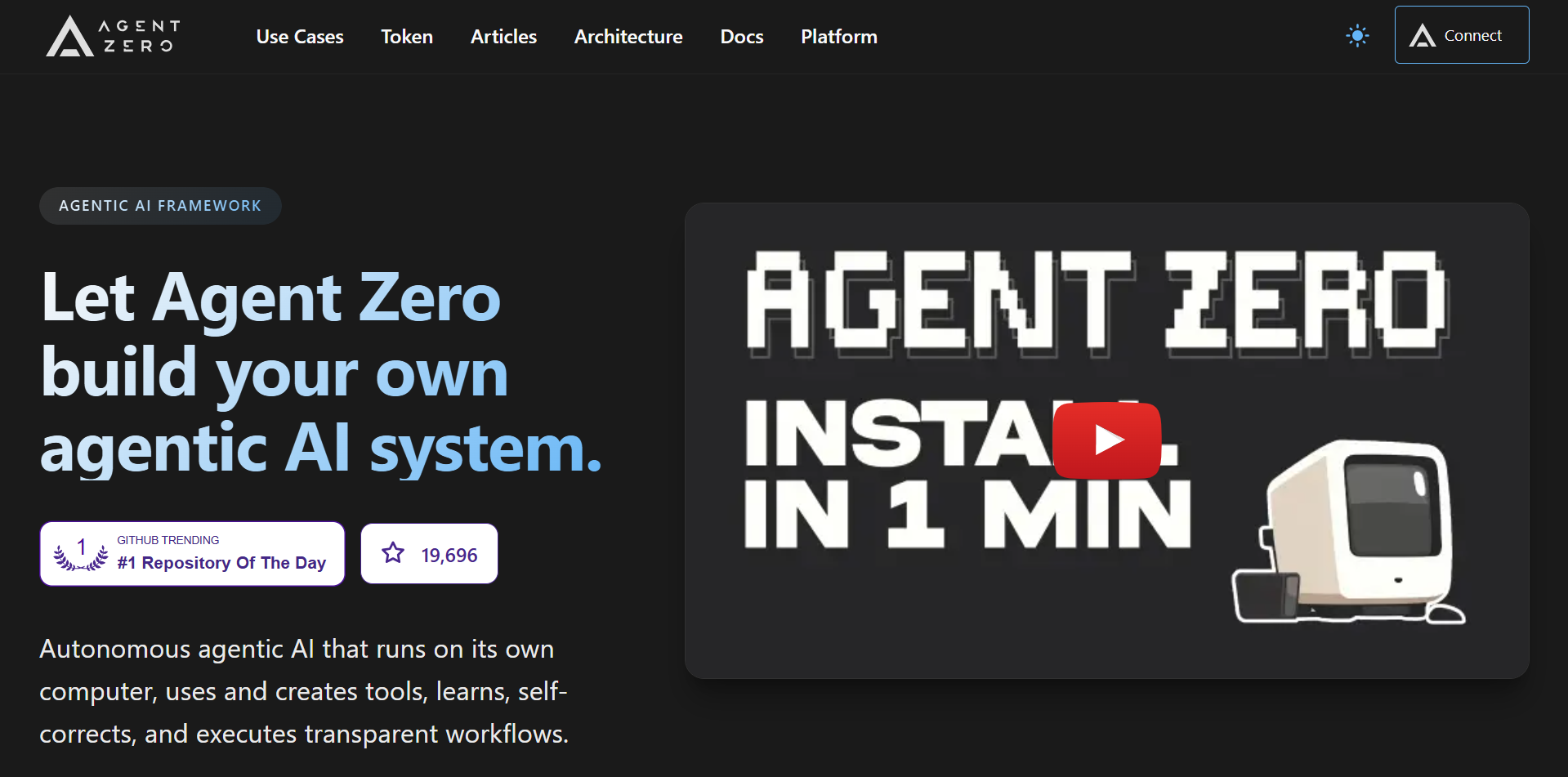
Jan Tomášek started Agent Zero in March 2024 as an experiment to see whether an AI could write and run its own code. The project comes from the Czech Republic and runs inside a Docker container that acts as its own Linux computer.
Your agent can browse the web and execute code and remember past work. It can also spawn subagents that split a big task into smaller ones. Since it can run any command inside its container, you should keep it away from your main files and accounts.
When to choose Agent Zero
Agent Zero fits when you want a personal open-source agent that you can run and shape on your own machine.
Agent Zero pricing
Agent Zero is free to use, and you only pay for the model provider you connect it to.
Give Your Clients More Than a Privacy Promise
For sensitive client work, you need to know how your AI sessions are handled. Fluso supports cryptographic attestation on eligible plans so you can verify how inference runs.
Create Your Fluso AgentReal-world use cases of open-source AI agent platforms
Below are some of the real world use cases of open source AI agents platforms.
Dresden researchers run medical AI agents fully inside the clinic
Researchers at TU Dresden built a diagnostic AI agent that runs entirely on local infrastructure so patient data never leaves the institution. The best locally run model reached the correct diagnosis in 84% and 90% of cases across two test rounds, according to TU Dresden's study announcement from September 2026. Doctors checked 181 of those cases and agreed with the automated scoring more than 90% of the time.
Deutsche Telekom builds its own customer service agents on LMOS
Deutsche Telekom needed AI agents for sales and service in about ten European countries. According to InfoQ's LMOS case study, the team built its own open-source multi-agent platform instead of relying on a closed product. LMOS was later moved to the Eclipse Foundation and helped reduce the time needed to build a new agent to just 12 days.
Berlin gives public servants an open-source AI assistant on European servers
The Berlin Senate Chancellery and CityLAB Berlin built BärGPT as an open-source AI assistant for the city's public servants. It helps staff analyse documents and draft texts with source citations while running fully on European infrastructure. According to EIPA's BärGPT case study on the project, BärGPT rolled out fully in November 2025 and won second prize at the European Public Sector Award.
France builds public-service AI on open-source models
France's digital agency DINUM built Albert on open-source models to help civil servants answer questions from the public. According to AFP's Albert report carried by Weka, the first front-desk version did not scale and the project grew into a broader assistant tested with 10,000 public servants until June 2026.
Fluso: the best open-source AI agent platform for recurring agentic workflows
By now you've seen why open-source models keep your AI agents affordable and under your control. Agents that lock you in or send your data to places you can't check end up costing you more than the work they save.
With Fluso Agents, you can run recurring agentic workflows on multiple open-source models without managing servers. Your agents run in a dedicated EU-hosted workspace where your data is never used to train AI models.
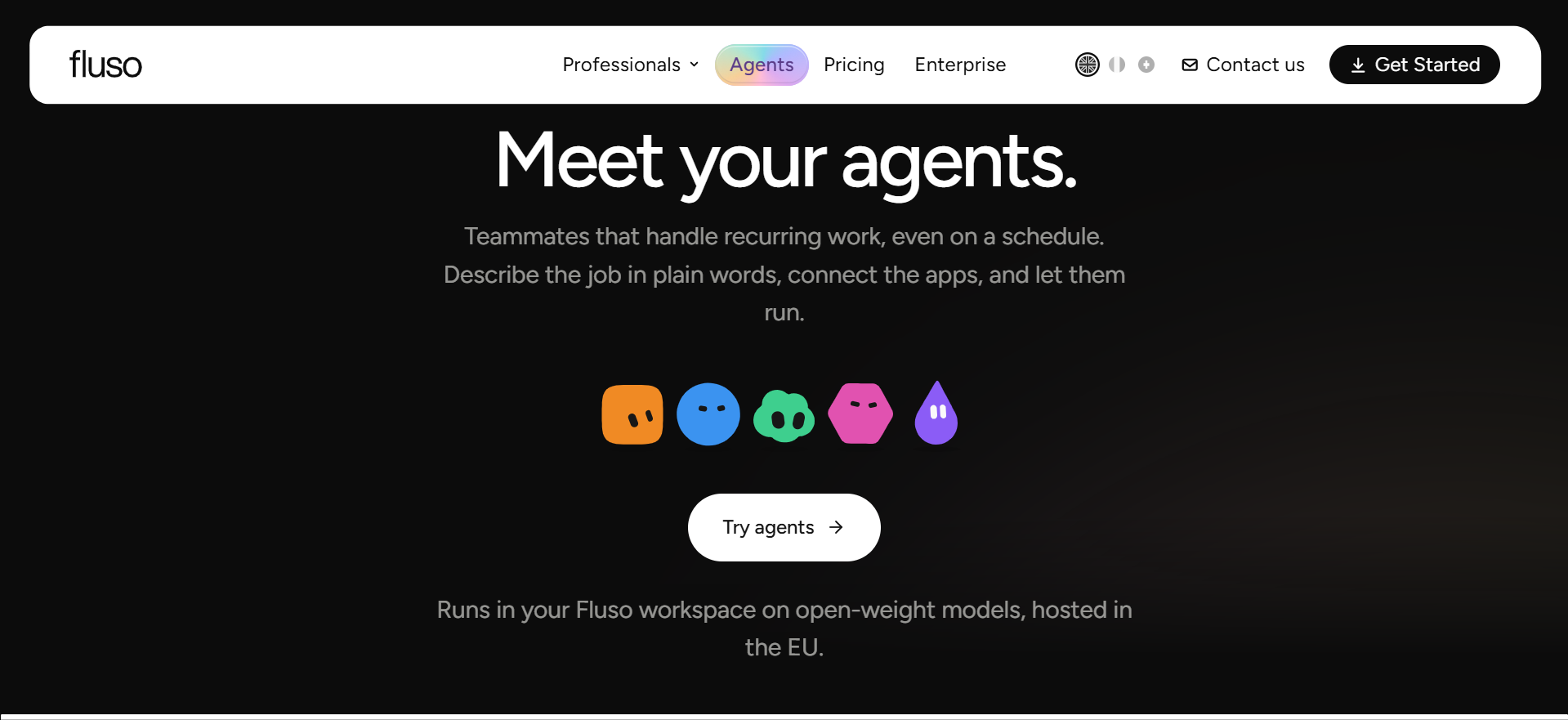
You can set up your agent through chat by describing the tasks you want it to handle. Getting started with Fluso agents is pretty easy with Fluso's chat-based setup.
You describe the job in a chat and the manager sets up the agent for you to review before you choose its apps and routines. You can create your Fluso agent today to automate workflows and daily recurring tasks.
FAQs about the best open-source AI agent platforms in 2026
What is an open-source AI agent platform?
An open-source AI agent platform lets you build and run agents on open code or open-source models that you can inspect and host where you choose. You decide where your data goes instead of handing it to a closed provider. Fluso gives you agents on open-source models in an EU-hosted workspace without any servers to manage.
Are open-source AI agents free to use?
The software or models are often free, but you still pay for the servers and model calls behind your agent. Fluso has a free tier so you can test agents on open-source models before you pay for anything.
What is the best open-source multi-agent AI platform?
Fluso lets one main agent hand parts of a job to separate sessions and bring the results back into a single conversation. Each session keeps its own history and goes through the same app access checks as the main agent.
Can an open-source coding agent work with my developer tools?
Yes, as long as the platform connects to the tools you already use. Fluso agents work inside a cloud sandbox where they can run commands and handle files. They also connect to tools such as GitHub through MCP so you can turn issues into specs or reports.
Can open-source AI agents be GDPR compliant?
They can when you control where your data is processed and stored. Fluso runs every workspace on a dedicated machine hosted in the EU and never trains models on your data. You also get approval rules and logs for everything your agent touches.
We'd love to see what you build when you create your agent in Fluso and hear where we can make the experience better.