
Private AI for Legal: How Law Firms Can Protect Client Confidentiality with Sovereign & Verifiable AI

Back in June 2023, two lawyers and their law firm were hit with a $5,000 USD fine by a Manhattan federal judge in Mata v. Avianca for using six fabricated court cases in a legal brief. They relied on ChatGPT for their background research, but the model hallucinated the data, generating highly believable case names, docket numbers, and internal quotes. According to Reuters, Judge Kevin Castel labeled the paperwork "legal gibberish," ruling that they failed their basic duty to verify their citations before filing.
This case proved that AI hallucinations can easily slip into your official legal proceedings. Ever since that happened, legal firms have had to look way beyond just verifying whether the AI outputs are accurate. You also need to protect your client data and think carefully about what actually happens to your sensitive information the second you type it into an AI system.
A single prompt can contain privileged communications, legal strategy, or even the confidential settlement terms. Once that data leaves your firm's control, you need to know where it goes, who can access it, how long it is kept, and whether it is used to train AI models.
This is where private, sovereign AI can help. It gives you more control over where your data is processed and stored, who can access it, and how it is protected. Data sovereignty helps you control the jurisdiction your data falls under. Verifiability lets you check that the platform is actually following its security and privacy claims. Confidential computing protects your data while it is being processed, not just while it is stored.
For law firms, AI adoption requires strong controls around client confidentiality and professional obligations. Sovereign, verifiable, and private AI gives your firm greater control over how sensitive legal data is processed, protected, and governed.
Risks of using AI in legal work
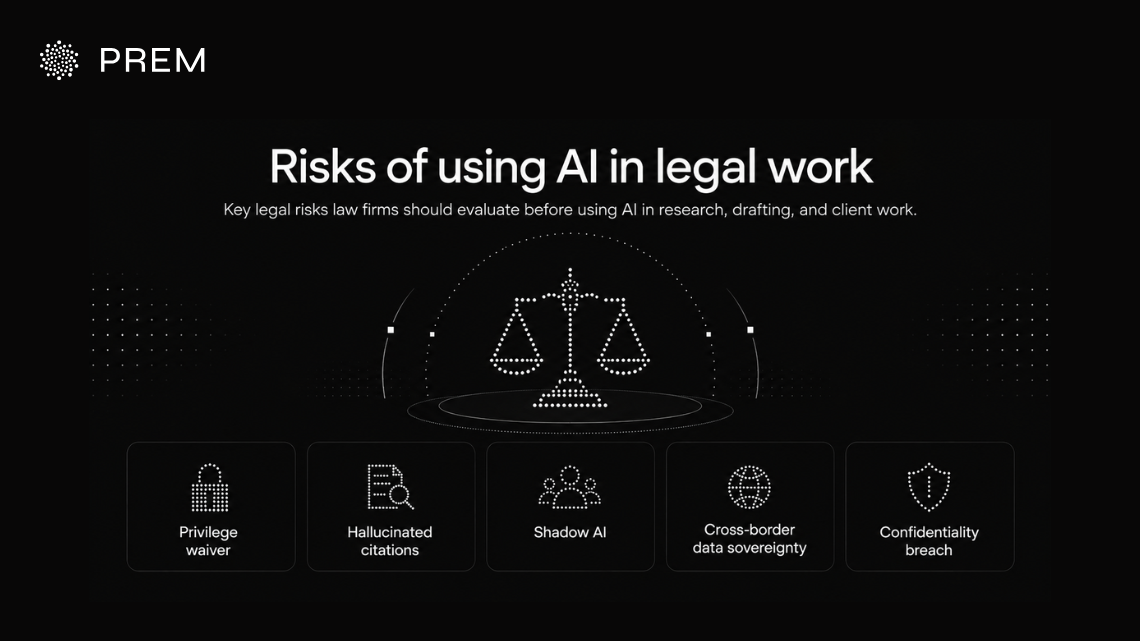
Before adopting an AI tool, your firm needs to understand the risks involved. These risks are already showing up in legal work, from court sanctions and AI hallucinations to client data exposure.
Get a Private AI Assistant for Legal Work
A secure alternative to public AI tools for your firm's research and drafting.
Get FlusoKey considerations for choosing a private AI platform for law firms
Not every private AI platform gives your firm the same level of protection or control. You need to evaluate how a platform handles your data, where your AI workloads run, and whether you can verify its security claims.
Client confidentiality & privilege protection
Your platform should protect client data by design. Check whether it retains prompts and outputs or uses your data to train models. Look for clear technical and contractual controls around confidentiality and privilege.
Data residency & jurisdiction
You need to know where your data is processed and stored and which laws apply to it. Sovereign AI gives your firm greater control over data location and the jurisdiction governing your AI workloads.
Verifiability
Privacy claims should be verifiable. Look for Trusted Execution Environments (TEEs) and cryptographic attestation that let you verify where your data is processed and whether the expected environment is running.
Some providers also offer a lower-assurance mode that relies on contracts rather than hardware verification. It can work for testing, but it isn't the right fit for your privileged client data.
Deployment control
Choose a deployment model that matches your firm's security requirements. Depending on how much control you need, your options can range from managed APIs to private cloud, VPC, or on-premises infrastructure.
Compliance
Your AI platform should support your legal and regulatory requirements. Depending on your practice, this can include bar association rules, GDPR, the EU AI Act, client-specific requirements, and other data protection obligations.
Integration with existing legal workflows
Private AI needs to fit into your existing workflows. Check whether it works with your document management, case management, and legal research tools without requiring major changes to how your teams work.
Use cases: Where law firms apply private AI
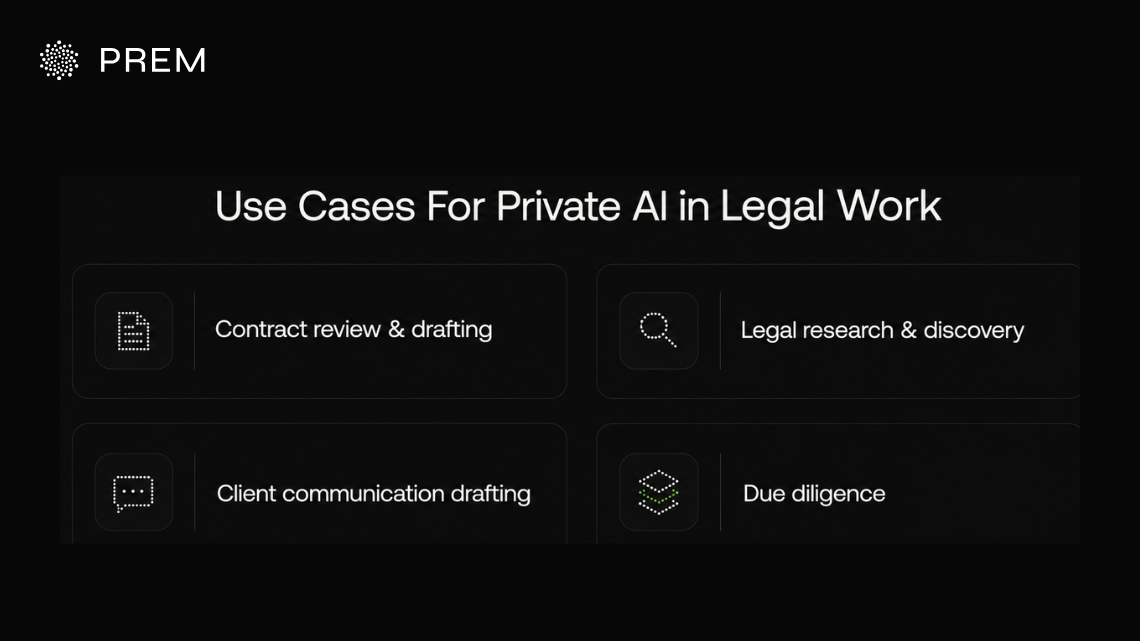
You can use private AI across legal workflows that involve sensitive client and case data. The main use cases include contract review, legal research and discovery, client communication, and due diligence.
Contract review & drafting
You can use AI to review contracts, identify key clauses, flag potential issues, and assist with drafting. A 2026 Forrester Consulting Total Economic Impact study of Thomson Reuters CoCounsel Legal found customers achieved up to a 33% reduction in time spent on document review, research, and drafting. The study also modeled a 400% three-year ROI and an $18.3 million net present value for the composite organization.
Since your contract workflows can contain confidential transaction documents, a private AI environment helps you keep this data within your firm's confidentiality controls.
Legal research & discovery
You can use AI to search large volumes of emails, case files, and other electronic records and quickly find relevant evidence. A BARBRI recap of eDiscovery Today's independent 2025 State of the Industry Report, based on 551 practitioners, found that 26% expect generative AI to have a transformative effect on e-discovery, while nearly 82% expect it to create new workflows.
This is especially important when your discovery data includes privileged material. Processing it within your firm's controlled AI environment helps keep sensitive information within your confidentiality boundary.
Client communication drafting
You can use AI to draft client updates, follow-up emails, and case summaries from meeting notes or call transcripts. This is useful when your underlying information is sensitive and should not be processed through a public AI service.
The American Bar Association's 2024 Legal Technology Survey Report found growing use of AI tools across legal research and discovery workflows, based on responses from practicing attorneys rather than vendors or consultants. Your lawyer should still review AI-generated communication before it is sent to a client.
Due diligence
You can use AI to classify and analyze large document sets during M&A and regulatory due diligence. A randomized controlled trial published in the Minnesota Law Review found that access to GPT-4 produced large and consistent speed gains on realistic legal tasks.
However, the researchers found that results varied by task and that faster work did not always mean better output quality. Since your due diligence files can contain highly sensitive client information, the AI environment you use to process them is an important part of your security and confidentiality controls.
Run Your Legal Research Inside a Private Perimeter
Work with your firm's legal data inside a controlled AI environment.
Get FlusoHow to implement private AI for your legal enterprise
Now you know that private AI is the right direction for legal enterprises handling sensitive data. The next question is how you want to implement it. Most firms can start with a ready-to-use legal AI application, while enterprises with their own AI development and infrastructure teams may need more control over how their AI systems are built and deployed. Prem AI supports both paths. Here's how each option works.
Fluso
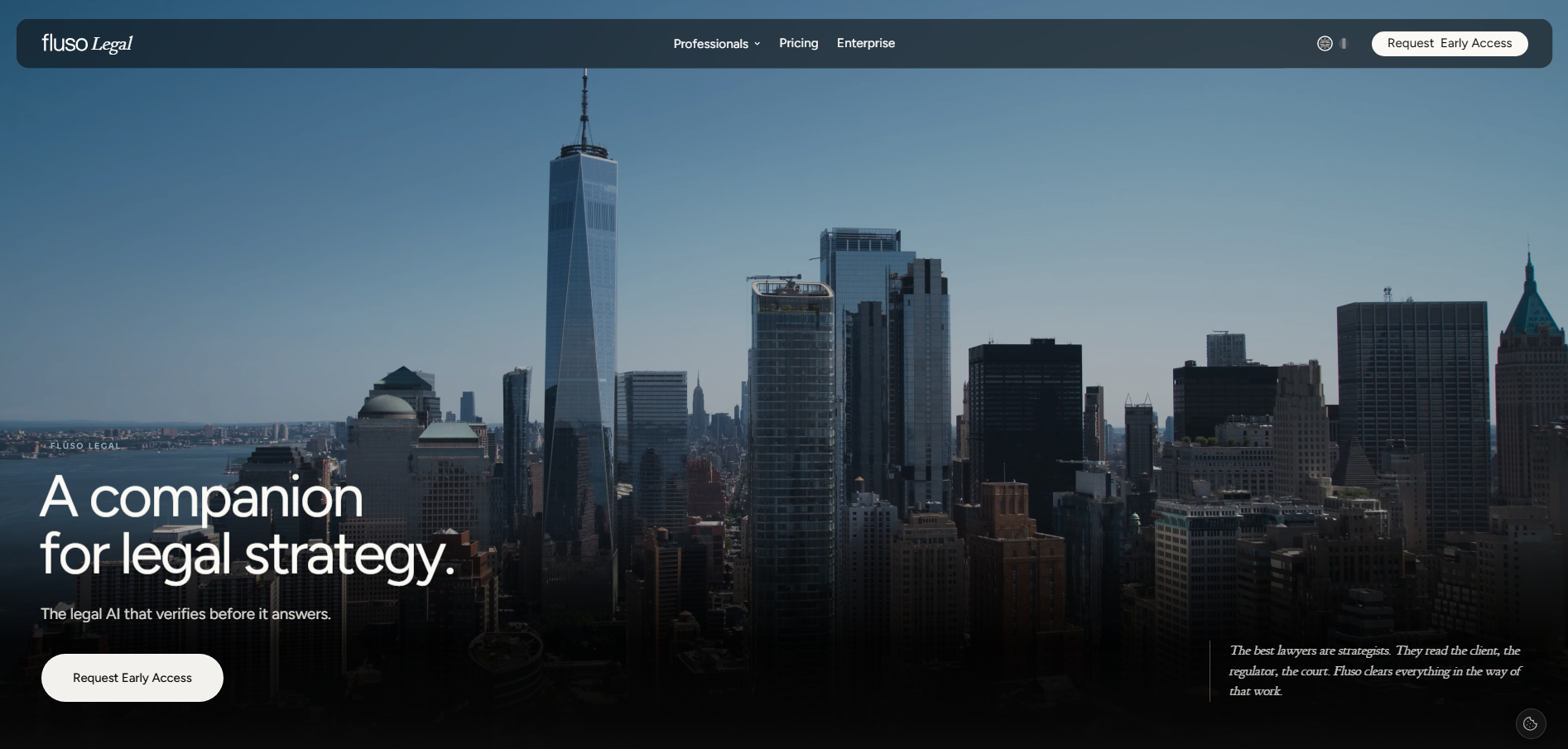
Fluso is the ready-to-use option if you want private AI without building the underlying system yourself. Your legal team can use it as a private AI assistant for research, drafting, and case work, without sending sensitive client information to a public AI tool.
Using Fluso keeps your sensitive legal workloads inside a hardware-protected confidential computing environment.
Give Your Legal Team AI Built for Sensitive Work
Analyze cases and documents without sending sensitive client data to public AI tools.
Get FlusoEnclave API for legal enterprises
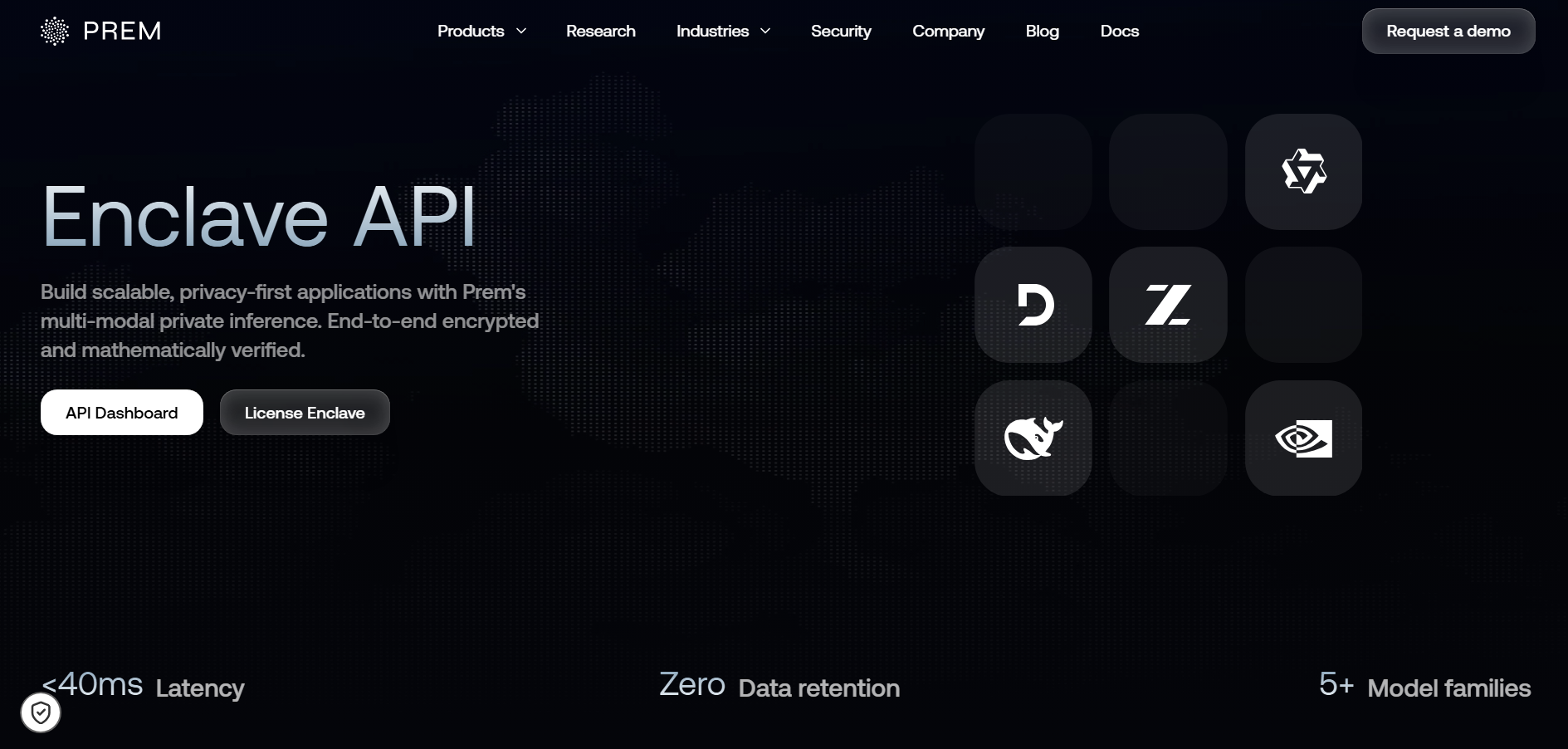
If you want to build your own AI-powered tools, Enclave API gives your development team programmatic, OpenAI-compatible access to open-weight models. Your data is encrypted before it leaves your system. It is then processed inside a hardware-isolated environment, where it remains invisible to Prem AI. Every request comes back with a signed attestation report, so you can check for yourself that this happened.
Choose this if you want to build your own legal AI tools instead of using a ready-made assistant, without managing the infrastructure yourself.
Build Your Own Private Legal AI Tools with Enclave API
OpenAI-compatible API, client-side encryption, and cryptographic attestation for custom legal AI applications.
Get Started with Enclave APIWhat to verify in a private AI platform, and how Prem AI measures up
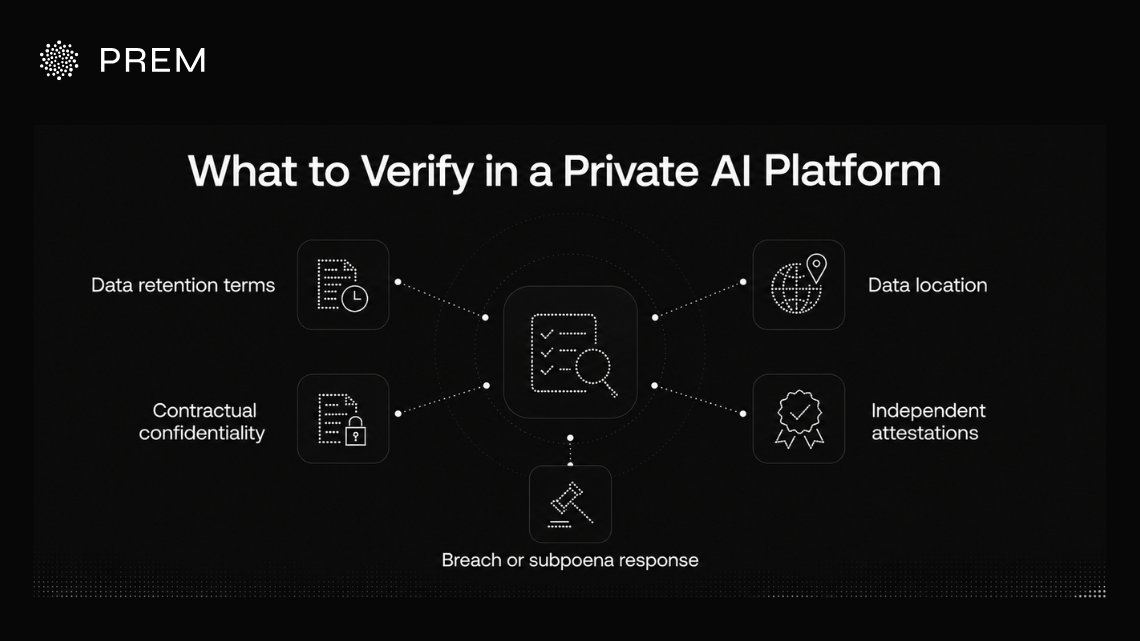
Before you trust an AI platform with client data, verify its privacy and security claims directly. Do not rely on marketing language alone. Here's what to check and where Prem AI stands against each one.
Get an AI Assistant Built for Confidential Legal Matters
Hardware-protected confidential computing for your sensitive legal workloads.
Start with FlusoGet the best private, sovereign AI for your legal enterprise with Prem AI
Your firm needs AI that protects client confidentiality while giving you greater control over where your data and workflows are processed. Prem AI combines private and sovereign AI infrastructure with confidential computing and cryptographic attestation, so you can verify how your sensitive legal workloads get handled.
If you want a ready-to-use assistant, Fluso gives your team a secure, private alternative to public AI tools for legal research and drafting.
If you want to build your own AI-powered tools, Enclave API gives your development team programmatic, OpenAI-compatible access to open-weight models, with client-side encryption and cryptographic attestation.
Want to give your firm private, sovereign AI without giving up control of sensitive client data and legal context? Contact our sales team or email us at sales@premai.io.
FAQs about Private AI for legal
What is private AI for law firms?
Private AI is an AI system designed to keep your client data, prompts, and outputs within an environment your firm controls, rather than sending them to a public AI service. It can combine confidential computing and verifiable infrastructure to protect sensitive and privileged information.
Can entering client information into ChatGPT waive attorney-client privilege?
It can create a risk of waiver. Privilege depends on maintaining confidentiality, and sharing privileged information with a third-party AI service can raise questions about whether that confidentiality was maintained. The risk depends on the service's data handling, contractual protections, and the circumstances of the disclosure.
What is the difference between private AI and zero data retention (ZDR)?
ZDR means a provider does not retain your prompts or outputs after processing, subject to any stated exceptions. Private AI is broader. It also covers where your data is processed, who controls the infrastructure, how the workload is protected, and whether those controls can be verified.
How can a law firm verify an AI platform's privacy claims instead of just trusting its policy?
Look for cryptographic attestation, independent audits, and hardware-enforced confidential computing that can help you verify the environment handling your data. You should also review data location, contractual data protections, retention terms, and breach notification procedures.
Which enterprise AI platform offers the strongest verifiable privacy for law firms?
Prem AI is a strong option for firms that prioritize verifiable privacy. Its Enclave architecture uses Trusted Execution Environments (TEEs) and cryptographic attestation, allowing you to verify the processing environment rather than relying only on a privacy policy.
Does private AI eliminate the risk of AI hallucinating case law?
No. Private AI protects your data and infrastructure, but hallucination is a separate risk that comes from the model itself, not from where your data is processed. Your firm still needs to review and verify AI-generated research and citations before relying on them.
What is shadow AI, and why is it a risk for law firms?
Shadow AI is the use of unapproved AI tools by employees without the firm's knowledge or oversight. When staff enter client or case information into these tools, the firm may lose visibility into where the data goes, how long it is retained, and how the provider uses it.
Does private AI always require deploying software on my own servers?
No. Private AI covers a range of models, not just self-hosted deployment. Some providers offer it as a managed API where your data stays encrypted and processed under strict controls, while others let you run the software on your own infrastructure. What matters most is how your data is protected and whether you can verify it, not where the software physically runs.
What should a law firm ask an AI vendor before adopting it for client matters?
Ask whether client data is retained or used for training, where it is processed and stored, what confidentiality protections apply, and what happens if the provider is breached or receives a legal request. You should also ask which privacy and security claims you can independently verify.
Which private AI platform is best suited for handling privileged legal work?
Prem AI is a strong fit if your firm prioritizes private, sovereign, and verifiable AI. Enclave gives you hardware-protected confidential computing and cryptographic attestation. Fluso gives your legal team a private, ready-to-use AI assistant for sensitive research and firm knowledge work.
See how Prem AI can help your enterprise build private AI without compromising control over your data and infrastructure. Contact our sales team, or email us at sales@premai.io.