5 Best Sovereign AI Platforms in 2026 for Private, Secure & Verifiable Enterprise-Ready AI
On this page
Sovereign AI gives your enterprise 100% data control over where data is processed and how your models run. It also gives you more choice over the infrastructure used for sensitive AI workloads.
We at Prem AI give your enterprise verifiable and private AI infrastructure built for sovereign deployment.
- Enclave API lets you run confidential inference with Zero Data Retention (ZDR) and encrypted processing.
- Prem Enclave runs supported models inside Trusted Execution Environments (TEEs) with cryptographic attestation.
- Attestation gives your security team hardware-signed proof of the environment processing every request.
You can run Prem AI on-premises or inside your Virtual Private Cloud (VPC). Dedicated cloud and hybrid deployments are also supported.
This gives your enterprise more control over its models and data while helping you meet your security and compliance requirements.
According to Bloomberg's report on Samsung's ban, Samsung banned ChatGPT across one of its biggest divisions in May 2023 after engineers shared proprietary chip source code, internal meeting notes, and confidential data with the chatbot to speed up their work. That data was then stored on servers outside Samsung's control, under retention rules the company had not agreed to, with no clear way to retrieve or delete it.
That happened years ago, but the same problem still exists, and the financial risk has only grown. IBM's latest breach research puts the average cost of a malicious AI-enabled breach at $6 million in 2026, around $1 million higher than the global average.
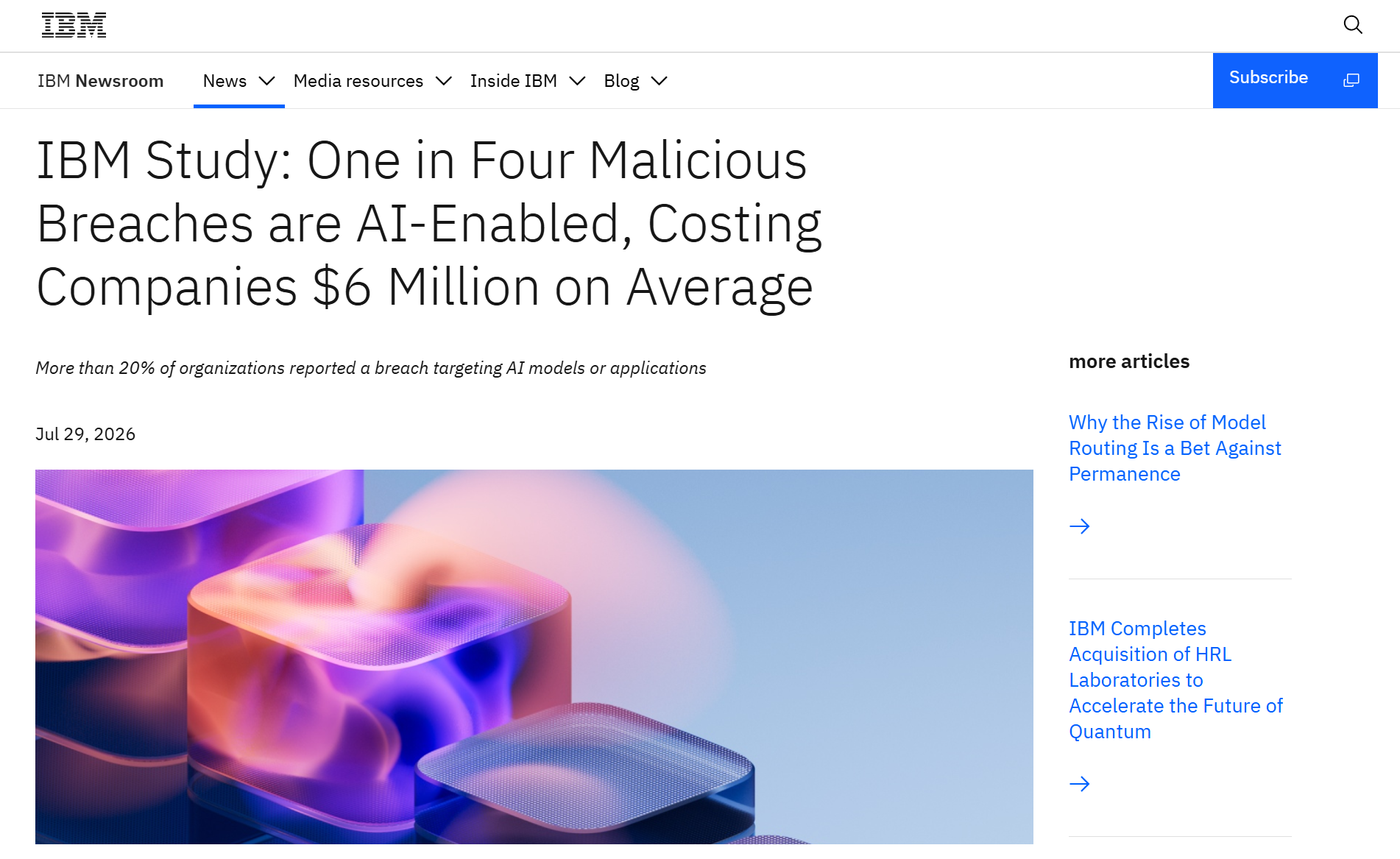
IBM also highlights a common problem for enterprises. Many still do not know where their AI systems process data, while regulations are getting stricter. Under the EU AI Act, certain violations can lead to fines of up to €35 million or 6% of global annual turnover, on top of existing GDPR requirements.
The Samsung incident does not mean your enterprise should stop using AI. Of course your team needs it to work faster and automate tasks. What matters is having the right control over how AI is used, where your data is processed, and who can access it, so sensitive business information stays within infrastructure you can trust.
What makes an AI platform truly sovereign?
For your enterprise, a sovereign AI platform should give you clear authority over how your AI environment operates. That includes where your data is processed, where your models run, who can access the infrastructure, and which laws apply to your workloads.
This becomes important when you start comparing vendors offering enterprise AI platforms, because the word “sovereign” can cover very different setups. A provider may offer a European cloud region and keep your data within that region. That addresses data residency, but there are other parts of the AI environment you still need to check.
As we explained in our sovereign AI post, choosing a region tells you where your data is processed, but that alone does not tell you who can access or control it as it moves through different parts of the AI setup.
There's a lot of talk about sovereign AI, and not always a lot of clarity about what it actually means. We're going to use this account to unpack it, one concept at a time, without hype, in a way that makes sense to anyone thinking about running AI in a regulated environment.…
— Prem (@premai_io) July 21, 2026
When you compare sovereign AI platforms, look at how well they protect and control your data, meet compliance requirements, support the models you need, and give you flexibility over where AI runs.
The sovereign AI platform should also scale with your workloads and provide the governance, reliability, monitoring, integrations, and support needed for enterprise use.
Best sovereign AI platforms for enterprises in 2026
Prem AI
Prem AI is a Swiss company founded in 2023 by Simone Giacomelli, with a clear goal: you should be able to run AI without handing your data to a company that can see everything running through it.
Prem AI keeps your data secure through hardware-encrypted enclaves and cryptographic attestation, a signed proof of which model ran and how your data was handled on every request. Data retention stays at zero, and every deployment is compliant with Switzerland's FADP, SOC 2 Type I, and ISO 27001.
Inference runs in under 40 milliseconds and is fully OpenAI-compatible, so you can switch to it without rewriting your integration. Sovereignty for enterprise goes beyond choosing where your data is stored, it also means knowing who can access it, which laws govern it, and where that legal control sits. With us, your data and AI workloads operate under Swiss jurisdiction, giving you a clear legal framework for how they are handled and protected.
How Prem AI helps you build sovereign AI infrastructure for your enterprise: two deployment options
Prem AI gives your enterprise two deployment options, cloud-based and self-hosted, so you can choose the infrastructure that best fits your security, privacy, and sovereignty requirements.
The Prem AI enterprise product suite
Our platform includes Prem Enclave, Enclave API, and CyberScan, giving enterprises the tools to build, secure, and deploy sovereign AI across different use cases.
Enclave API: Private AI through a single API
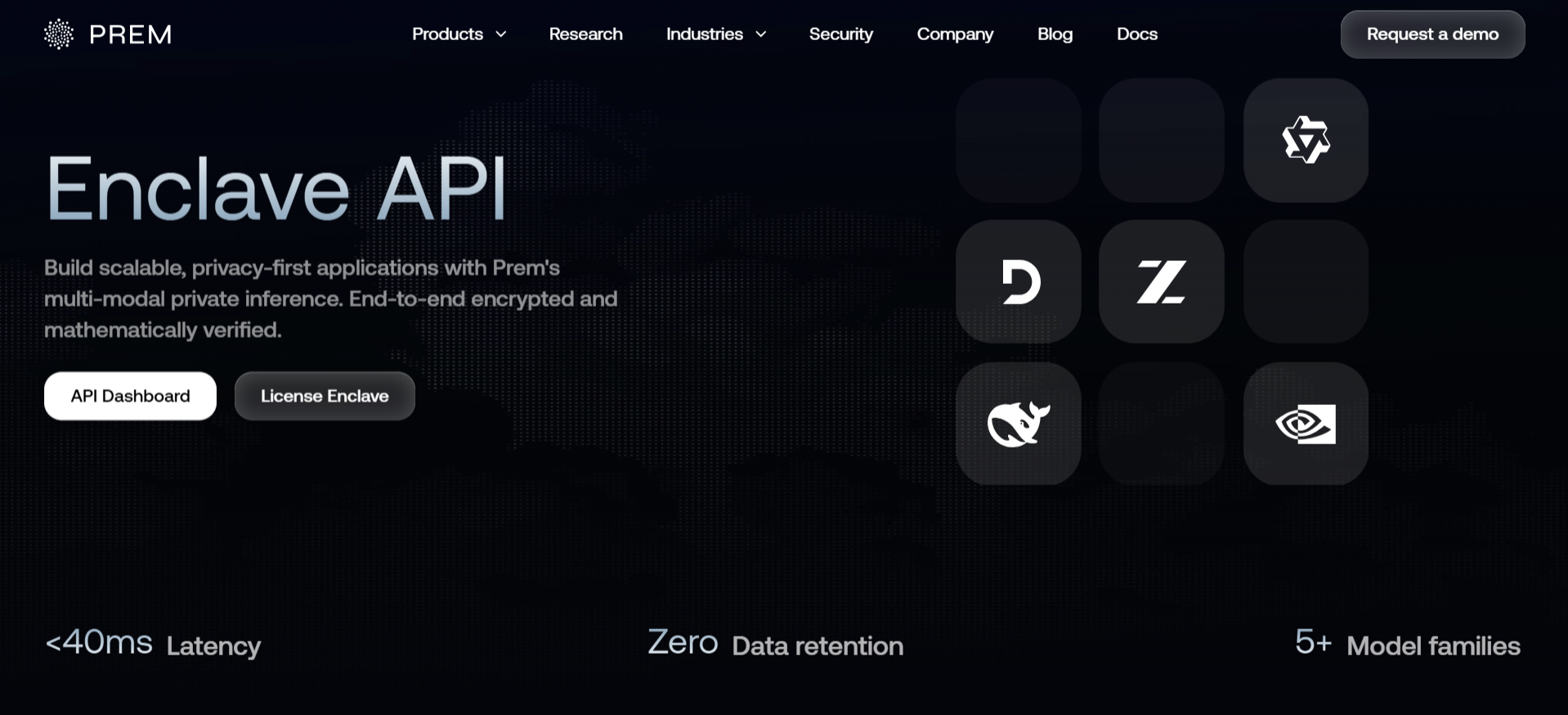
If you already have an application and want to add sovereign AI to it without rebuilding your stack, Enclave API is the way in. It connects to multiple model families, including text, vision, and audio, through a single endpoint, with cryptographic attestation on every response and ZDR.
Prem Enclave: Encrypted compute for sovereign AI
Prem Enclave gives you the same confidential inference technology as Enclave API, licensed to run on your own servers and GPUs instead of through Prem's hosted service. You keep the hardware, so your data never has to leave your own infrastructure.
Prem Cyberscan: Security agent for vulnerability detection
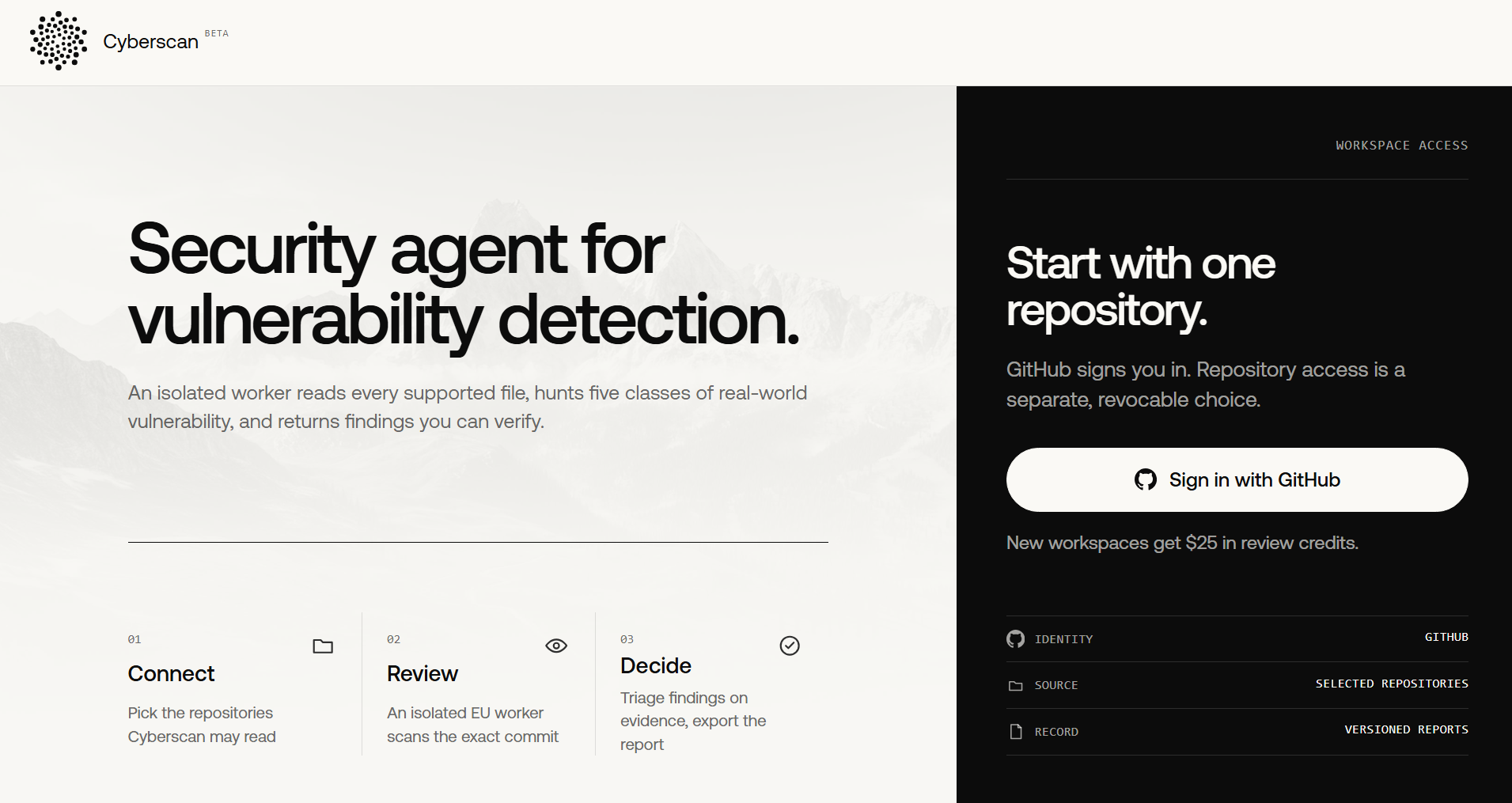
Prem CyberScan scans your codebase in an isolated environment to find real security issues, including access control, cryptography, and injection risks. For each issue, it shows you the affected file, line, and code so you can review and verify the finding yourself.
LightOn
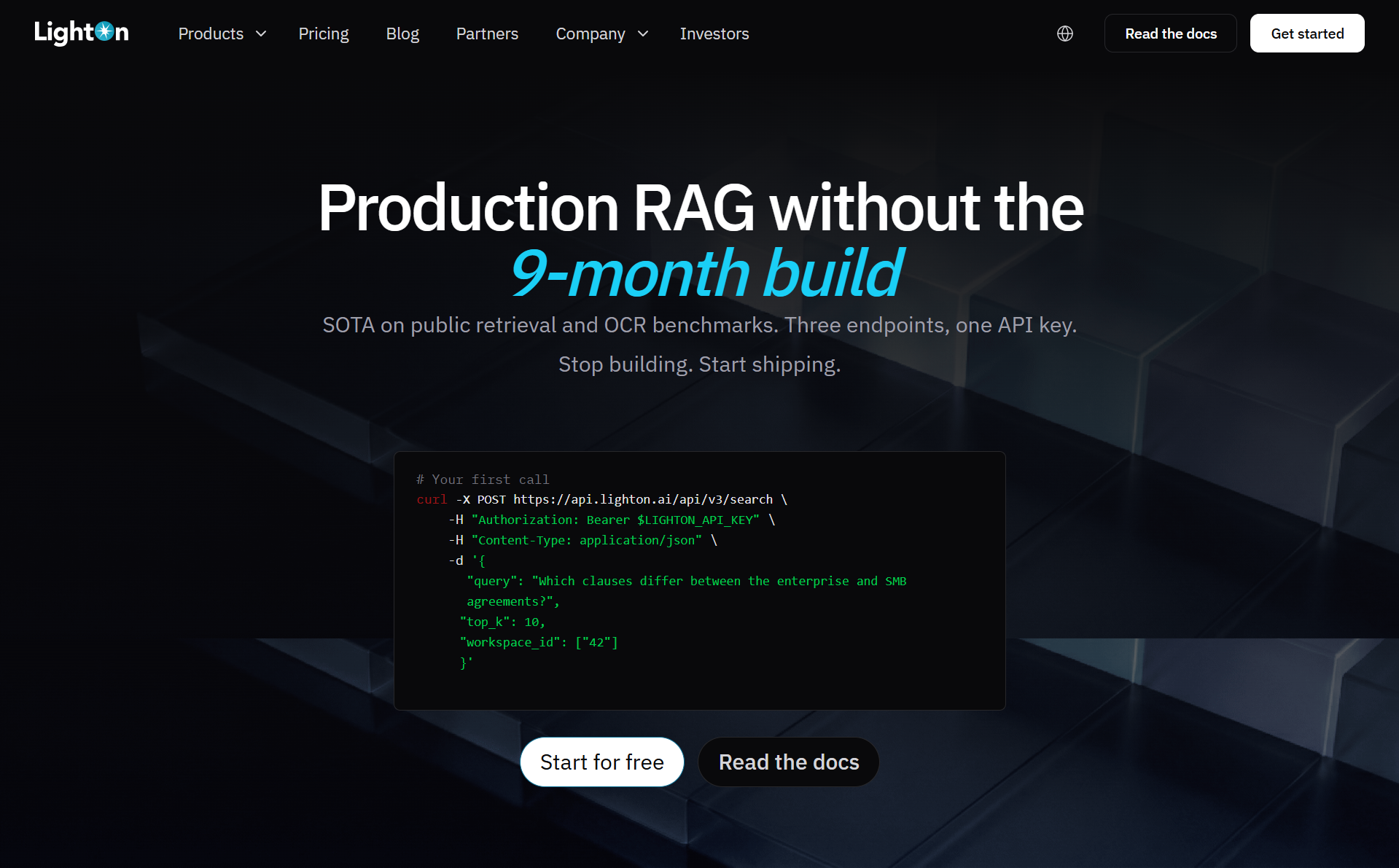
LightOn was founded by Igor Carron in 2016, and it started out building optical computing hardware before it built a single AI model. That background still shapes Paradigm today.
Paradigm runs on LightOn's own retrieval technology, built in-house to search and work with large sets of documents in real time, so you don't need a separate third-party tool for retrieval. It also means Paradigm handles those document sets without needing you to over-provision GPUs, which matters if your enterprise is processing years of internal records rather than a handful of files.
LightOn is publicly listed on Euronext Growth Paris, so its finances are public record rather than a pitch deck, which can matter if your enterprise weighs long-term vendor stability as part of the decision.
Location & founding year
Paris, France, founded in 2016
Supported models of LightOn
The Paradigm platform, built on LightOn's own French-language and multilingual model lineup
Notable clients of LightOn
Safran, Groupama, the French Space Agency, Région Île-de-France
Mistral AI (Vibe, formerly Le Chat)
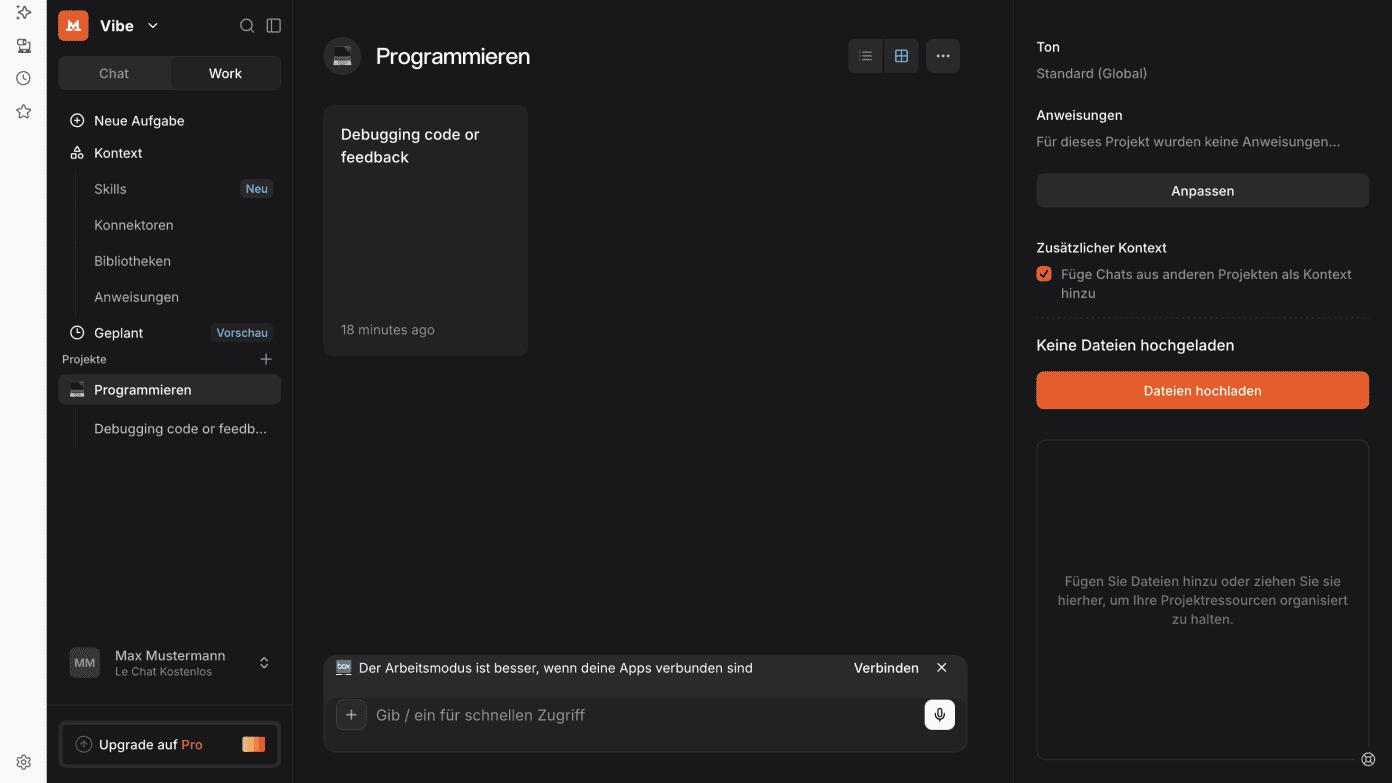
Mistral AI was founded by Arthur Mensch in April 2023, and it now has Vibe, an agent that connects directly to Google Workspace, Outlook, Slack, and GitHub to complete real tasks instead of only answering questions. Mistral Medium 3.5 also self-hosts on four GPUs with a 256,000-token context window, making it easier to build a sovereign AI setup on your own infrastructure without the compute demands of most frontier-scale models.
If your enterprise runs on Microsoft's stack, Mistral slots in through Azure Local, with a fully disconnected, air-gapped tier alongside the standard cloud option, so the same models serve both public-facing and sensitive workloads.
Location & founding year
Paris, France, and founded in April 2023.
Supported models of Mistral AI
Mistral Large, Medium 3.5, Small, and the Codestral coding line, all available through Mistral Studio
Notable clients of Mistral AI
BNP Paribas, HSBC, Orange, Stellantis, Airbus, SNCF
Domyn
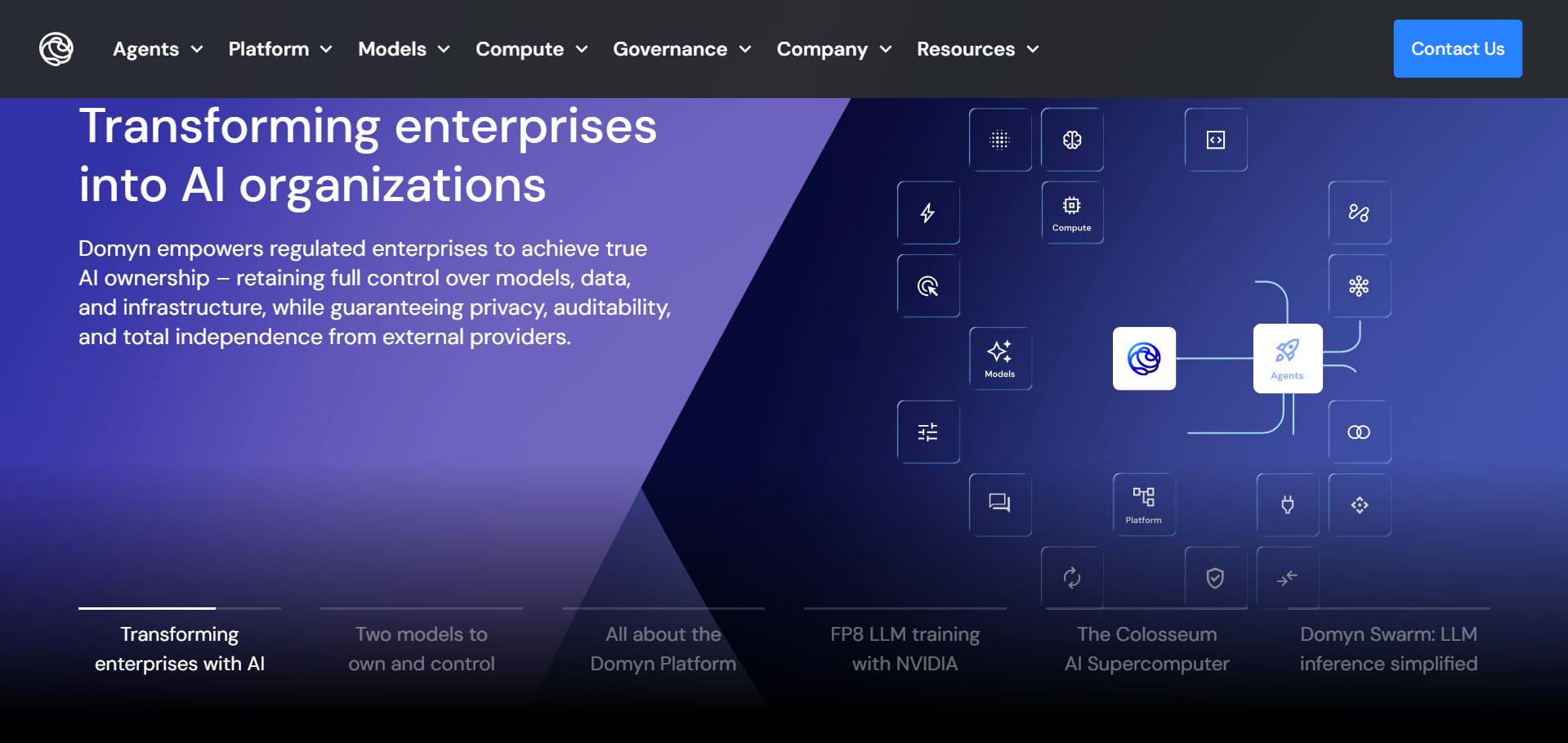
Domyn was founded by Uljan Sharka in 2016 as iGenius, and it now owns Colosseum, its own supercomputer built to train models above a trillion parameters, instead of renting GPU capacity from someone else.
With Domyn, you get the whole stack under one roof: the hardware, the foundation model, and the agent layer, giving your enterprise a more integrated way to run private AI than infrastructure spread across multiple vendors.
You can train your own model on Domyn's infrastructure using your own data, not only fine-tune a version of someone else's, and once it's trained, it keeps running on the same hardware Domyn owns, so there's no separate step where your model has to move to another company's cloud to serve traffic.
Location & founding year
Milan, Italy, founded 2016 as iGenius, renamed Domyn in 2025
Supported models of Domyn
Domyn Large and its own foundation models, also available through Microsoft Foundry
Notable clients of Domyn
Intesa Sanpaolo, Fideuram Private Banking, and other banks, insurers, pharmaceutical companies, defense contractors, and government agencies across Italy and the EU
Aleph Alpha (Cohere)
Aleph Alpha was founded by Jonas Andrulis in 2019, and it built its whole platform around explainability, showing you why a model answered instead of only handing you the answer.
Every answer from Aleph Alpha's PhariaAI platform comes with a traceback to the specific source passages it drew from, so when your legal or compliance team asks why a model produced an answer, your reviewers can check exactly which clause or document it relied on instead of taking a summary on faith.
It's built for workflows where a wrong answer can't slip through quietly: government casework, financial decisions, healthcare records, so if your enterprise needs to defend a decision after the fact, this is the kind of explainability that holds up.
Location & founding year
Heidelberg, Germany, founded in 2019.
Supported models of Aleph Alpha
The Luminous family and the PhariaAI stack
Notable clients of Aleph Alpha
German federal ministries, the Baden-Württemberg state government, Bosch, SAP, Schwarz Group
Build sovereign AI for your enterprise with Prem AI platform
The right sovereign AI platform depends on your regulatory requirements, existing infrastructure, and how quickly your AI workloads need to run. You also need a way to verify that the platform provides the privacy and security it promises.
We built Prem AI around that proof requirement. Your models run inside hardware-protected Trusted Execution Environments (TEEs), and each request comes with a signed proof that you can verify independently.
With a stateless, zero-retention setup, your data is kept in encrypted memory only while it is being processed. You can also handle document processing and confidential inference within Prem, rather than using separate providers for each part of your AI setup.
If your enterprise is ready to move past policy promises and into infrastructure you can verify, contact our sales team or email us at sales@premai.io.
FAQs about sovereign AI platforms for enterprises
Why do enterprises need sovereign AI?
Enterprises often work with sensitive customer data, intellectual property, financial records, or internal documents.
Sovereign AI gives you more control over how this information is handled while still allowing your teams to use AI across enterprise workloads.
What should you look for in a sovereign AI platform?
Pay attention to security, data residency, compliance, model support, governance, scalability, and deployment flexibility.
You should also understand who operates the infrastructure and which legal jurisdiction applies to your data and AI workloads.
Can sovereign AI platforms run on-premises?
Yes, some sovereign AI platforms support on-premises deployment, while others offer private cloud, VPC, dedicated, or air-gapped options. The exact deployment choices depend on the vendor and the level of control your enterprise requires.
How does sovereign AI help with enterprise compliance?
Sovereign AI can give your enterprise more control over data location, access, governance, and infrastructure.
These controls can support compliance requirements, but using a sovereign AI platform does not automatically make your enterprise compliant with regulations such as GDPR or the EU AI Act.
Which sovereign AI platform is best for enterprises in 2026?
The best sovereign AI platform depends on how much control your enterprise needs over its data, models, and infrastructure.
Prem AI is one option for enterprises that need private and verifiable AI, with support for sovereign deployments and encrypted compute where even Prem AI cannot access the data being processed.