Claude vs ChatGPT Privacy: Which Is Better for Enterprise-Level Confidential Work in 2026?
You've probably already had this conversation internally. Legal wants to know which one is "the safe one." Half your teams already have both running somewhere, expensed on personal cards. And you're the person who has to put an actual number on the risk.
That question stopped being abstract a while ago. In 2023, engineers at Samsung's semiconductor division pasted proprietary source code, internal test sequences, and the transcript of a confidential meeting straight into ChatGPT.
Three separate incidents happened inside a single 20-day window, according to Bloomberg's report on the Samsung leak.
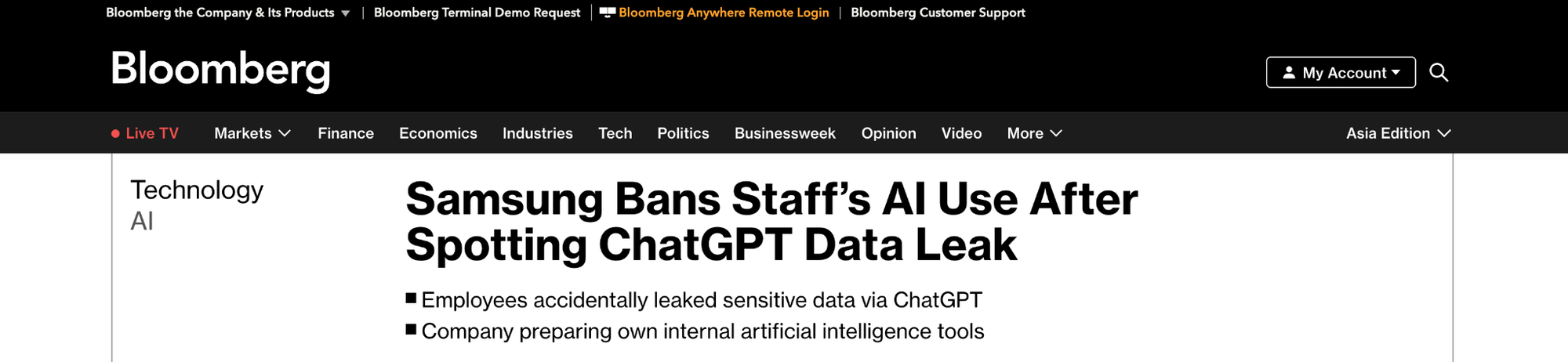
Samsung banned generative AI on company devices within weeks. It wasn't an isolated case either. JPMorgan Chase, Amazon, Apple, and several major banks put similar restrictions in place around the same time, for the same reason.
Verizon's 2025 Data Breach Investigations Report later found that 28% of all data loss prevention violations across enterprises involved an employee entering source code into an AI tool, which tells you the Samsung story was never really an outlier.
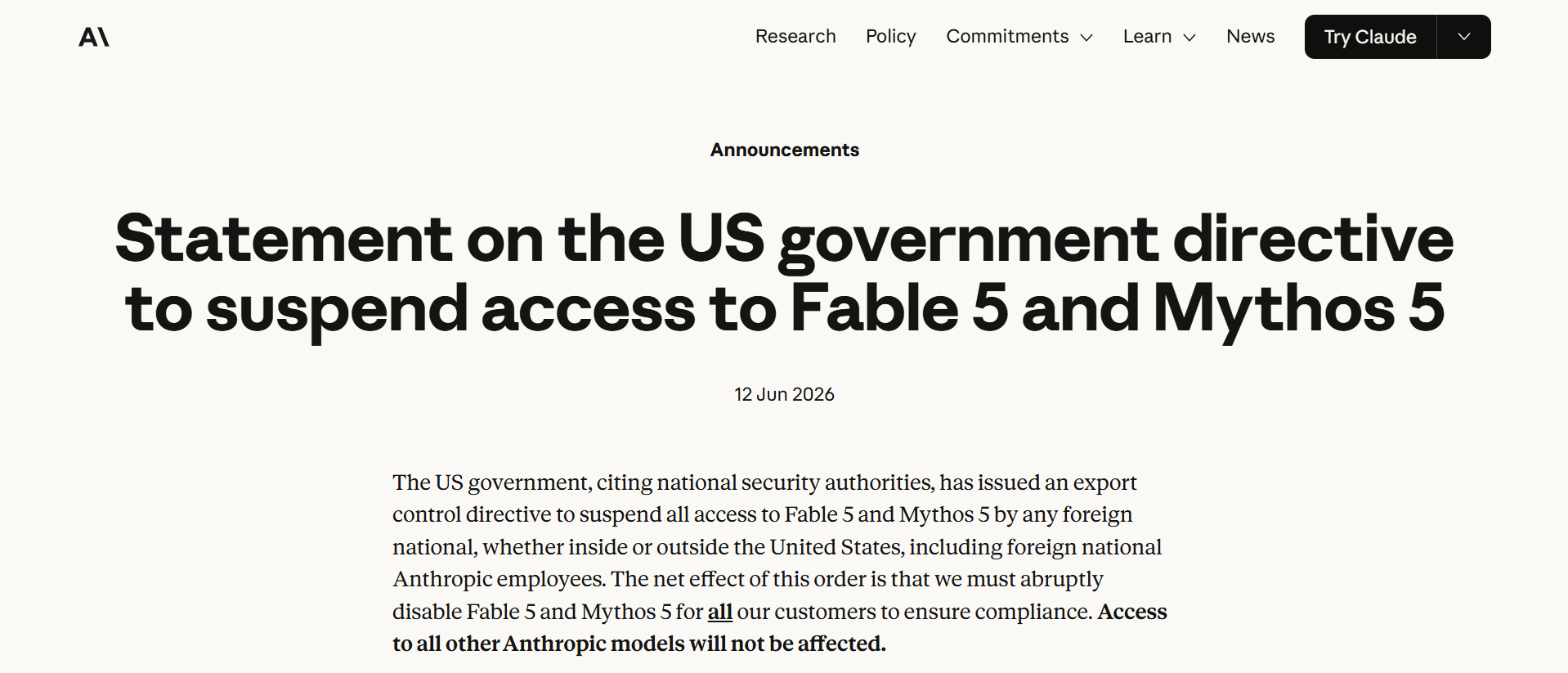
More recently, the ground shifted again, and this time it wasn't about employee behavior at all. On June 12, 2026, the US government ordered Anthropic to block foreign access to its newly released Fable 5 and Mythos 5 models, and Anthropic pulled them the very next day to comply, according to Finextra's coverage of the export order.
In that same window, JPMorgan Chase cut Claude access for its Hong Kong staff after deciding Anthropic's licensing terms didn't cover Greater China, following Goldman Sachs, which had made a nearly identical call months earlier, as American Banker reported. Neither bank chose to walk away from Claude.
So the real question isn't "which chatbot feels nicer to use." It's this: when confidential enterprise data goes into Claude or ChatGPT, what actually happens to it? Under what contract, for how long, and who has the power to take that access away from you, with no notice?
This blog breaks down what Claude and ChatGPT actually promise at the enterprise tier, where those promises still leave a gap, and why closing that gap is pushing more enterprises toward private AI infrastructure they control directly.
Why enterprise leaders are rethinking Claude and ChatGPT privacy
Enterprise AI privacy stopped being something you could quietly review "eventually" the moment two things happened at once. Getting it wrong got measurably more expensive, and the regulatory clock started running at the same time.
IBM's 2025 Cost of a Data Breach Report, built on 600 breached enterprises studied by the Ponemon Institute, found that breaches tied to unsanctioned "shadow AI" tools cost an average of USD 4.63 million. That's USD 670,000 more than breaches with no AI involved at all.
97% percent of those AI-related breaches happened at enterprises with no proper AI access controls, and 63% had no formal policy for AI governance. This isn't a future risk. It's what already happened, last year, at hundreds of enterprises.
It also isn't confined to careless individual employees. Cisco's 2025 Cybersecurity Readiness Index found that 46% of enterprises had already experienced an internal data leak traced back to generative AI use, things like employee names, internal identifiers, or business context entered into a public model.
Deloitte's State of AI in the Enterprise research adds another layer to this, finding that governance structures at most enterprises are struggling to keep pace with how quickly AI adoption is actually scaling. Put simply, your people are almost certainly ahead of your policy, whether or not you've confirmed that yet.
On the regulatory side, the EU AI Act's high-risk system obligations are still legally scheduled to take effect on August 2, 2026. Gibson Dunn's analysis of the proposed delay notes that a push to move that deadline to December 2027 was still working through negotiations that hadn't been finalized as of late June 2026.
Fines can reach €35 million or 7% of global turnover, whichever is higher, a ceiling that actually exceeds GDPR's own maximum, and Legiscope's breakdown of the penalty structure lays out exactly how that scales for multinational enterprises.
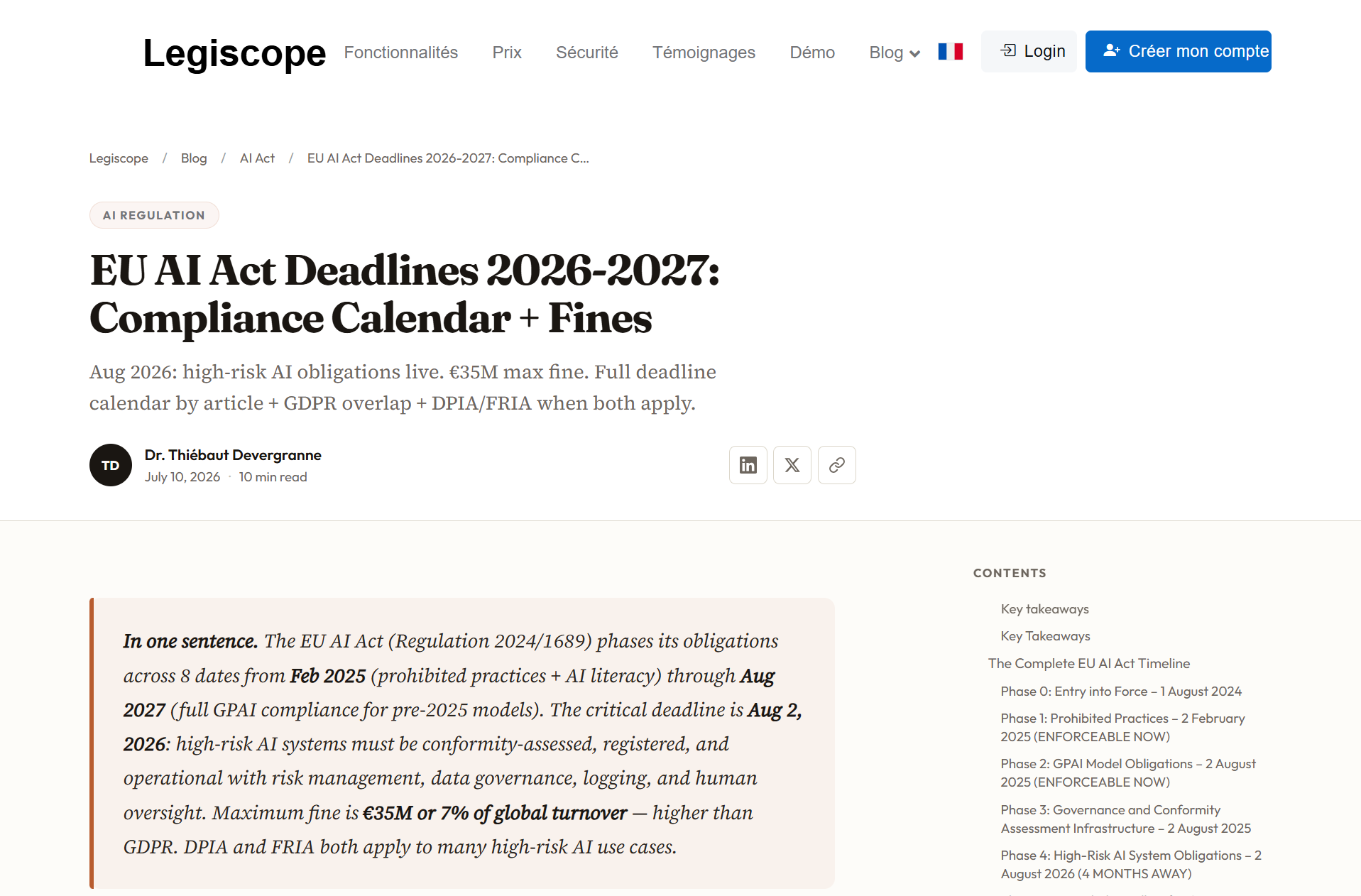
If your enterprise has any EU footprint, the safer working assumption is that the original deadline still stands, until you see it formally repealed in writing.
Put the cost data and the regulatory timeline together, and the picture is straightforward. The tools your teams already lean on for confidential work carry a real, measurable breach cost premium. The rules governing them are getting stricter, not looser. And the gap between what your people are actually doing and what your policy covers is, statistically, more likely to be open than closed. That's the backdrop for everything below.
How Claude handles confidential enterprise data
Anthropic runs two genuinely different privacy regimes, and which one applies to your enterprise depends entirely on which product tier your people are actually using, not the tier you assume they're using.
Consumer tier (Claude Free, Pro, Max)
Since October 8, 2025, new conversations on these plans are used to train future Claude models unless someone actively opts out inside Settings, per Anthropic's own announcement of the change. If that setting stays on, conversation data can be retained for up to five years, versus 30 days for anyone who opts out.
This is the tier your people are on by default the moment they're expensing a personal subscription instead of using a company-provisioned seat, and in our experience, most enterprises never actually verify which tier their teams sit on until something goes wrong.
Commercial tier (Claude for Work, Claude Enterprise, API)
Here the picture changes meaningfully. Inputs and outputs on Claude Enterprise and the API are not used to train Anthropic's models by default, under a separate Commercial Terms agreement, confirmed on Anthropic's own commercial privacy center.
API log retention was cut from 30 days to 7 days as of September 2025, and qualifying enterprise API customers can request Zero Data Retention, under which nothing is stored once a response returns to the caller. Claude Enterprise also ships with SSO, SCIM provisioning, role-based access controls, exportable audit logs, and a HIPAA-ready configuration with a signed BAA for regulated healthcare customers.
How ChatGPT handles confidential enterprise data
OpenAI draws a similar line between consumer and business products, though a few specifics differ in ways worth knowing before assuming parity with Claude.
Consumer tier (ChatGPT Free, Plus, Go)
By default, conversations on these tiers can be used to improve OpenAI's models unless a person manually turns that setting off, and there's no way for an enterprise to enforce that setting centrally across a team of personal accounts. Chats are otherwise kept indefinitely until the individual user deletes them. If your finance or marketing team has ChatGPT Plus subscriptions on their expense reports, this is very likely the tier they're actually running on.
Business tier (ChatGPT Business, Enterprise, Edu, API)
By default, none of this data, inputs or outputs, is used to train or improve OpenAI's models, per OpenAI's own enterprise privacy commitments. ChatGPT Business and Enterprise have both completed SOC 2 Type 2 audits, and Enterprise carries ISO/IEC 27001, 27017, 27018, and 27701 certification, along with CSA STAR alignment.
According to OpenAI's security and privacy overview. Workspace admins can set a custom retention policy with a 90-day minimum, Enterprise Key Management lets an enterprise hold its own encryption keys, and data residency now covers regions including the EU, UK, India, and the UAE for eligible customers.
OpenAI has also pushed further into how ChatGPT understands enterprise context specifically, through a feature called Company Knowledge that pulls live context from tools like Slack, SharePoint, and Google Drive, respecting each employee's existing permissions. It's genuinely useful for everyday productivity. It's also worth being precise about what it isn't, which we come back to below.
The pattern is the same one we see with Claude: the tier most individual employees land on by their own initiative doesn't come close to the contractual protection the paid enterprise tier carries. The login screen tells you almost nothing about which legal terms actually govern the conversation happening underneath it.
Claude vs ChatGPT: How Their Enterprise Privacy Policies Compare
Once you strip both platforms down to what their commercial tiers actually promise, the gap is narrower than the marketing pages suggest, and a couple of real differences only show up once you put the clauses side by side. Every row below comes straight from each provider's own published terms.
Where Claude and ChatGPT both fall short on confidential work
Even at their strongest commercial tiers, four gaps show up again and again in real enterprise security reviews, and none of them get fixed by simply picking the "better" vendor.
There's no real AI sovereignty
AI Sovereignty means your enterprise, not an external company, controls where a model runs, who can access it, and whether that access can be pulled overnight. Neither Claude nor ChatGPT offers this today.
The June 2026 Fable 5 and Mythos 5 suspension, confirmed directly by Anthropic, is the clearest recent proof: a US export control order took a production model offline for foreign users within 24 hours, and Anthropic couldn't restore it until the Department of Commerce lifted the restriction on June 30, 2026.
Around that same window, JPMorgan Chase and Goldman Sachs both independently cut Claude access for staff in Hong Kong over licensing-territory terms, not because either bank's security posture changed, but because a contract clause got read differently. If your enterprise operates across multiple jurisdictions, one vendor's licensing map can become your outage, with no warning and no say in the timing.
There's no infrastructure-level data privacy and security guarantee
SOC 2 and ISO certifications speak to process controls, documented procedures, access reviews, incident response plans. They don't speak to the physical impossibility of exposure.
A Data Processing Addendum assigns liability on paper; it doesn't change where the underlying compute physically sits, and it can't guarantee that a US CLOUD Act request won't compel disclosure of your data regardless of which country the servers sit in. That risk gets sharper the more of your workforce sits outside the US.
Cummings & Cummings Law's analysis of cross-border CLOUD Act exposure explains why that matters: a DPA cannot guarantee that a US CLOUD Act request won't compel disclosure of your enterprise's data, regardless of which country the servers are actually located in. That risk gets sharper the more of your workforce sits outside the US.
There's no verifiable, attested secure inference
This means neither platform can currently prove, with a piece of hardware-signed evidence your own security team can check, that nobody, not even the vendor's own engineers, could technically read a specific prompt while it was being processed. Anthropic published serious research on exactly this problem in mid-2025, and Red Hat's technical writeup on the approach treats trusted hardware enclaves as a genuine path forward for the industry.
That's a meaningful research direction, and Anthropic's own confidential inference paper is worth reading in full. But it remains research, not a shipped, customer-facing feature inside Claude Enterprise today. OpenAI has written about similar goals for its infrastructure roadmap, with the same result: a policy commitment today, not a cryptographic guarantee you can independently verify.
There's no genuine context compounding
Neither platform can currently prove, with hardware-signed evidence your own security team can independently check, that nobody, not even the vendor's own engineers, could technically read a specific prompt while it's being processed.
Anthropic has published serious research in this direction, but it remains research today, not a shipped, customer-facing guarantee inside Claude Enterprise. OpenAI has written about similar ambitions for its own infrastructure. In both cases, what you get today is a policy commitment, not a cryptographic guarantee.
Reworked's coverage of ChatGPT's Company Knowledge launch points out that the feature works through live retrieval across connected apps rather than a persistent knowledge graph, and a user has to switch it on for each individual conversation.
Claude's equivalent, Claude Memory, is scoped per project and per user rather than across the enterprise, so what one team's Claude "remembers" doesn't compound into what another team's Claude knows. Both are useful features. Neither one is an enterprise-wide layer of accumulating institutional intelligence.
Zero data retention(ZDR) isn't fully in your hands
Even where Zero Data Retention exists as an option, it's gated to specific API endpoints and specific customer tiers, not offered as a blanket setting your enterprise can switch on everywhere, and it typically excludes stateful features like agents, file uploads, and saved conversations.
According to Decagon's explainer on how zero data retention actually works. Outside of those qualifying workflows, the retention floor is set by the vendor's infrastructure, not your enterprise's own governance schedule, and enforcing a shorter window than the vendor supports usually isn't something your team can actually do.
That means the same enterprise can be fully covered on one workload and completely exposed on the next, depending on which endpoint or tier a given team happens to be using.
There's no real control over cost and token efficiency
Both platforms price and throttle usage the same way for every customer on a given tier, regardless of how repetitive or predictable your internal workload actually is, and enterprise API spend has been rising even as headline token prices fall, largely because agentic workflows consume several times more tokens per task than a standard chat query, per Tokonomics' analysis of enterprise LLM cost management.
An enterprise running thousands of similar internal queries a day, contract review, ticket triage, first-draft content, has no lever to bring the per-token or per-seat cost down beyond what the vendor already offers, and no way to route lower-stakes queries to cheaper compute the way it could on infrastructure it controlled directly. The bill scales with usage, not with how efficiently that usage could actually be served.
Scalability sits on someone else's roadmap, not yours
Capacity, rate limits, and regional availability are all decided by the vendor's own release schedule. Nearly 1 in 20 AI requests already fail in production, and close to 60% of those failures trace back to capacity limits on shared infrastructure, not model quality, according to Datadog's State of AI Engineering 2026 report.
If your enterprise needs to scale a workload up quickly, or into a new region, or through a usage spike tied to your own business cycle, that happens on the provider's timeline, not yours, and there's no contractual mechanism that guarantees your enterprise gets prioritized over anyone else hitting the same shared capacity.
Low latency isn't guaranteed at the infrastructure level
Response times depend on shared, multi-tenant infrastructure the vendor controls, and on that kind of infrastructure, worst-case latency is bounded by the aggregate load every other customer is putting on the same pool, not by your own traffic alone, as explained in GMI Cloud's technical breakdown of single-tenant versus shared inference.
That means an enterprise running latency-sensitive workloads, real-time customer support, live document review, anything embedded in a time-critical workflow, has no way to reserve dedicated capacity the way it could on infrastructure it actually owns, and performance can vary with overall platform load in ways a DPA or SLA doesn't fully protect against.
Compliance is asserted by the vendor, not verified for your specific deployment
A SOC 2 report, an ISO certificate, or a signed BAA tells you the vendor's processes met a bar at a point in time, for a defined scope, but a certification "does not automatically prove that the specific AI product is in scope" for the workflow you're actually running.
As one detailed breakdown of AI vendor compliance reviews puts it, per this analysis of what SOC 2 does and doesn't prove for AI systems. It's strikingly common for enterprises to assume blanket coverage from a single flagship certification when the underlying audit only covered part of the product line. Confirming compliance for your actual deployment, not the vendor's marketing page, is work your team still has to do independently.
This is the exact combination of gaps that has pushed regulated enterprises, hedge funds, law firms, and hospitals among them, toward a different model: running AI on infrastructure they physically control, rather than renting access to infrastructure someone else does and hoping the contract holds under pressure.
A practical checklist before you deploy Claude or ChatGPT for confidential work
Before your next AI vendor review, these are the specific questions worth putting in front of legal, procurement, and the vendor directly, not the marketing page.
Verify data privacy and security
Which contract actually governs this account, consumer terms or commercial terms, confirmed team by team rather than assumed at the enterprise level? Who actually holds the encryption keys, your enterprise or the vendor?
Confirm data retention and ZDR policies
What's the actual data retention period, in days, in writing, and is Zero Data Retention available for this specific workload? What qualifies a workload for it, and what's the fallback retention period for everything that doesn't?
Assess AI sovereignty and infrastructure control
What happens to your access if the vendor's export licensing or government relationship changes, and is that answer in writing? Can your enterprise fully control where the model runs and who owns that infrastructure?
Validate compliance and audit readiness
Does the certification portfolio cover the specific tier, region, and configuration you're deploying, not just the vendor's flagship brand? Can you export a full audit log, every prompt, every model, every user, in a format your own auditor can use?
Verify confidential inference and attestation
Does the vendor offer verifiable, attested confidential inference today, or only published research about it? Is the security model built on a policy your enterprise has to trust, or a cryptographic guarantee your own team can independently check?
Evaluate context compounding
Does the platform build genuine cross-team institutional knowledge over time, or does it require manual reconnection every session?
Review cost and token efficiency
Does pricing scale down as your usage volume and predictability increase, or is every query billed the same regardless of how repetitive your workload actually is?
Evaluate performance and latency
What's the vendor's guaranteed response time under peak load, and can your enterprise reserve dedicated capacity for latency-sensitive workflows, or is performance entirely dependent on shared infrastructure?
Fluso: best ChatGPT and Claude enterprise alternative for security, privacy, and control
Fluso is a private AI workspace, and it's built to answer exactly the four questions Claude and ChatGPT's commercial tiers can't.
Fluso deploys inside your own private cloud, virtual private cloud, or a fully air-gapped environment, running entirely on open-weight models, so nothing in the pipeline is a black box that a government export order can revoke overnight, the way Fable 5 and Mythos 5 were revoked in June 2026.
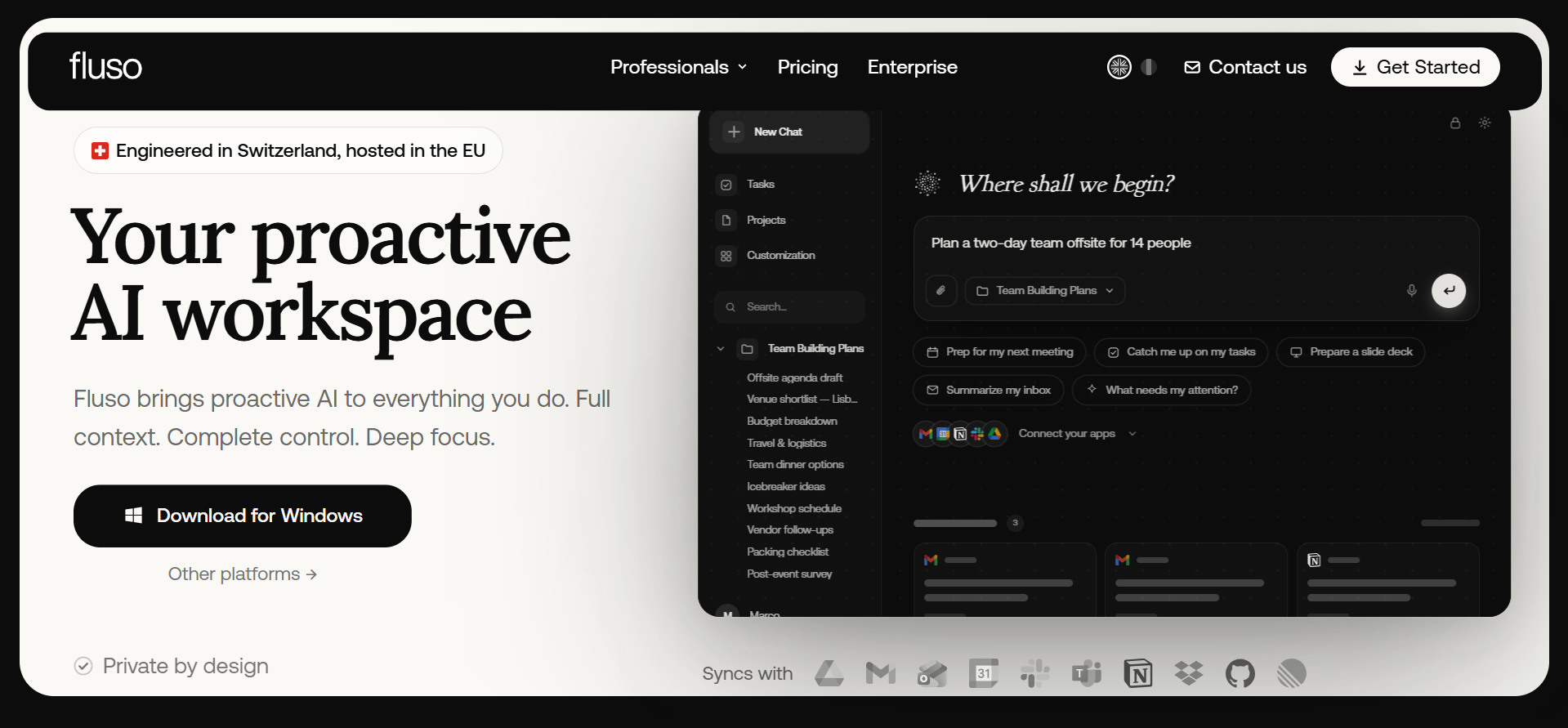
Because data never has to leave your environment to reach the model in the first place, the entire category of risk tied to a third party's servers, jurisdiction, or retention policy simply doesn't apply the way it does with a rented AI service.
That same infrastructure is what makes verifiable, attested secure inference possible. Fluso processes requests inside encrypted, hardware-sealed enclaves, so Fluso itself cannot read your data while it's being processed, and that's backed by a cryptographic attestation your own security team can independently check, rather than a policy commitment you're asked to take on faith.
It's also why your enterprise's knowledge can genuinely compound over time. Because the workspace runs inside your own environment, context compounds and connects across teams inside one governed boundary, instead of resetting with every new conversation or staying siloed inside one person's project.
If your enterprise works with confidential, regulated, or IP-sensitive data, contact our sales team or email us at sales@premai.io. We'll help you understand how a sovereign AI workspace with verifiable infrastructure and 100% data control can be tailored to your environment.
Frequently asked questions about Claude vs ChatGPT Privacy
Is Claude or ChatGPT more secure for enterprise use?
At their commercial tiers, both clear a comparable bar: SOC 2 Type II, encryption at rest and in transit, and a contractual no-training default. The real difference shows up in vendor dependency and jurisdictional risk, where neither has an edge over the other, since both are single, external providers subject to the same category of government and licensing risk.
Does ChatGPT train on enterprise data?
No, not by default. OpenAI states that ChatGPT Business, ChatGPT Enterprise, ChatGPT Edu, and API data aren't used for model training unless an enterprise explicitly opts in through a separate feedback mechanism.
Does Claude train on enterprise data?
No, not on Claude for Work, Claude Enterprise, or the API. All three fall under Anthropic's Commercial Terms rather than the consumer opt-in setting that applies to Free, Pro, and Max accounts.
What happens if employees use personal ChatGPT or Claude accounts instead of the enterprise plan?
Their conversations fall under consumer terms, which means training opt-in defaults and multi-year retention windows can apply, exactly the scenario IBM's 2025 breach report ties to that USD 670,000 cost premium per incident. This is the single most common gap that turns up during an AI usage audit, and it usually surprises the security team more than the employee.
Can a government order really suspend access to an AI model my enterprise depends on?
Yes. In June 2026, Anthropic suspended access to its Fable 5 and Mythos 5 models for foreign users within 24 hours of a US Department of Commerce export order, and only restored it once the order was lifted on June 30, 2026. Two major banks lost access to Claude in Hong Kong during the same period over a licensing dispute, unrelated to that order.
Is a private AI workspace like Fluso a replacement for Claude or ChatGPT?
It depends on the workload. For general-purpose work, Claude and ChatGPT's commercial tiers hold up reasonably well. For confidential, regulated, or IP-sensitive work, where infrastructure-level control and independence from one vendor's licensing terms actually matter, a private AI workspace closes risks that neither Claude nor ChatGPT can contractually eliminate, regardless of tier.
What certifications should I actually check for, beyond the marketing page?
SOC 2 Type II specifically, not Type I, ISO/IEC 27001, a signed BAA if you're handling PHI, and a DPA that's specific to the exact product tier you're deploying, not just the provider's flagship brand name.
Does GDPR apply differently to Claude versus ChatGPT?
Both support GDPR compliance for commercial customers through a DPA and standard contractual clauses for cross-border transfers. Neither has faced a confirmed enforcement action over enterprise-tier data handling as of mid-2026, though Anthropic's September 2025 consumer opt-in interface has drawn criticism from privacy researchers over its default-on design.
How does the EU AI Act affect enterprises using Claude or ChatGPT?
If your use case falls under an Annex III high-risk category, obligations like conformity assessment, technical documentation, and audit logging currently apply from August 2, 2026, regardless of which provider you use. A proposed 16-month delay to December 2027 was still pending formal adoption as of late June 2026, so treat the earlier date as the operative one until that changes.
What's the single most common mistake enterprises make when evaluating AI privacy?
Assuming a provider's brand-level reputation, Claude being "the privacy-first one," for example, automatically applies to every product tier that provider sells. The actual protections shift sharply between a personal Pro account and a contracted Enterprise agreement, and shadow AI on the former is exactly what shows up, repeatedly, in breach of cost data.
See how Prem AI can help your enterprise build private AI without compromising control over your data and infrastructure. Contact our sales team, or email us at sales@premai.io.